The Importance of Visual Feedback

An earlier ‘Musing’ described the importance of manageable plots for fruit and vegetable growing as we concluded that it was best to “think big but start small”.

This issue of manageable plots has come to the fore in our minds recently with regard to our small back garden, which ought to be easily manageable.  However, with poor weather over the summer and other growing priorities, the allotment and Mark’s kitchen garden work, we let the back garden slide.  The odd burst of weeding and a hasty mow when weather permitted kept things just about under control, but a closer look revealed that chunks of the garden were growing out of control.

A few weeks ago a pleasant afternoon stimulated a burst of activity.  The immediate visual improvement provided the catalyst to a concerted effort of pruning, weeding and tidying to the point where we now have a fairly solid framework for the next few years and are planning further developments for next spring.

The impetus provided by some positive visual feedback was quite remarkable, but should not have been that surprising.  Mark has already seen this in a couple of jobs, where bringing a garden or vegetable plot back under control has stimulated the interest of the owners and inspired renewed efforts, overcoming the inertia that had been built up by the depressing spectacle of an out of control bed.

Sometimes it needs the purchase of a little extra external effort to overcome the inertia, sometimes a small focused effort that yields a tangible reward in terms of the aesthetics of the plot can be enough to re-invigorate the inner gardener, however much we have been beaten down by the weather.  If you can see the difference, so can other people, but more importantly if you can see the difference, you know it was worth the effort.
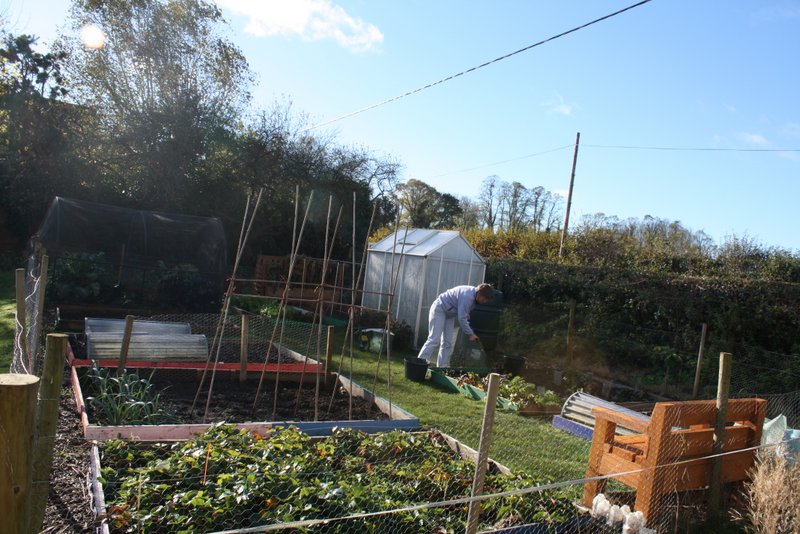
Putting the Allotment to Bed

As autumn has started to deepen, harvesting has slowed down to a trickle and the onus has shifted to tidying up and preparations for next year.

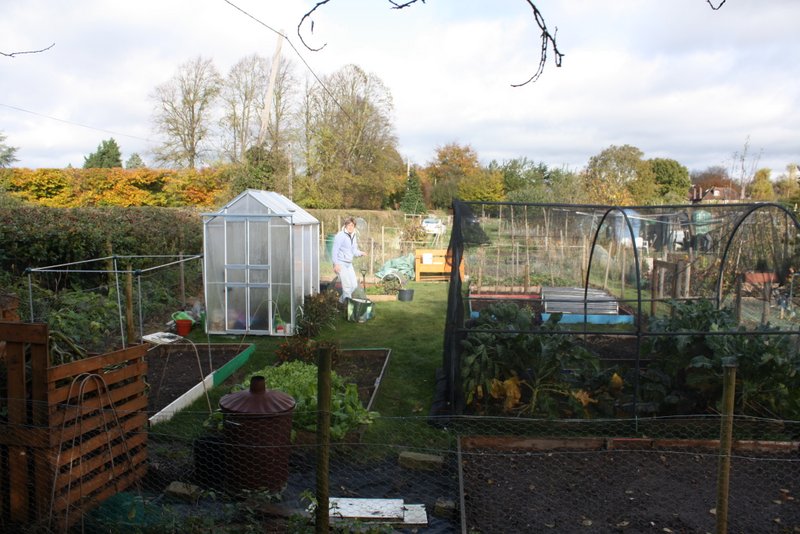
Looking North 3 November 2012

Looking South West 3 November 2012

This year we have tried to ensure that we have some continuity of cropping throughout the winter, by using a few follow-on crops.  We have got leeks, winter greens and spinach for winter harvesting, along with the very last of this year’s beetroot and onions and broad beans in the ground for next year.  We are however, not pushing all of the beds all year, allowing some to be rested over the winter.  For example, we are in the process of preparing a bed for an increased range of climbing beans and peas for next year and are using the first of our allotment-made compost to fill planting trenches.

It is noticeable that the larger size of the compost bins is making the rotting-down process much quicker than in the smaller bin that we have at home, so we should be able to keep a steady flow of well-rotted organic matter into the cultivated beds.  Our allotment soil is a light sandy loam and adding organic matter will allow better moisture and nutrient retention ensuring that we can continue the heavy cropping we have enjoyed as the plot first came into cultivation.

A Terrible Summer?

Has it really been a bad summer for growing?

I can’t speak for commercial growers, I suspect that the answer for them has been yes, given the need to work to very specific timetables.  If you can’t get harvesting gear onto sodden fields when crops are ripe then you have a serious problem.  I am less convinced that it is true for the allotment or garden grower.

In the early spring we were seriously worried about drought in the south-east and had the ground stayed as dry as it was back in March/April we would have struggled to grow anything.  The subsequent cold wet weather certainly inhibited the growth of some plants, but once we got some warmth in the air then things did move on.  Yes of course the weeds moved more quickly than the rest of the plants and slugs/snails were a major headache in the wet, but lots of crops have really benefitted from the store of water in the ground, which is now almost gone in our neck of the woods, with little rain in the last 5-6 weeks.  Things that have done well included peas, beans, potatoes (if caught before the blight), beetroot, carrots, sweet corn, brassicas and courgettes (do they ever do badly?). 

The biggest problem may well have been that the dreary weather acted as a disincentive to get out and do anything in the garden or on the plot (this has been the case in the ornamental bits of our garden).  In a vegetable plot a little bit of neglect soon sees weeds, disease and pests take over creating a downward spiral, where the only job left to do is tidying up and potential harvests are minimal.  This can certainly be seen on some of the allotment plots, but by no means all, a number are looking really good and judging by the bags and boxes of produce that we’ve seen people carrying many have been productive.  It was therefore very disappointing that the annual judging was cancelled this year because of the weather and the effect that it had had on the plots, for some (and yes we include ourselves in this) the weather had enabled some crops to be much better than expected.

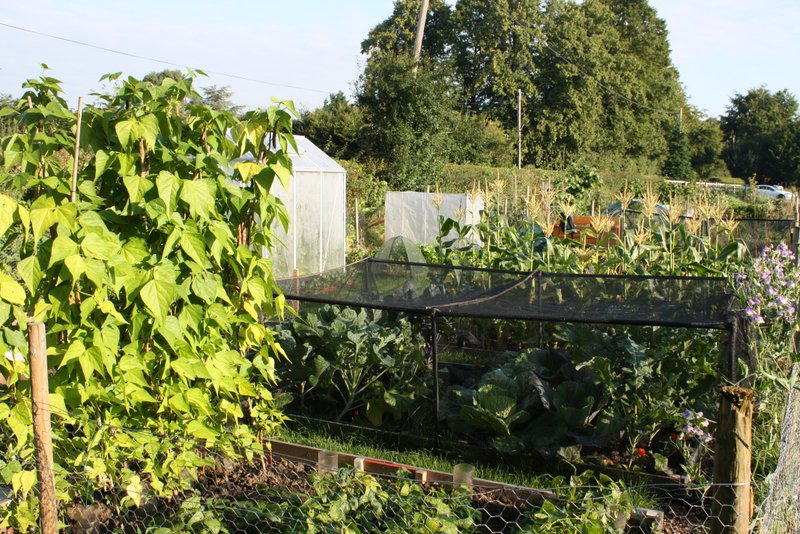
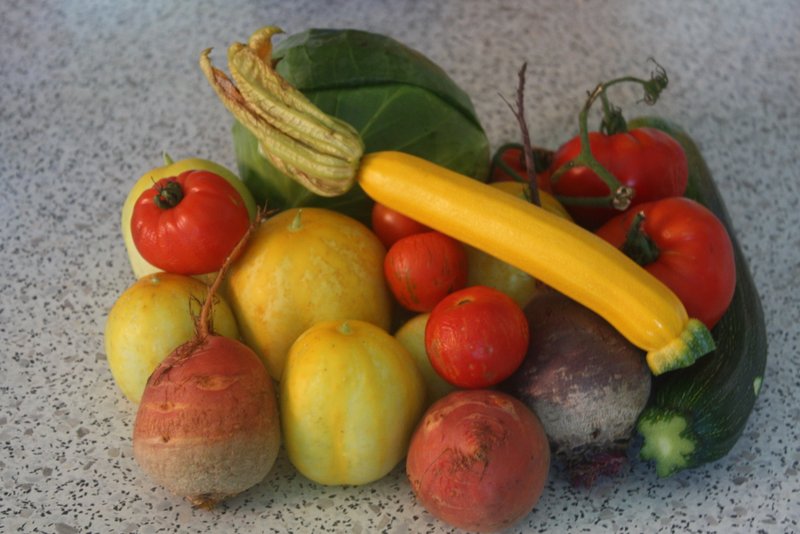
The photos below show how the plot was looking a couple of weeks ago and some of yesterday’s harvest.

Looking North West 9 August


Some Random Harvesting

The First Melon

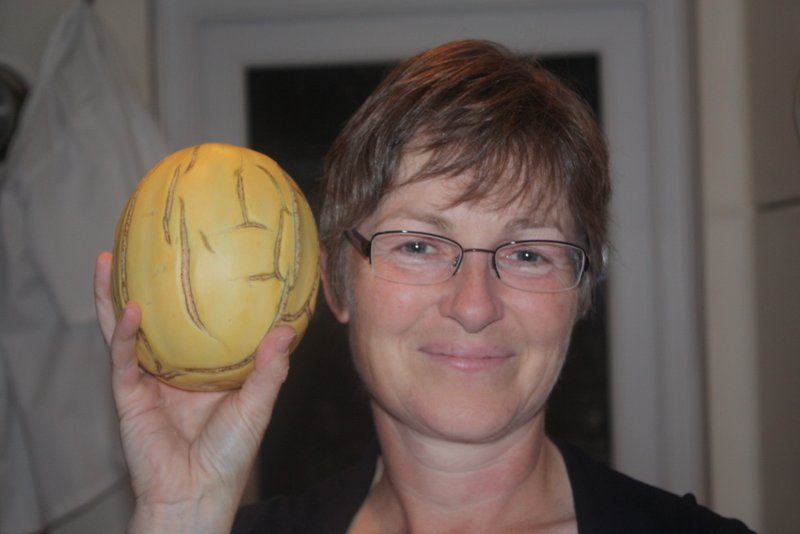
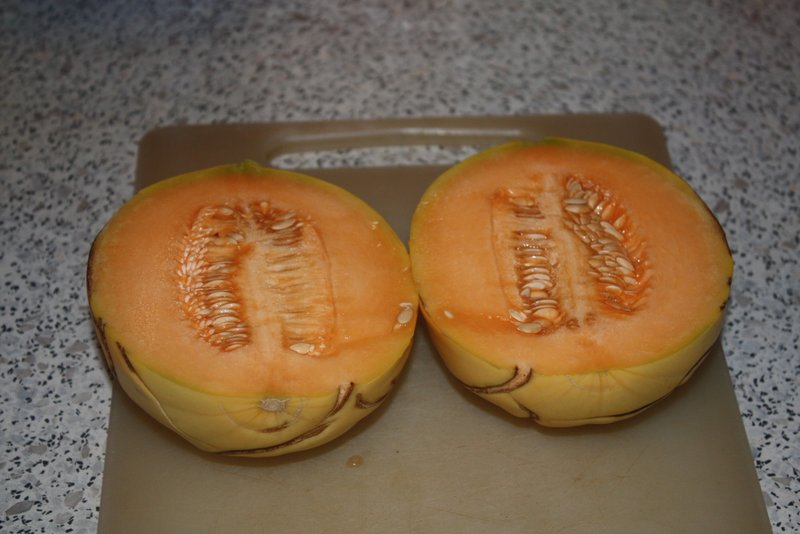
The big news today was that we harvested our fist melon from the greenhouse.  When Mark went in to water this morning there was a strong smell of melon, so he picked up the largest melon to check it for ripeness as it fell off the stalk in this process, it was safe to assume that it was as ripe as it was going to get.  The flavour was not quite as strong as the smell suggested it might be, but it was undeniably a melon and a ripe one at that.

Lynn and the melon


Blight and Other Better News

Wet summer weather invariably means potato blight and this has been the case both on the allotment and on the farm where Mark has been working on the kitchen garden.  The speed with which the disease develops once it has started is really quite depressing and it is crucial to cut down infected haulms as soon as possible to ensure that the tubers will be unaffected and OK for storage.  We may not have managed this completely on the allotment as we have been busy enjoying an Olympic summer holiday, but ought to have acted in time for the harvest to see us through the winter.  On the farm it has been more of an issue as the seed potatoes were planting about six weeks later, leaving very little time for the tubers to mature, so it was a gamble trying to leave the tops for as long as possible to feed the tubers, whilst hoping that the fungus did not reach the tubers.

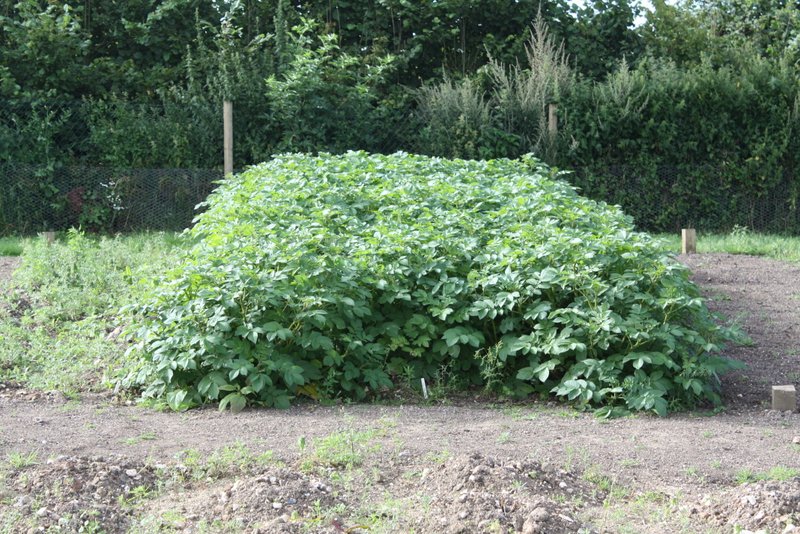
We have not tried a preventative copper-based spray (in the incessant rain of the early summer it would have been quite difficult to find a spraying window) and this is an option for future years.  However, Mark has seen extremely impressive blight resistance from Sarpo Mira as shown on the photo.  This cultivar is definitely worth considering for areas where blight is a real problem most years.

Sarpo Mira Aug 2012

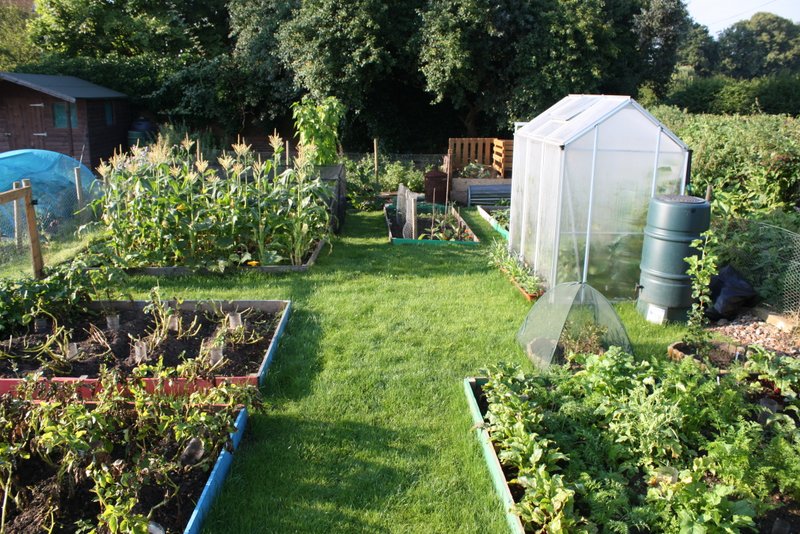
 On the allotment a bit of sunshine has helped things to develop and the plot is looking good and as well as providing a steady stream of beetroot, beans and new potatoes, there is the promise of much more to come, with the tomato plants all looking vigorous and healthy, the cucumbers and melons and the “Big Jim” chilli starting to set fruit and the brassicas and sweet corn maturing nicely.

Looking South 9 August


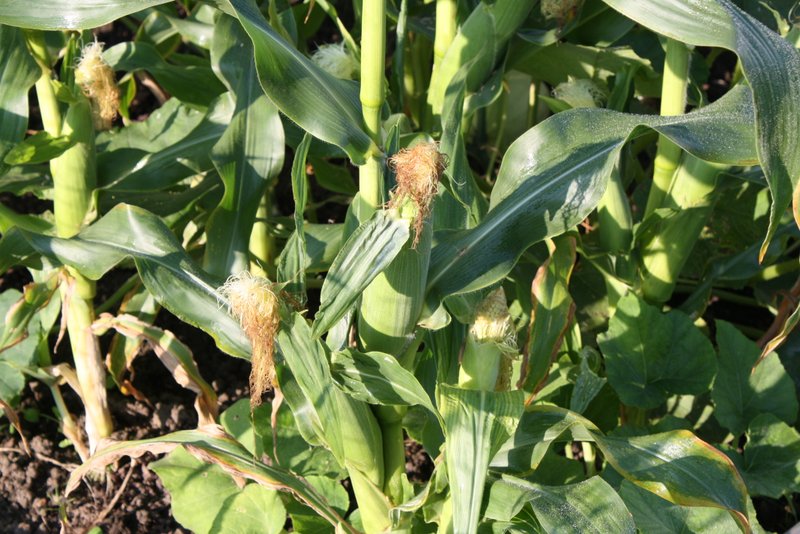
Ripening Sweet Corn


Is growing your own difficult?

Mark has been working on a large-scale kitchen garden for the last few weeks.  This large plot has fantastic infrastructure – proper fencing, well laid out beds and paths, and a couple of large fruit cages, but had become badly neglected.  There were people around to work on the plot, albeit with competing pressures, so why did such a good set-up become so overgrown?  Is there something intrinsically difficult about growing fruit and vegetables, or do they require much more effort than other types of gardening.

On balance we don’t think that there is anything especially difficult about kitchen gardening.  Like ornamental gardening it is helpful to know about the habits and botany of the plants and the nature of your soil, pests and diseases and how to control them.

We also don’t think that it is necessarily harder work than ornamental gardening, but it does require planning and organisation.  Most kitchen gardening works on an annual cycle with fruit trees/bushes and some crops such as rhubarb, asparagus and globe artichokes being perennial.  The balance tends to be different in ornamental gardening with more permanent and perennial planting in place.  So for a given area, kitchen gardening probably requires more effort than ornamental gardening.  The important thing therefore is be realistic about the size of your plot and the effort that you’ll be able to put in at key times (soil preparation, propagation, planting, weeding, harvesting etc.)

Make sure that in the first instance you set something up that you are sure you can manage.  This is no different to making decisions about the balance between lawns and beds, or annuals and perennials in the ornamental garden.

It is far better to start with a small plot, or even a few containers that you can look after properly and enjoy the excitement of the growing process and the rewards of edible crops.  Once you experience success, and get to understand the work involved, you might be inspired to try more.  It is easy to use more spaces in the garden or add more containers to a productive base, but there are few things more dispiriting than a plot that gets out of control because you don’t have the time to manage it.

If you’re starting out on “Growing your own” our advice is think big, but start small.