
We have been asked to include ideas for cooking and storing produce. We will endeavour to post thoughts at the appropriate time of year to match up with your gluts. However, we are going to start with one of the best crops that there is for storing – Potatoes.
Author Archives: Lynn Davis
Plants for Free
… well almost. There are some costs associated with propagation – compost, pots, power if you are using a heated environment, but, even allowing for these, you can end up with plants that are significantly cheaper than if you buy them.
There are many ways to propagate plants, one of which we’ll come back to another time (from seeds). For now the focus is vegetative propagation, cuttings, layering and division. Different types of plants can be propagated in different ways (and some by different methods at different times of year). There are many guides to propagation, books, TV clips and other on-line resources, so I don’t propose to go into the individual details of different techniques. A resource that I have found helpful, because of the detailed step-by-step instructions is the Royal Horticultural Society (RHS) website.
Unfortunately there doesn’t seem to be one bit of the site devoted to propagation, but within the list on this page http://apps.rhs.org.uk/advicesearch/AtoZ.aspx are links to things such as cuttings (of various types), Irises (dividing), Ornamental grasses (dividing), Perennials (dividing) and Layering. The individual pages such as this one on softwood cuttings http://apps.rhs.org.uk/advicesearch/Profile.aspx?pid=307 follow the same general structure describing not just the process of collecting and preparing cuttings, but identifying plants that can be propagated using the specific technique.
The purpose of this piece is to share some of our experiences and to focus on two particular techniques that we have found to be particularly useful. The first is softwood cuttings (for two reasons – firstly it is almost time to be taking these and secondly that these are the cuttings most likely to root quickly. A great advantage of softwood cuttings is that you get a fairly quick result (either success or failure) and if you are successful then you have a young plant ready to grow on during the later spring and summer. This means that you can also get quick results in terms of a display in the same year. We have used this technique for Fuchsias, Hebes, Rosemary and Box to name a few. Softwood cuttings will also root if taken later in the year, but are slower and need more care to get them ready for the following year. Here are some (now safely rooted) young plants from cuttings taken last autumn.
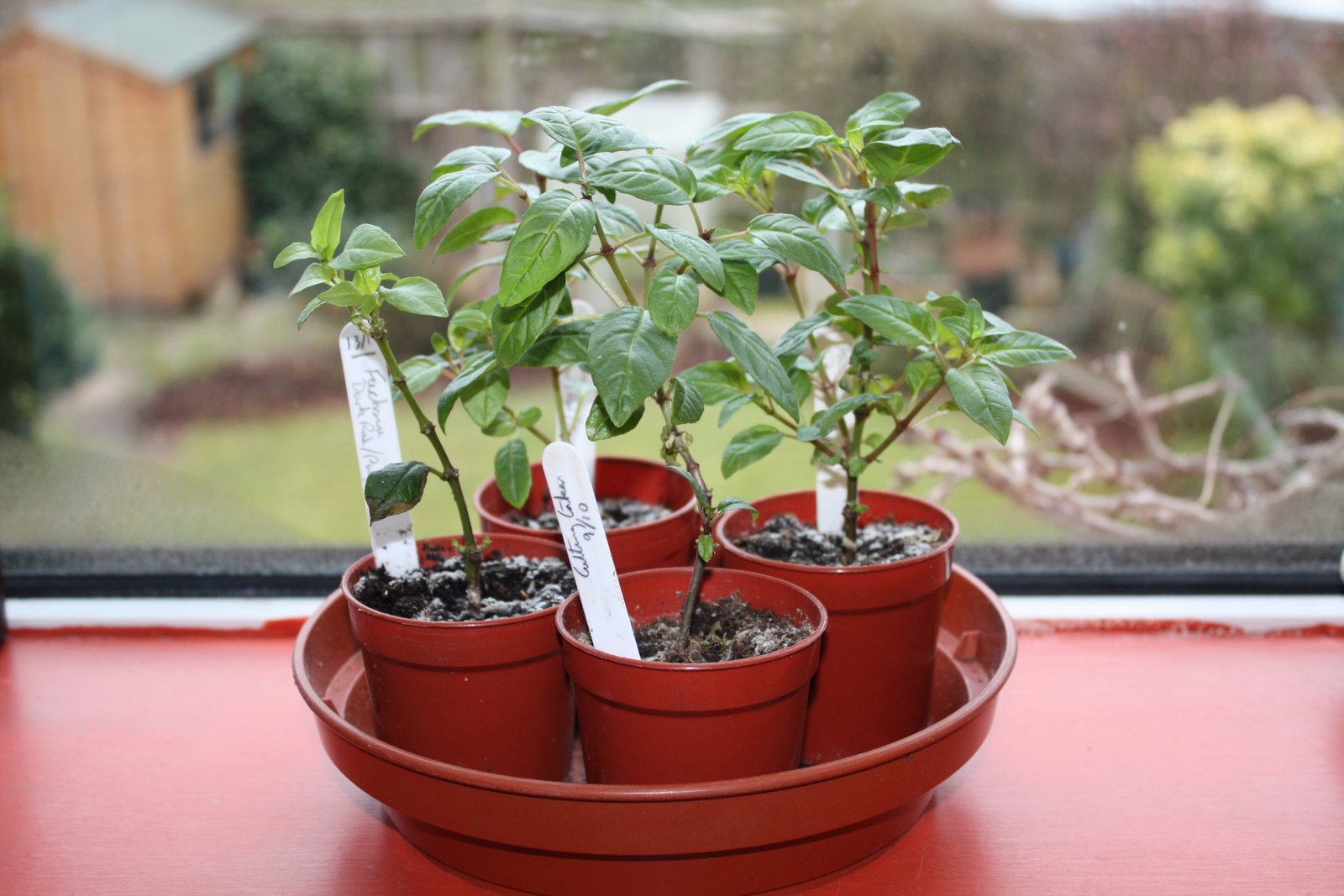
Fuchsia Cuttings
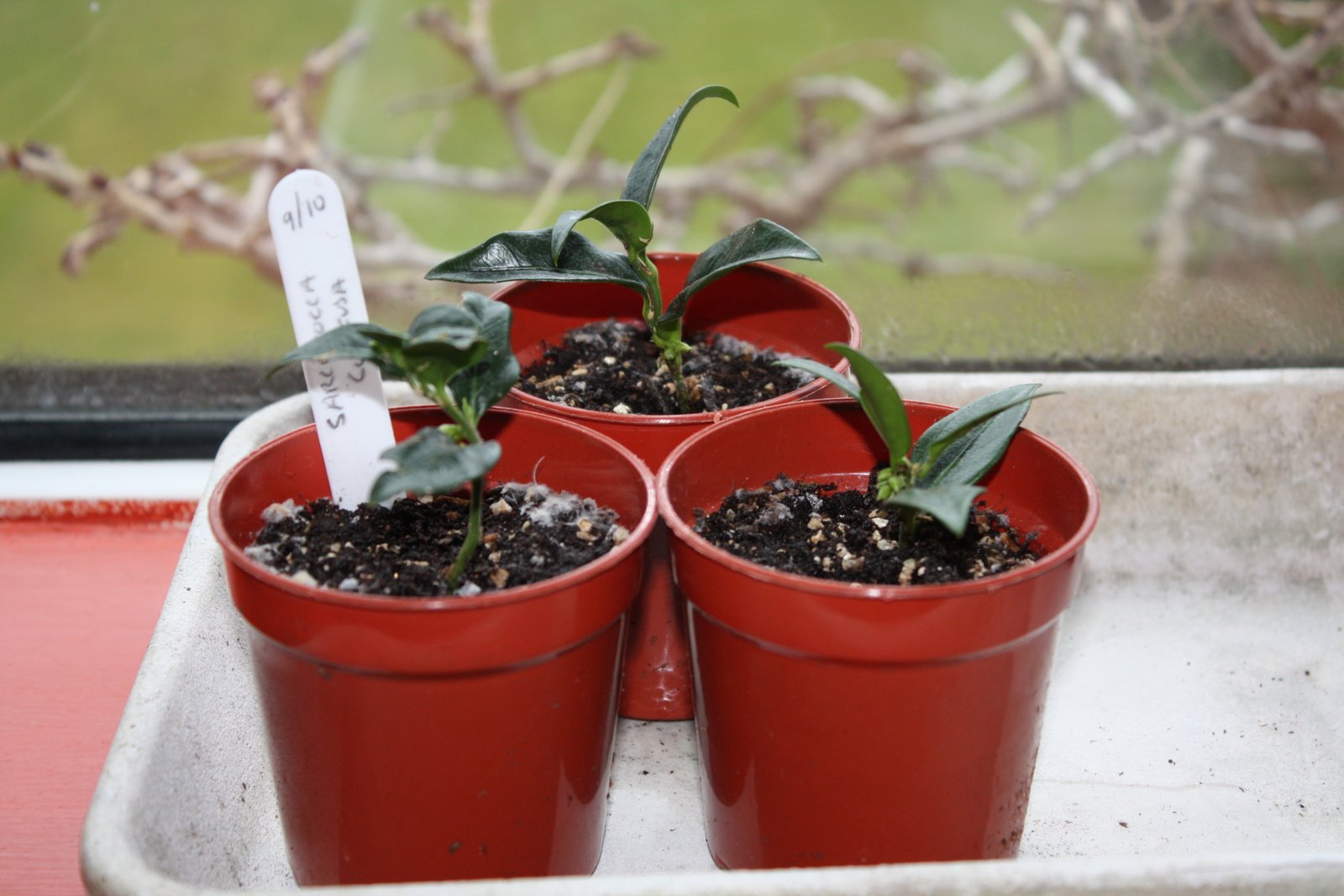
Sarcococca Cuttings
It will be a year or two before the latter look like this
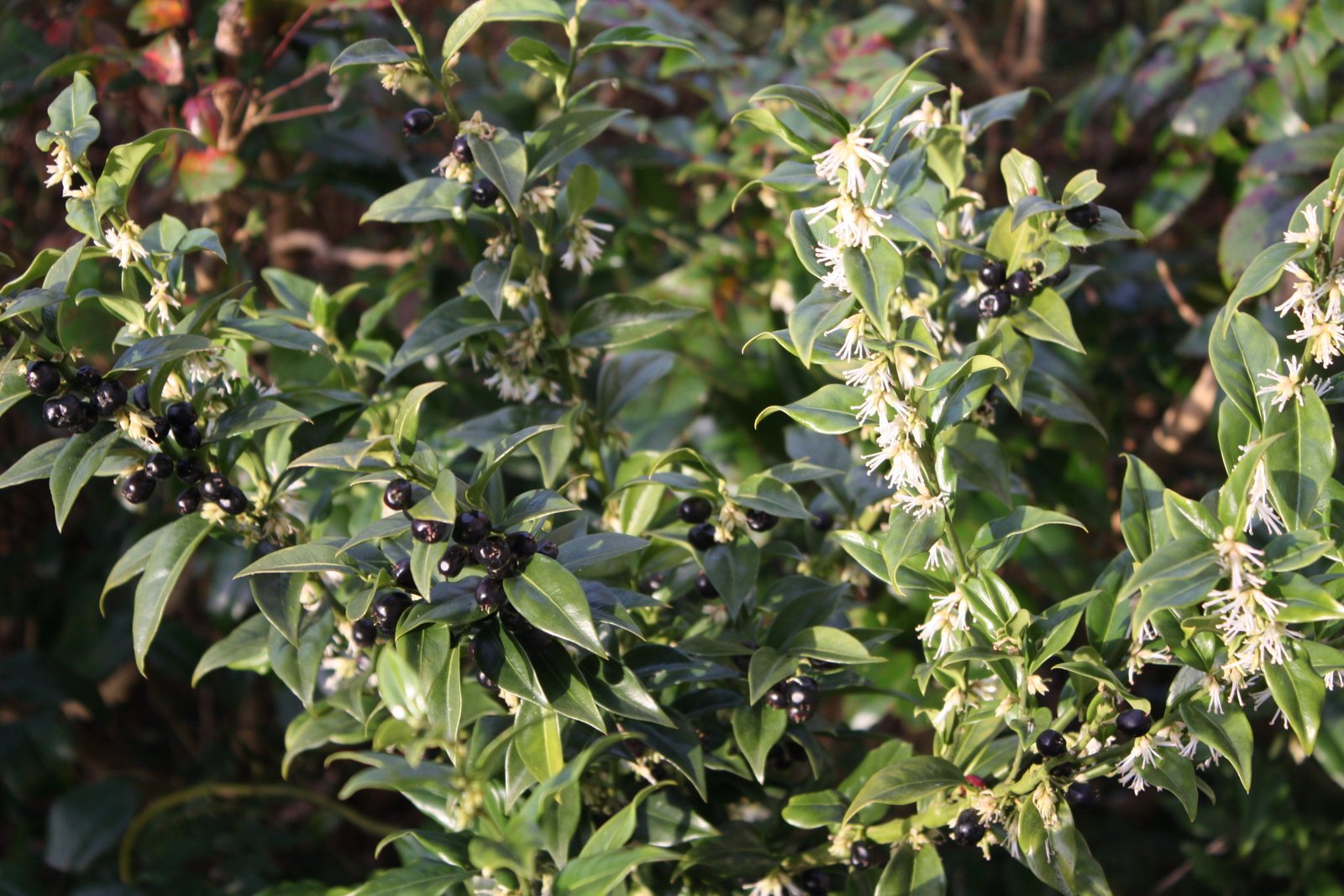
Sarcococca confusa
but the Fuchsias will be flowering this summer.
The other technique that we’ve been trying out is hardwood cuttings, see here for the RHS advice http://apps.rhs.org.uk/advicesearch/Profile.aspx?pid=387. The big advantage of this technique is that once you’ve done the initial work, you can pretty much forget about them for 6 months or so until you pot on the successes and get rid of the failures. This little nursery corner in front of our shed shows the blackcurrant cuttings taken early last year that were potted on individually last summer and will be ready for planting out this spring. It also shows the rose cuttings taken late last year, which we’ll be potting on later this year.
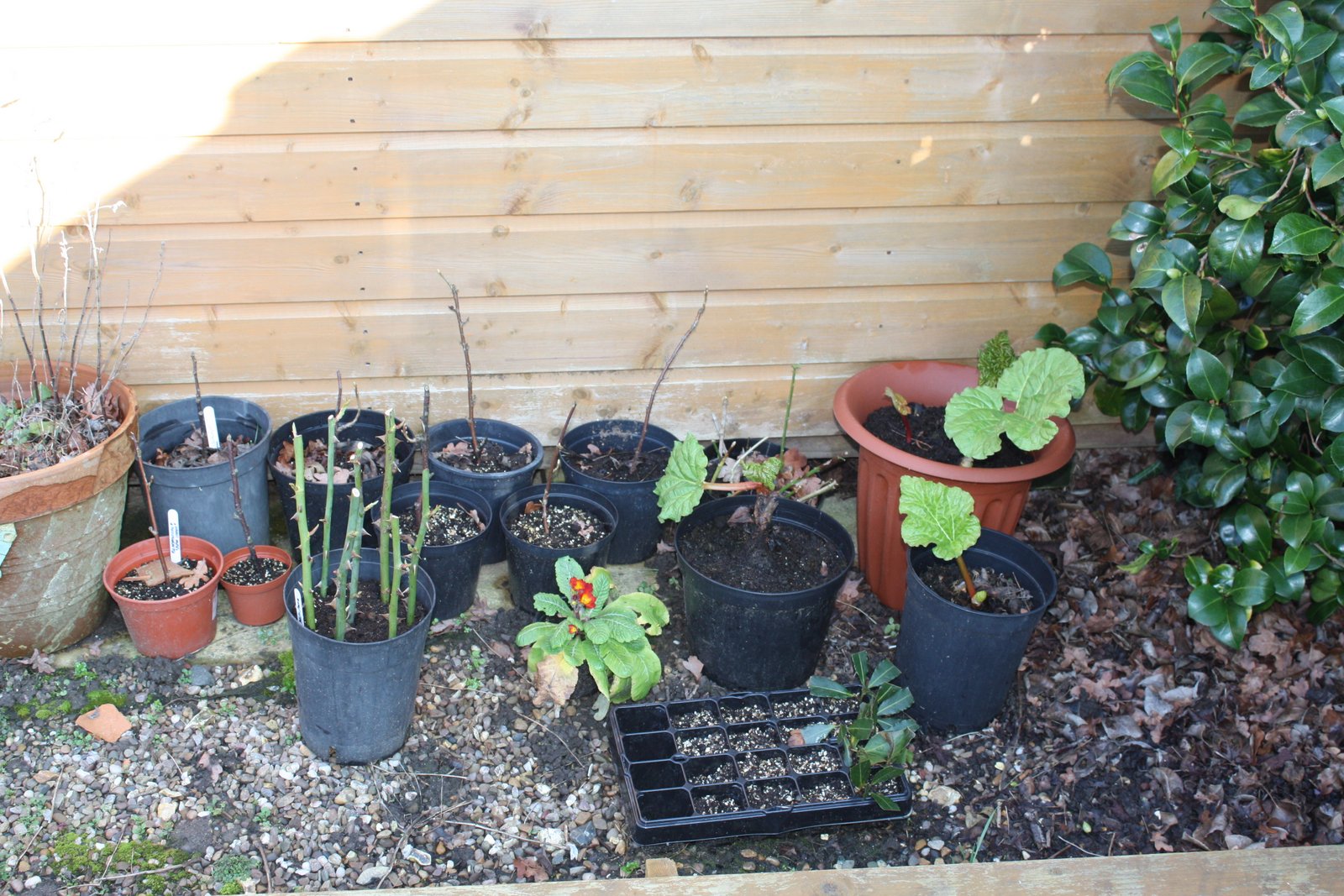
Nursery Area Feb 2013
In the nursery you can also see some rhubarb plants that are growing from the crown that we divided last year. The key with division is to be bold and not worry too much about damaging your original plant. This technique is mostly used with herbaceous perennials and not only gives you new plants but also rejuvenates the original. We have just finished lifting and dividing some of our ornamental grasses, with some of the divided pieces being immediately re-planted and others potted up so that we can plant them out at leisure (or give them to friends/family).
An interesting example of division was a very weary looking Aloe Vera plant that had been sat on the kitchen windowsill, when we went to re-pot it, we found the best part of 20 plantlets and after dividing them and potting them on, they have grown away really well, to the point where the individual plants are starting to produce their own colonies of new material. Here are some of them.
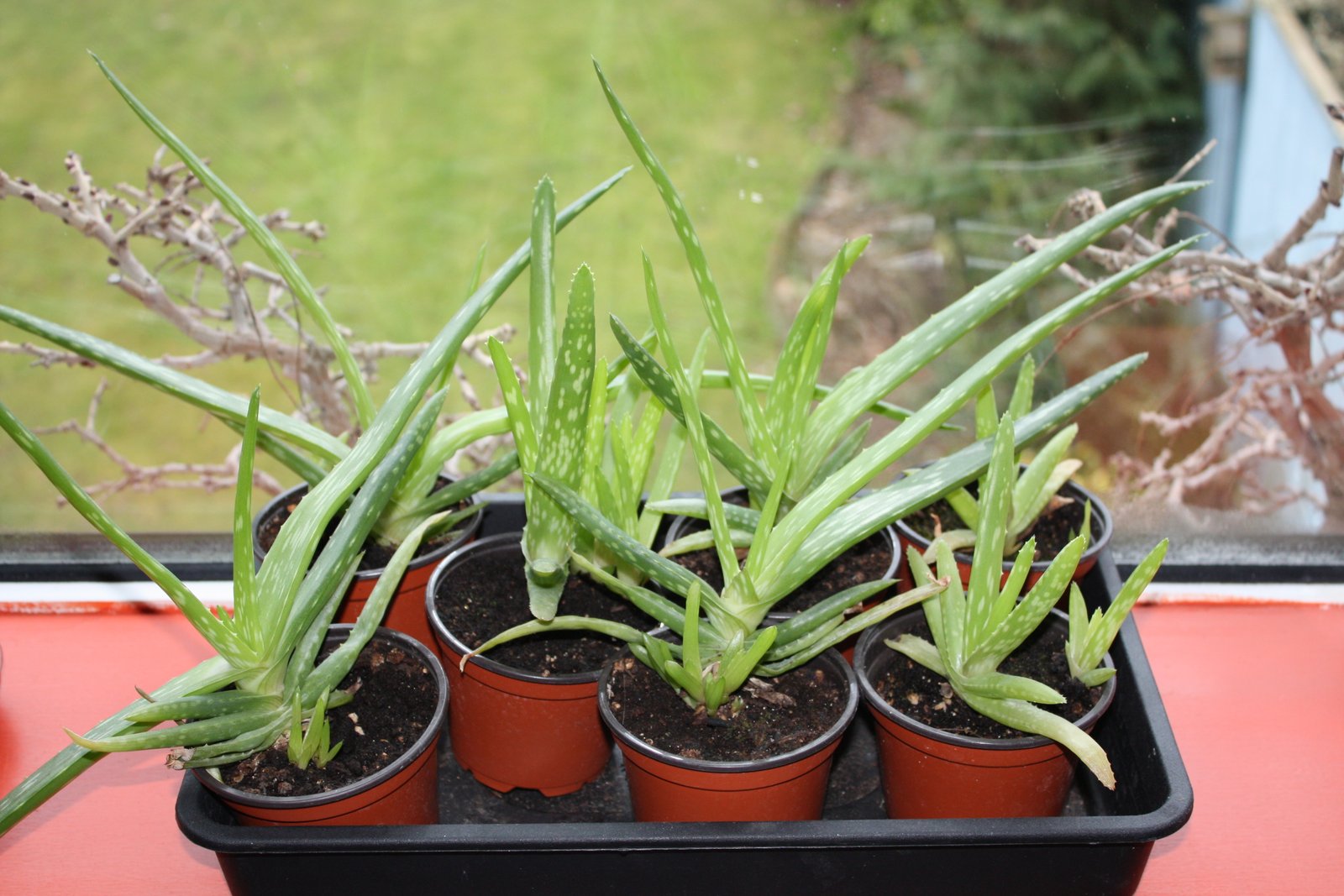
Aloe Vera
On the subject of indoor plants, a number can be propagated from leaf cuttings. Here are some examples from the RHS practical course taken last October.
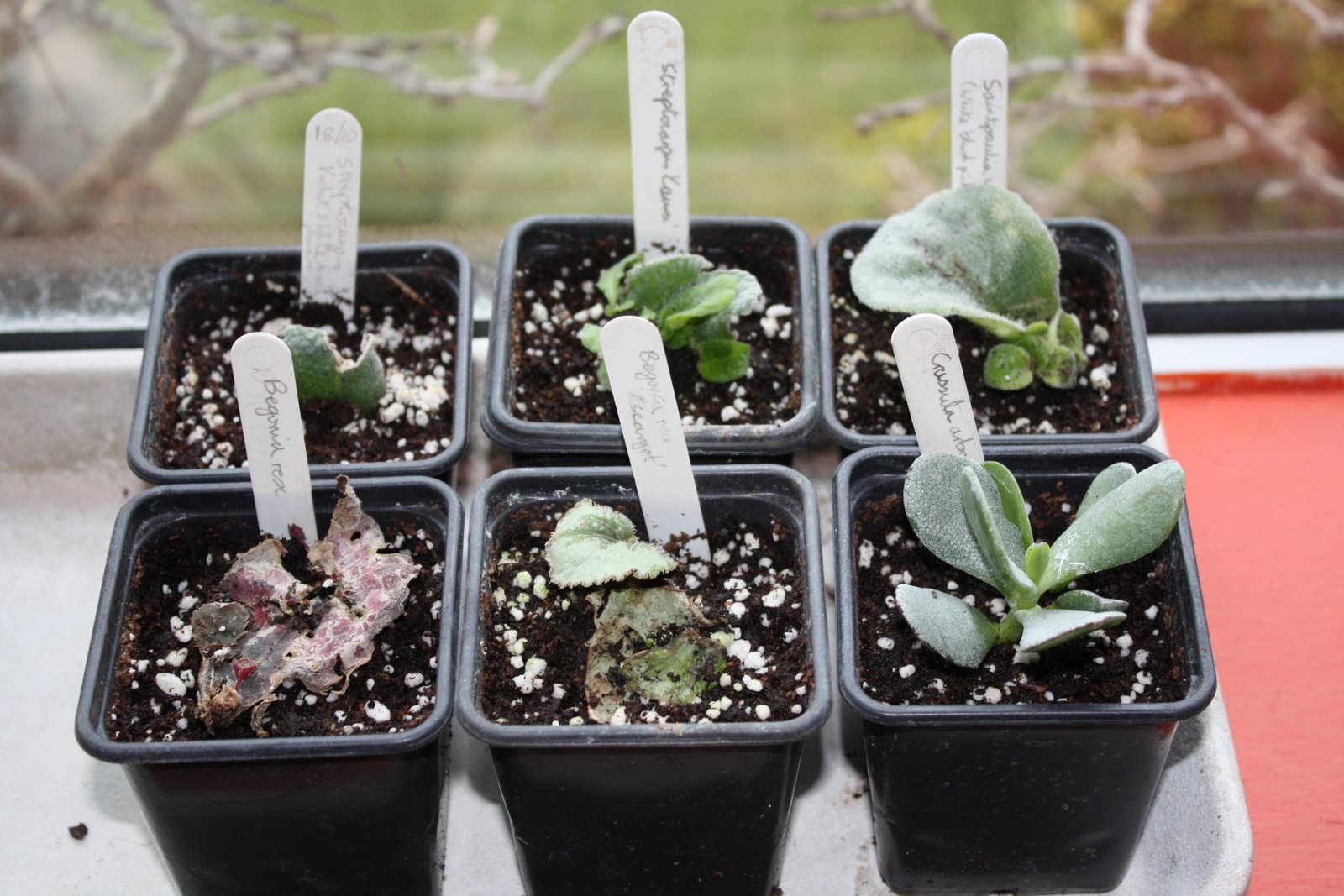
Leaf Cuttings
These cuttings do require some care (an environment that will prevent the cuttings from drying out, but is not so humid that they pick up fungal diseases) and patience, the pictures below show that it has taken more than four months for solid rooting to take place followed by the start of top growth, but for those of you who love your house plants, the opportunity to get new examples of your favourite ones may make the results worth the time and effort.
Getting the Allotment Ready For Spring
The weather hasn’t been that encouraging for allotment holders so far this year. When things haven’t been covered in snow, the ground has generally been too wet to do very much.
After putting the allotment to bed last November, all we’ve really been doing is the odd bit of harvesting (leeks and brassicas) and a bit of work to prepare the greenhouse for the new year. We’ve gone for a new approach in the greenhouse this year, having covered the floor with weed supressant membrane and then covered this with white stone chippings. We’re hoping that the extra reflected light will aid faster ripening, however the trade off is that more reflection means less absorption so things will warm up a bit more slowly. We’ll keep you posted on whether or not this works.
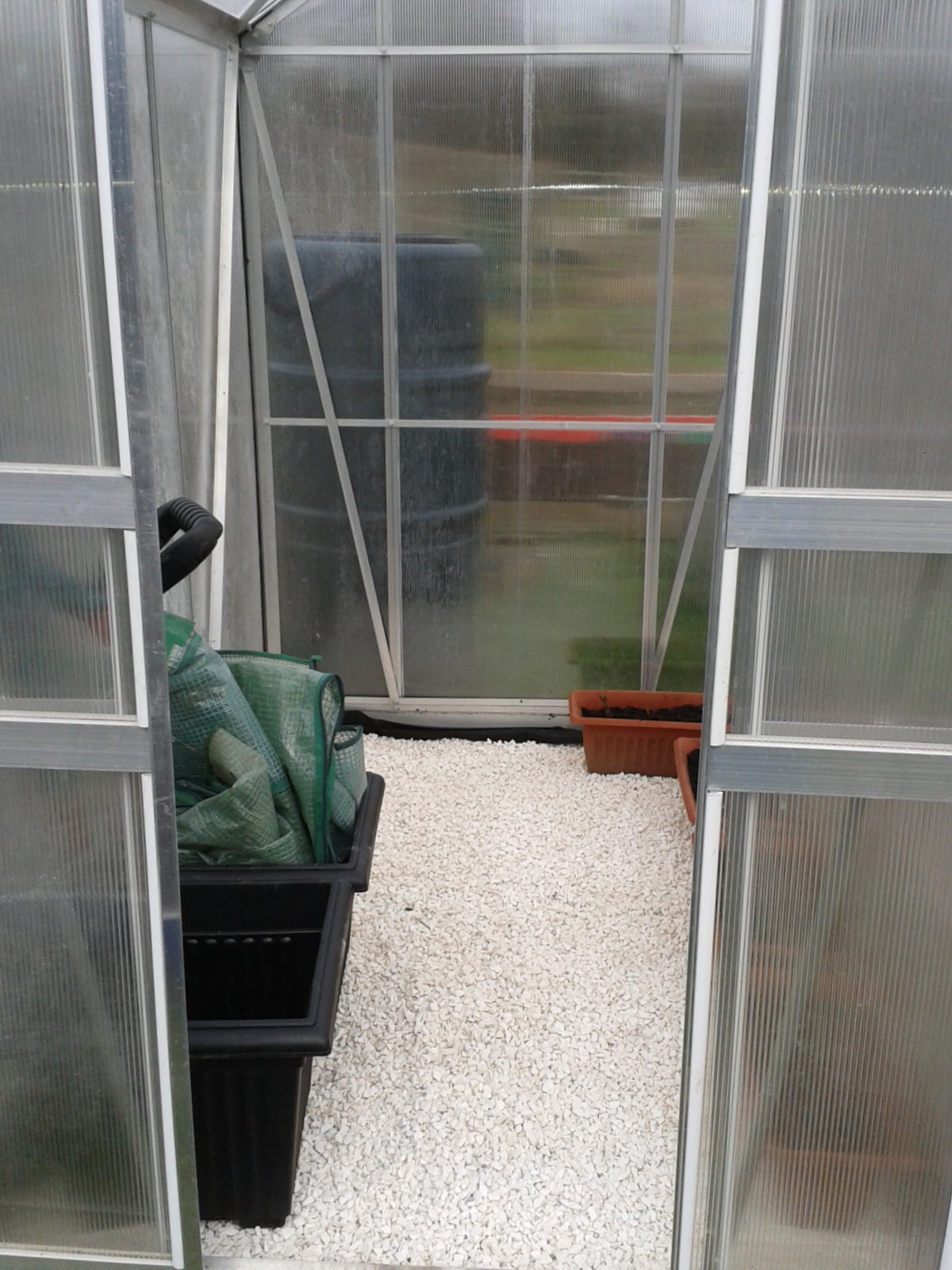
The re-jigged greenhouse
A little bit of warmer and dryer weather has allowed us to prepare some of the empty beds (weeding, rough forking and raking) and we’ve given the stawberry bed a thorough tidying. The strawberries will be enjoying their second summer and are now quite sturdy plants, so we’re very hopeful of a good harvest from them this summer.
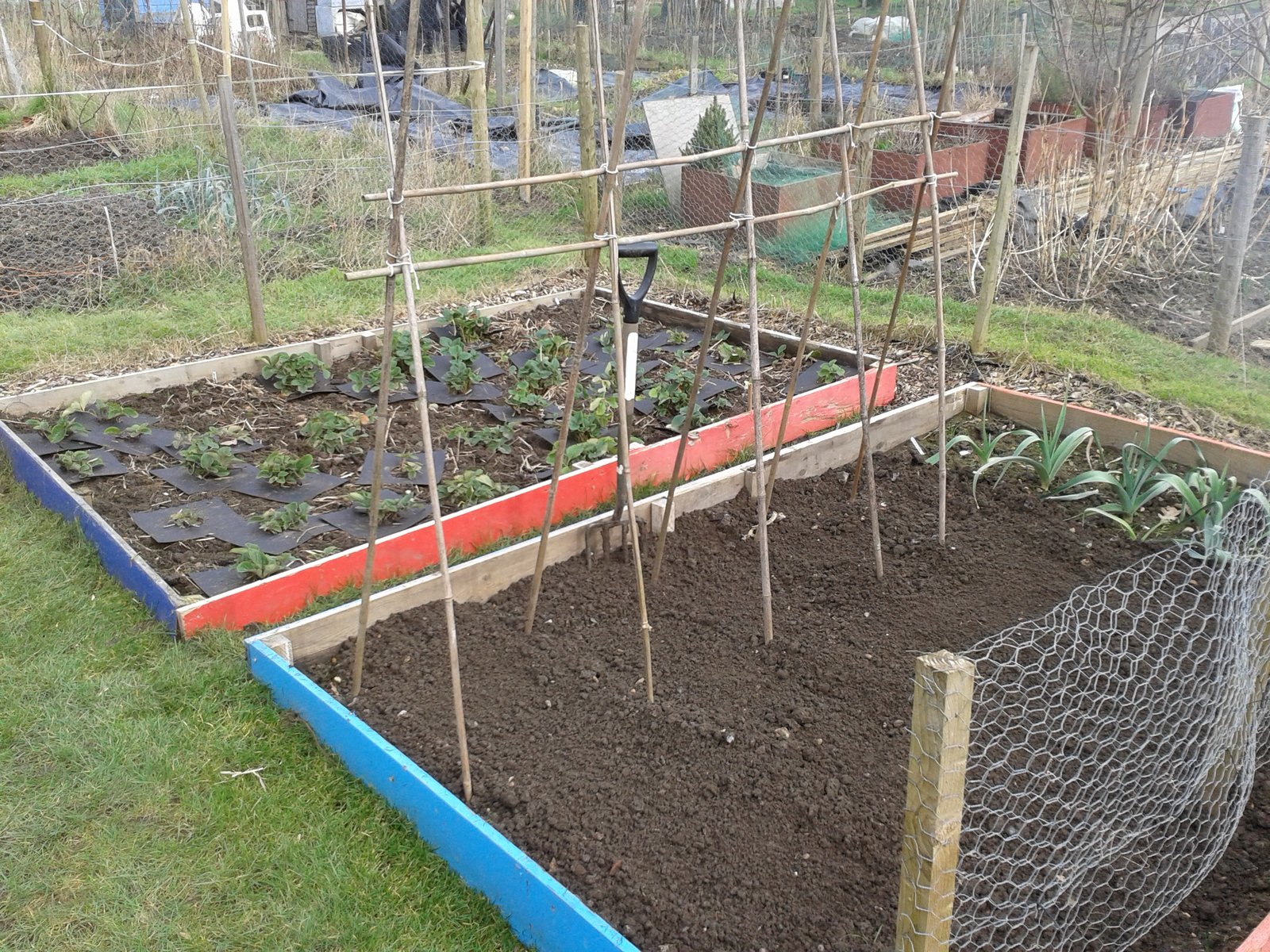
Getting ready for Spring
The picture above shows the strawberries in the distance and in the foreground is the bed that will have our peas and beans this year. We will be growing Borlotti beans again, as drying them and storing them has worked very well and we still have 2 or 3 meals left in last summer’s harvest.
Last year’s new fruit bushes should start to give a modest harvest this year and we’re keenly awaiting the first Jostaberries to see what they taste like.
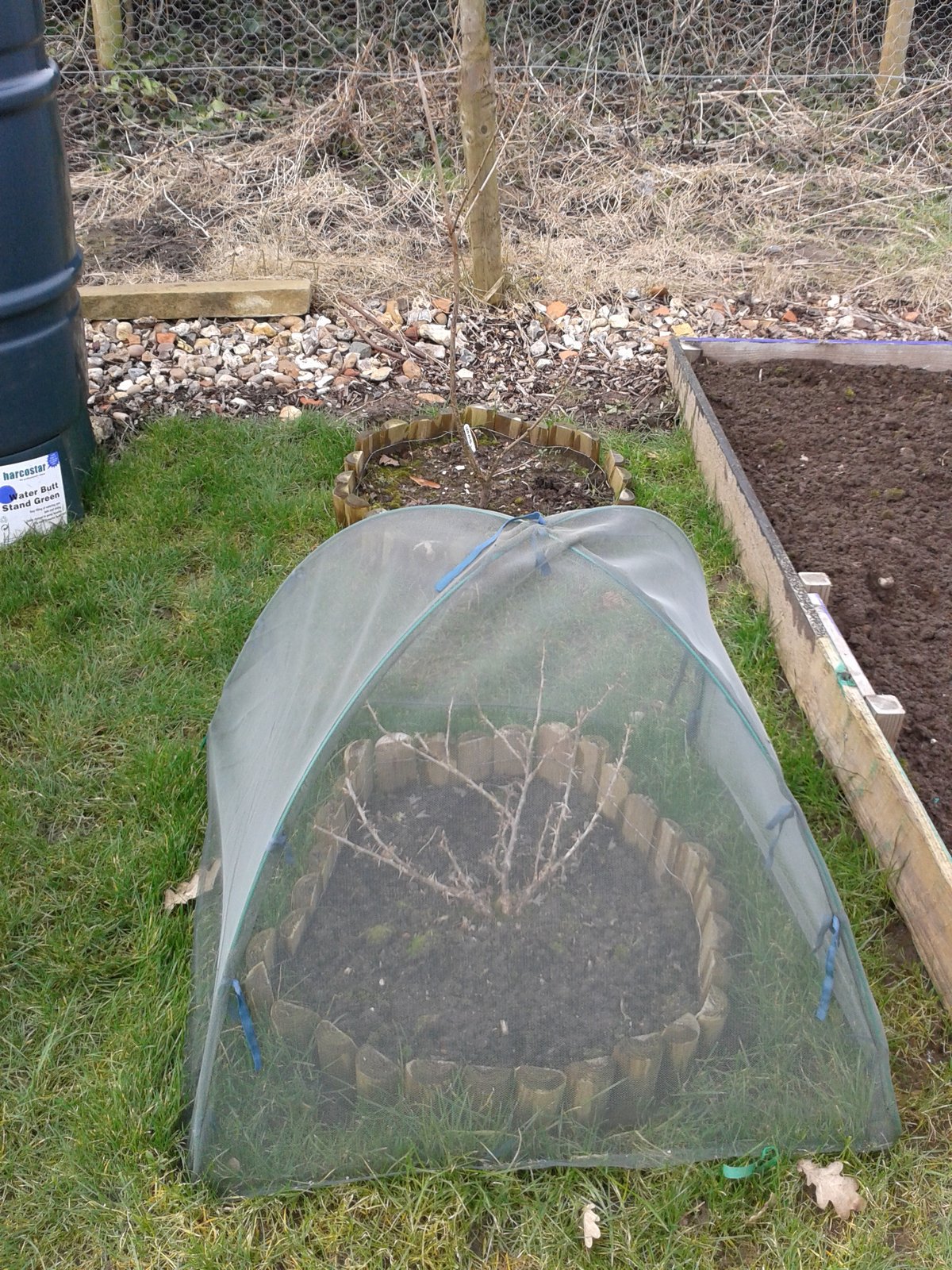
Gooseberry and Jostaberry
Doubtless there is more wet and cold weather to come, but for the last few days at least, there has been a hint of promise in the air.
It Isn’t Spring Yet, But…
There will be plenty of cold (and probably wet) weather to get through, before spring is safely here, but a couple of rather more pleasant days recently have left the garden looking as though it is starting to wake up.
In particular the emergence in the last couple of days of some crocuses/croci (choose your preferred plural) provides a real promise of things to come.

Harbingers of Spring
The rhubarb is also starting to come through and while we don’t force it, we do use a cloche to give it a little bit of protection once it has started to grow away.
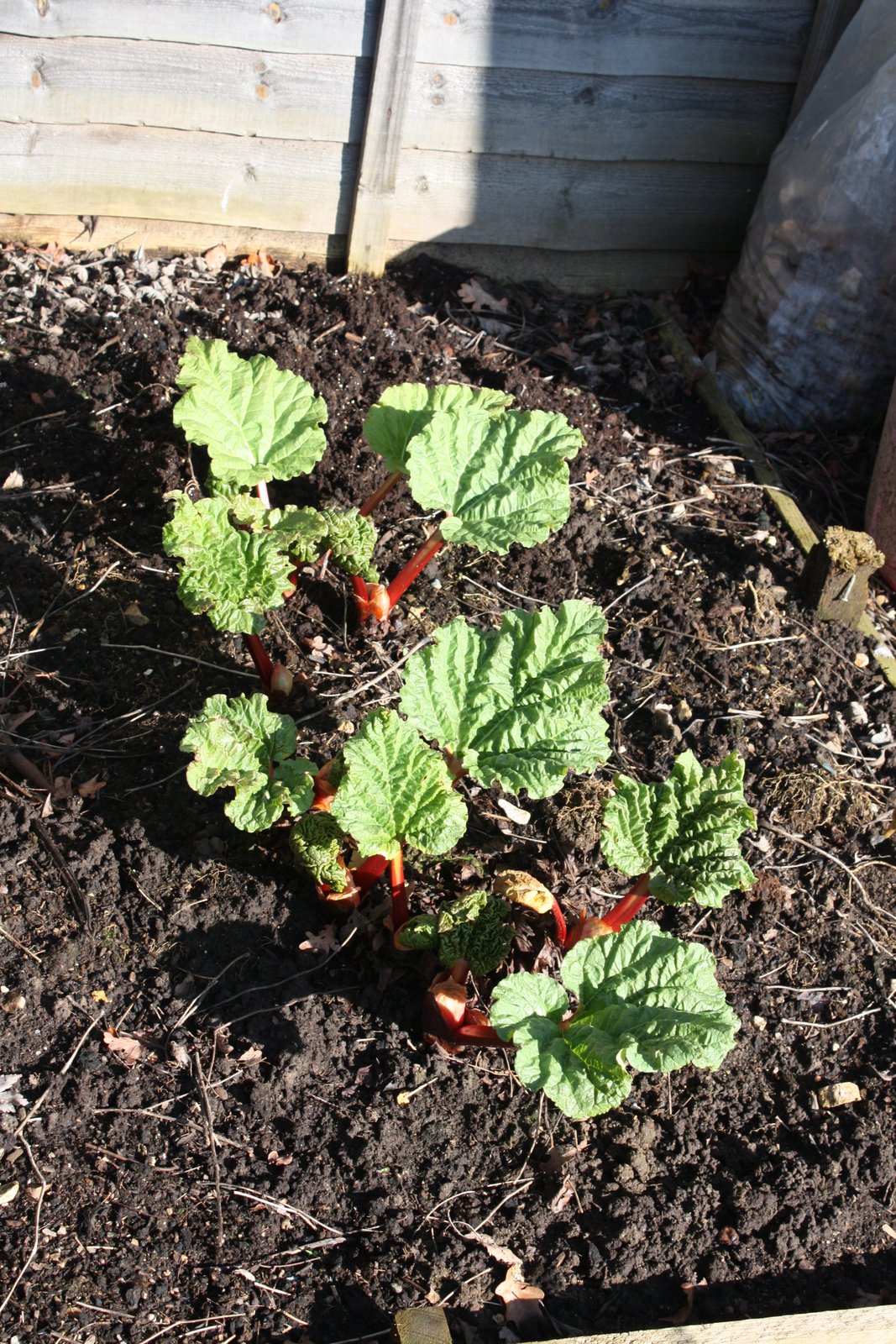
Rhubarb 17 Feb 2013
Inspired by a bit of sunshine we completed the winter prune of our Wisteria. This is now relatively mature (we planted it 15 or so years ago, but it was already showing flowers when we bought it) and we have largely got a framework, with which we are happy.
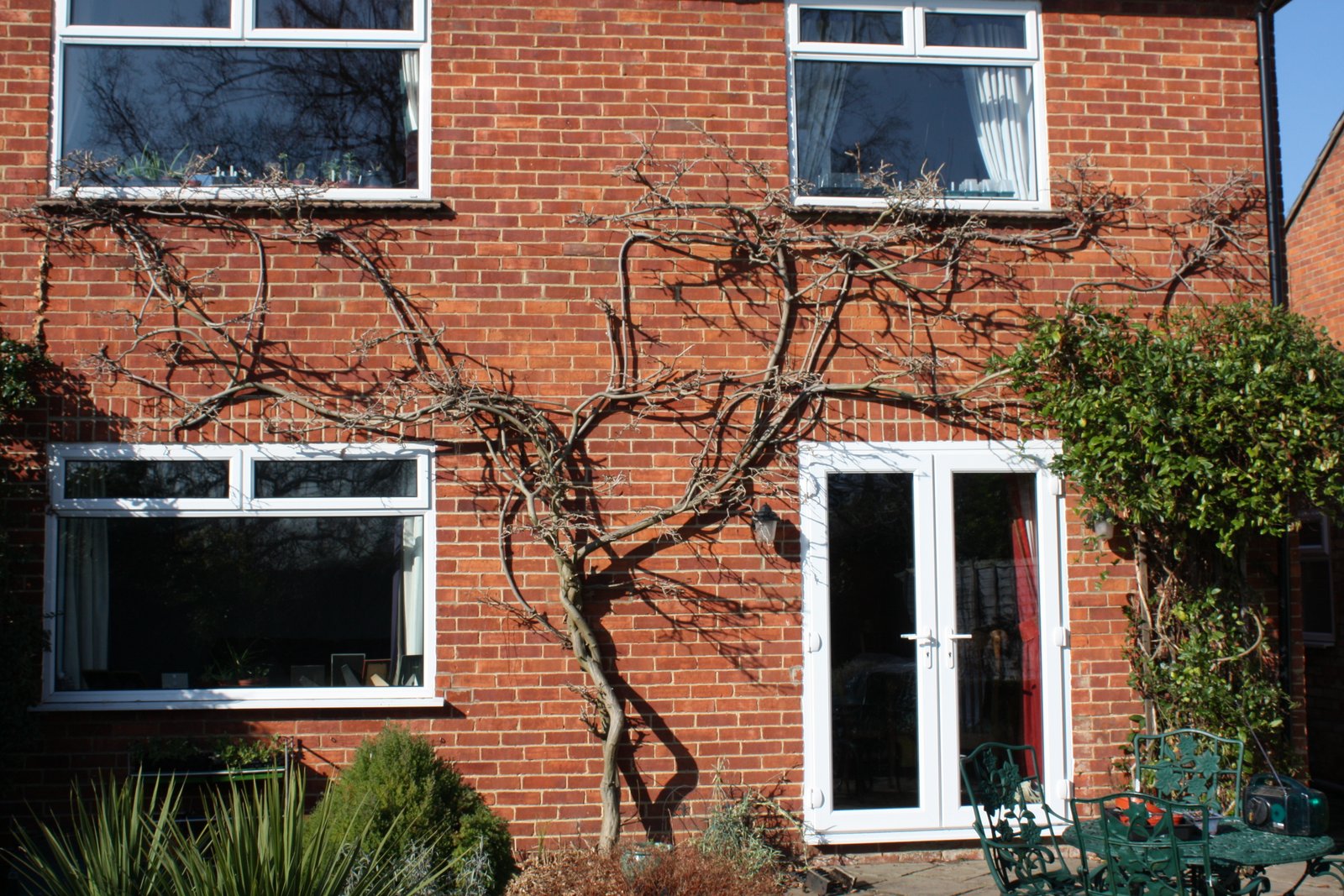
Wisteria Feb 2013
The photo below shows what it looked like four summers ago and later this year we’ll give you a sight of how it has developed since then.
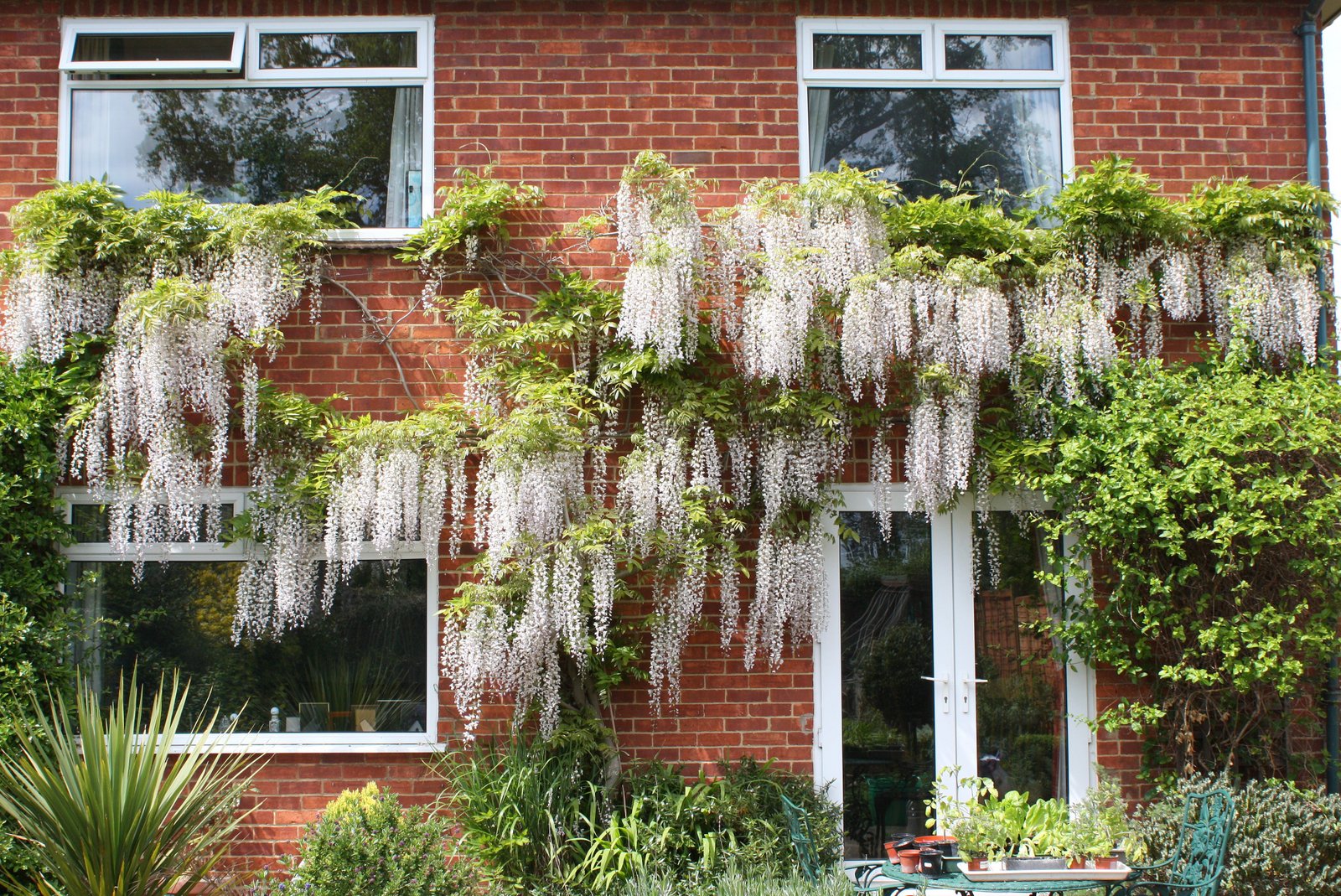
Wisteria May 2009
There is the promise of some decent weather early next week, but probably more cold to come after that so let’s hope that these early signs aren’t a false dawn.
This Year’s Stars – and the others
As the year heads to a close, we’ve been reflecting on the most successful crops (and the others) of 2012. Broadly speaking vegetative crops did well, while the fruiting ones struggled rather more.
Cabbages have done well, with our existing favourites ‘Minicole’ and ‘Kalibos’ which provided steady cropping from August until October, when we cut the remaining heads for storage and anticipate that these will keep us going until the end of the year. We also have some January King that will hopefully stand through the winter and see us on to February.
The dwarf French beans that we grew ‘Sonesta’ were excellent, high yielding, tasty and the bright yellow pods made them easy to spot and therefore easy to pick while they were still young.
Beetroot was again a solid performer especially ‘Boltardy’, the ‘Burpees Golden’ were tasty but did not give such a good yield. We had a bit of a problem with germination in the first instance, possibly because things got so dry in March (remember that).
Another outside crop that did well, perhaps surprisingly bearing in mind the weather was the sweet corn ‘Swift’. We had a glorious few weeks in late summer when every meal was started off with fresh sweet corn. We will be sticking with this cultivar.
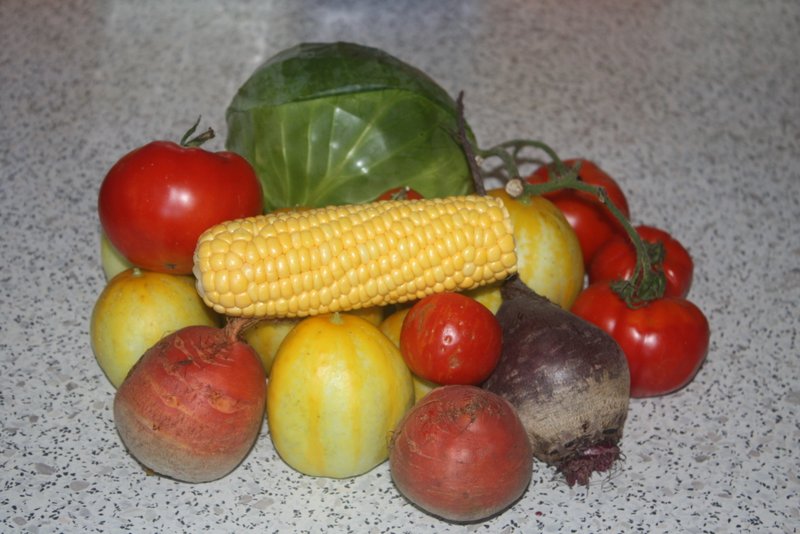
Some of this year's crops
In the greenhouse, the cucumber that we grew ‘Lemon Crystal’ was also a star performer, the small(ish) round yellow fruits tasted good and provided an attractive splash of colour in salads. Later in the year the remaining fruits provided a good base for pickle-making. We had some success with ‘Big Jim’ chillis, which are quite mild, but grow to a spectacular size. The ‘Twilight’ chillis that we grew outside are much perkier, but the wet cool weather meant a pretty poor crop. ‘Twilight’ has done well before, so we’re happy to blame the weather.
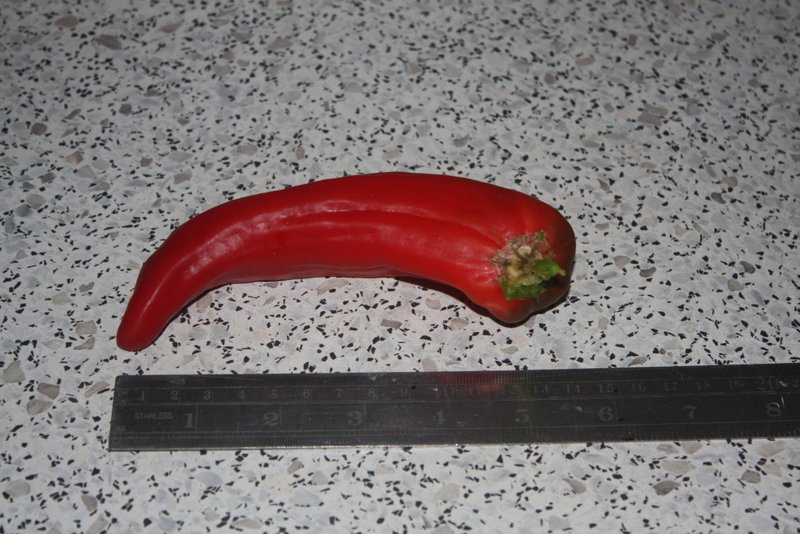
Big Jim Chilli
The big let down of the year were the cucurbits. The ‘Yellow Orelia’ courgette kept us going, but aside from that the yield from the various pumpkins and squashes was very disappointing. Given how well these plants performed last year it was a double blow to have so few fruits available for storage. The one bright spot was the lovely flavour of the ‘Uchiki Kuri’ squash, which have earned a place in next plans in the hope that the weather will allow more to grow and ripen.
Even though the cabbages did well, we had more problems with some other brassicas. The cauliflowers were chewed off by slugs/snails before they got going and the calabrese threw up very small heads, most of which turned to flower before we could harvest them.
All in all it was a year with more pluses than minuses and even the setbacks have not quenched our enthusiasm. Next year’s seeds have arrived and the spreadsheet on the study wall reminds us that it is only a few weeks before we start sowing again.
Getting to Grips with the Garden
There has been a distinct lack of news from our garden this year. Largely this has been because there has been little to report, especially on the ornamental side.
To be honest, after some early season tidying up, we rather lost impetus as the weather deteriorated. Mark’s work on kitchen gardening over the summer and our joint efforts on the allotment took priority and the cold wet weather soon dampened enthusiasm for shrubs and flowers. On the fruit and vegetable front, the asparagus bed has developed and next year we should start to harvest, so there will definitely be a posting then. Our small cabbage bed has done well with both Minicole and Kalibos cabbages in store to see us through the early part of the winter and we have had plenty of leeks. The rhubarb did very well and as well as eating lots of freshly cooked crumbles, jars of rhubarb jam made their way into the cupboard and rhubarb pies into the freezer. We had mixed success with container growing – potatoes and carrots did quite well, but the more exotic crops, chilli peppers and aubergines struggled with the lack of light and warmth, as did the tomatoes.
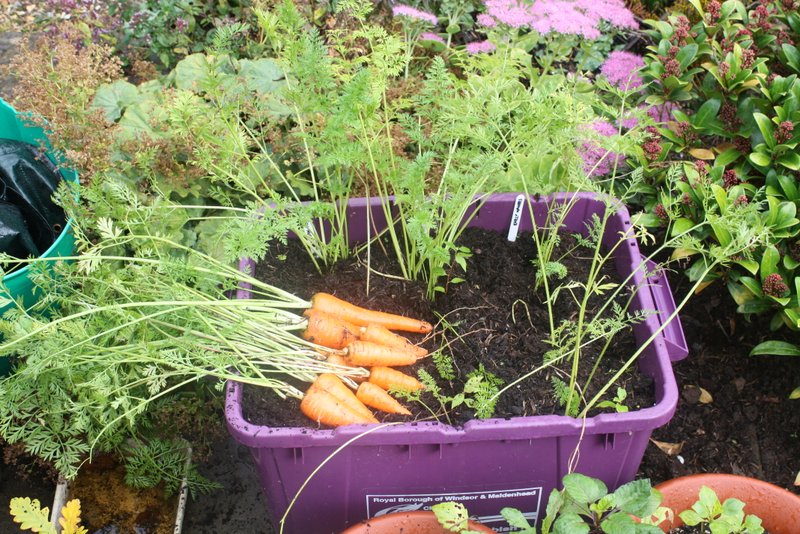
Re-using the re-cycling tub
The autumn has seen renewed efforts in the garden, especially in the back garden where we have put some serious effort into tidying up the beds, including moving a couple of the more overgrown shrubs. We should now have a fairly solid framework for next year and have plans to grow more annuals to splash drifts of colour amongst the borders.
One pleasant autumn afternoon provided a powerful catalyst. Making a small improvement in one corner suddenly provided the incentive to get the rest of the garden up to the standard of the bit that had been done. The energy provided by making a visible difference in one place inspired the latest musing.