Author Archives: Lynn Davis
Is it Finally Spring?
Looking back, the post on the 17th of February looks horribly premature.
There has been the odd day that suggested spring might be on the way, but (ironically) it has not been until the bank holiday weekend that the weather has finally started to look genuinely promising.
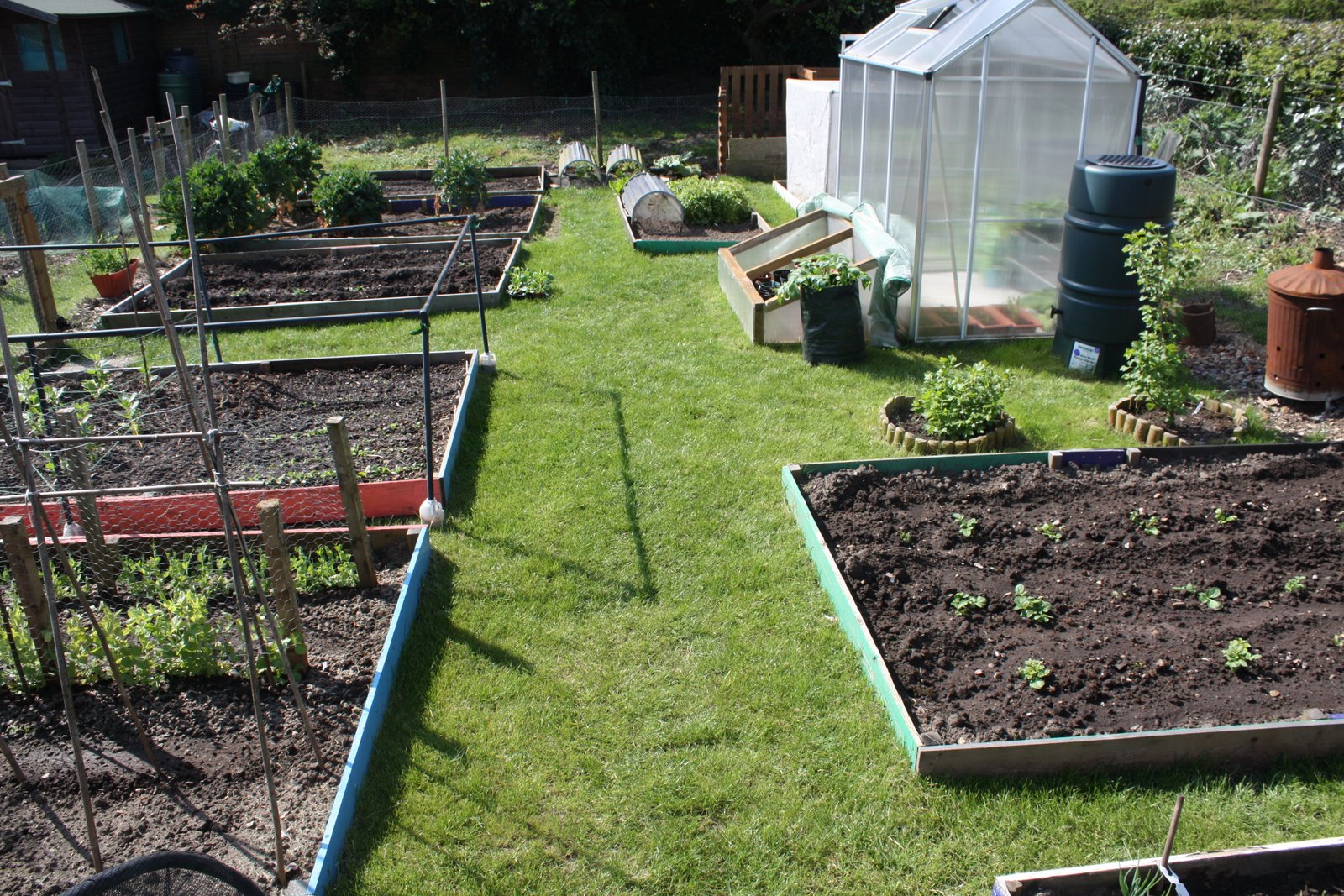
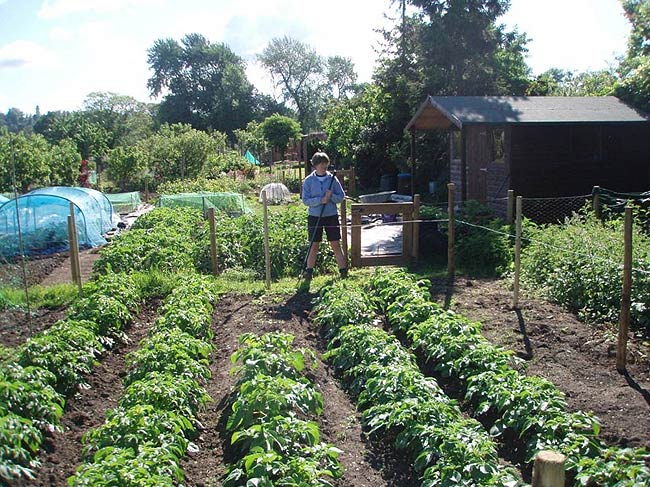
We have spent some time down on the allotment and the overall plot is looking quite tidy now as the photo below shows.
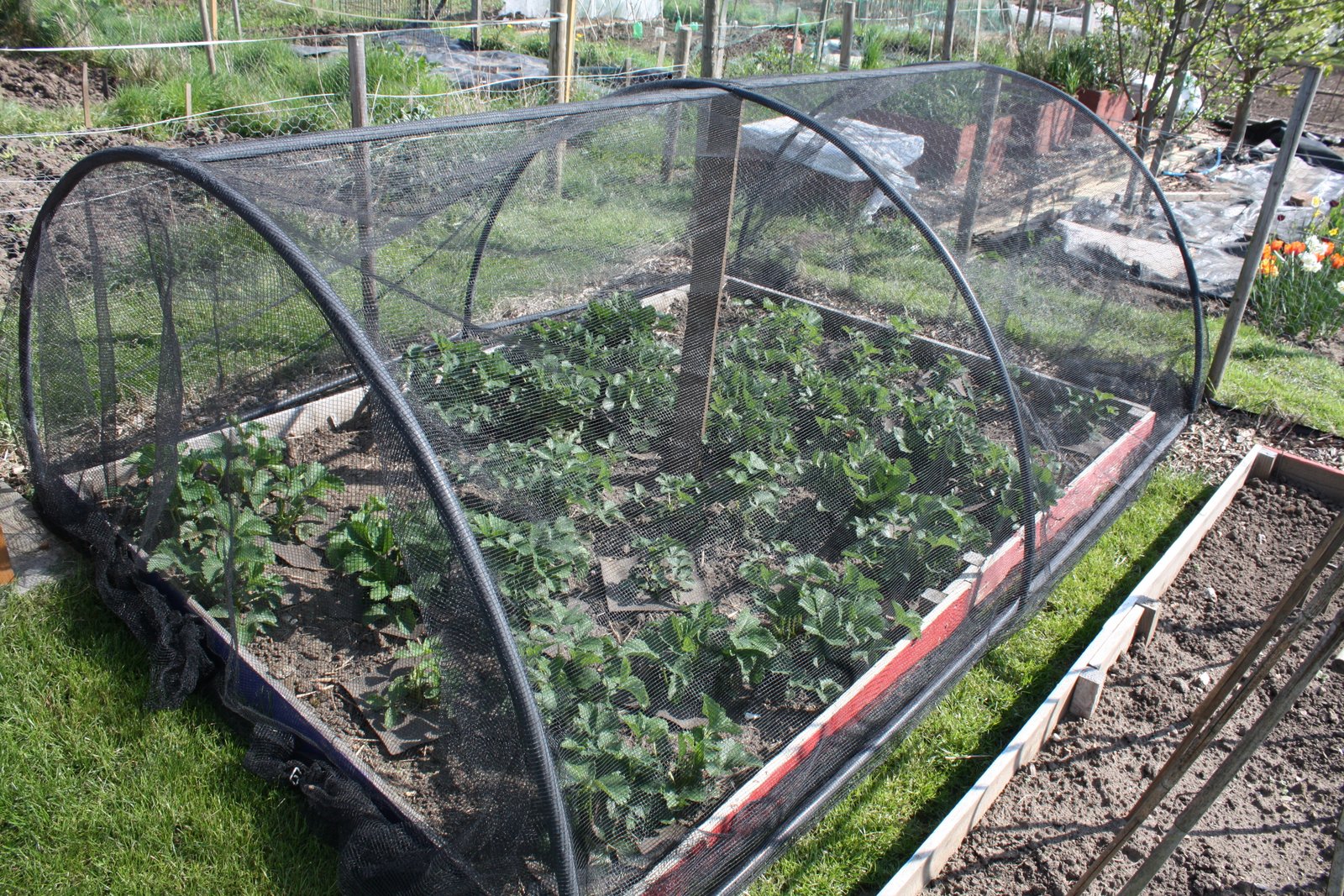
The strawberry bed is coming on nicely and (given some decent weather) this should really come into its own this year.
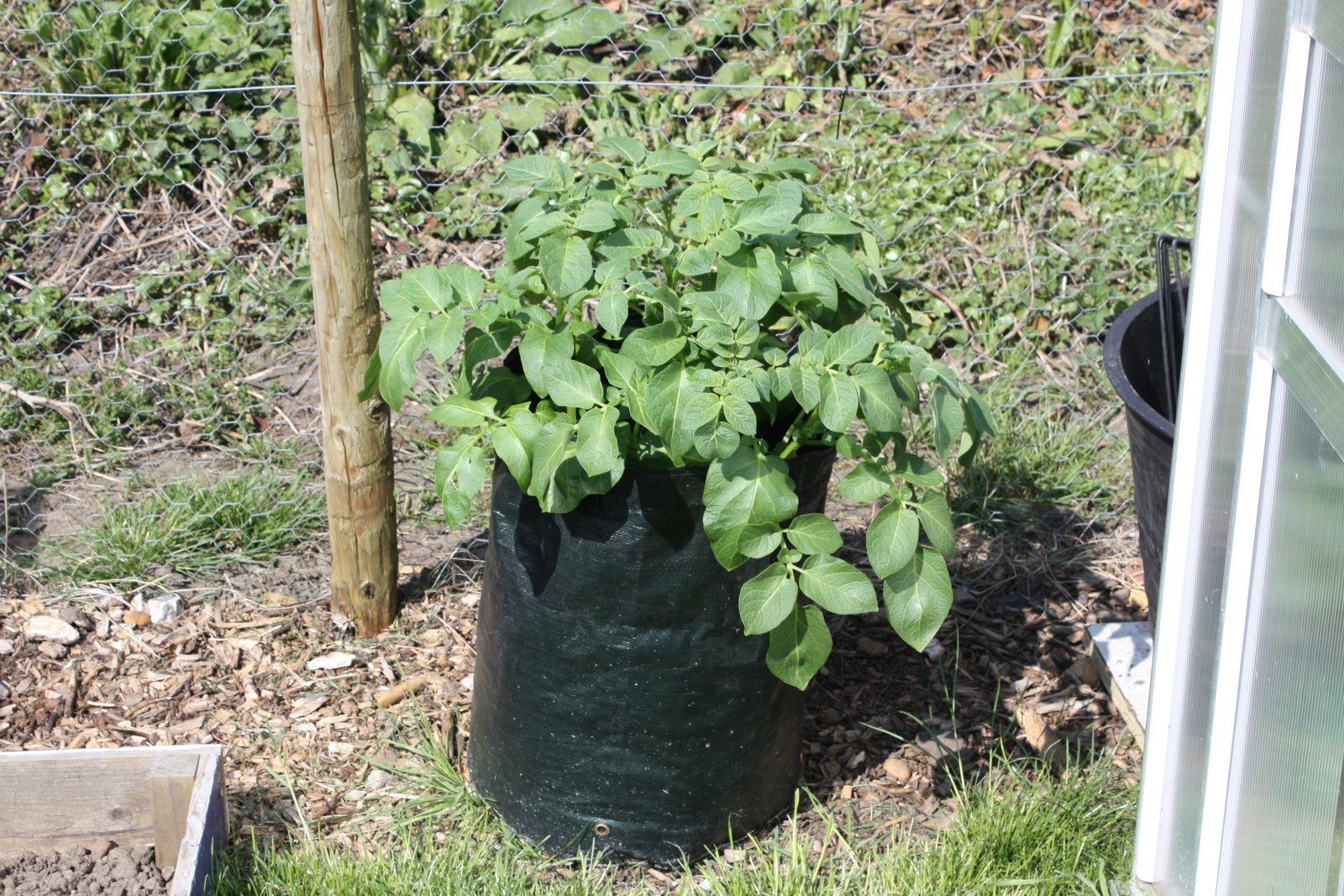
We experimented this year with sowing some early seed potatoes very early in containers inside the greenhouse. This appears to have worked (so far) and the plants (Lady Christl) are definitely well ahead of their outdoor counterparts and have now been moved outside. We are hoping that we might be able to start harvesting these around the time of the next bank holiday.
Asparagus
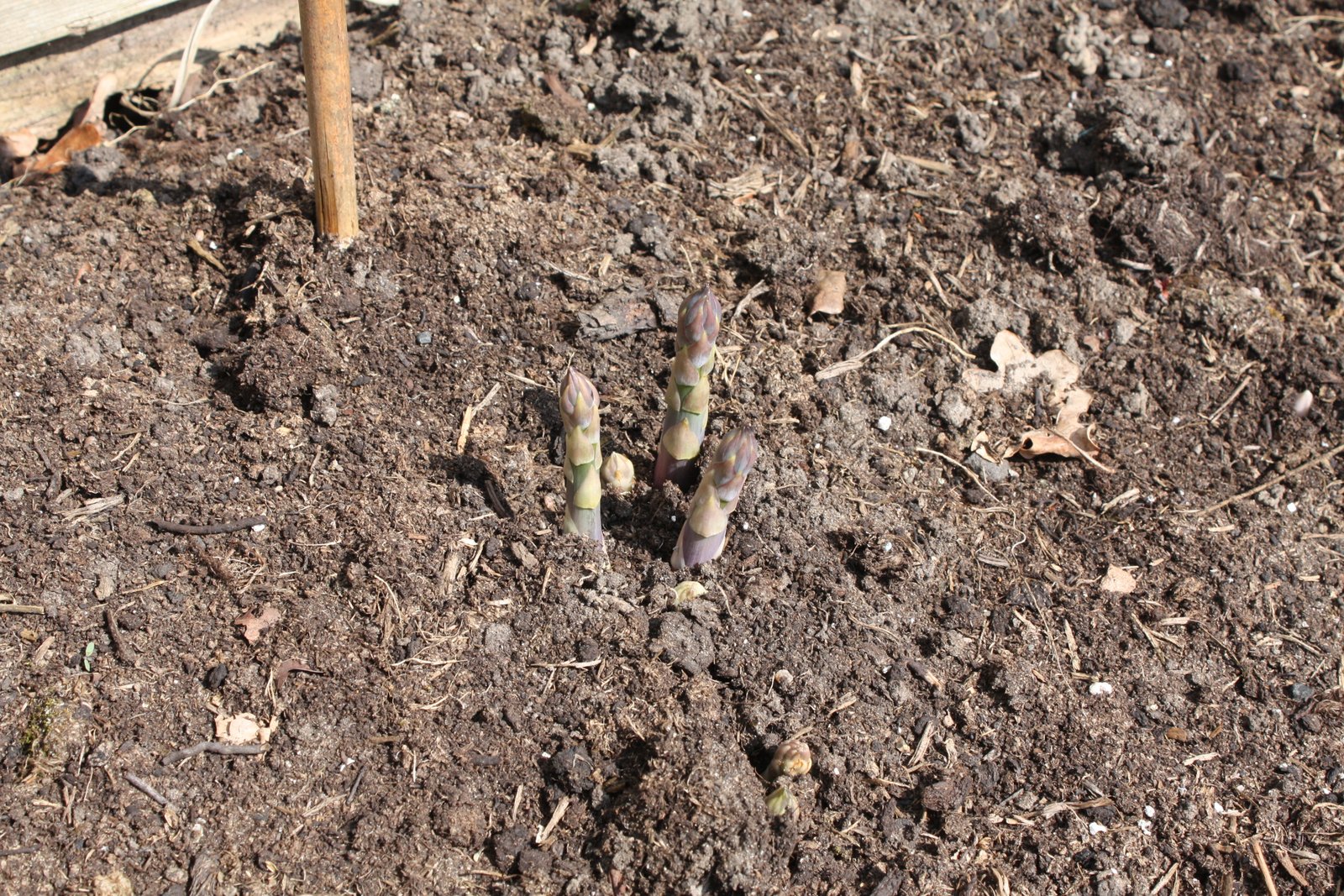
Well after a two year wait, we can finally start harvesting from our asparagus bed in the back garden as the spears have started to appear.
It is quite noticeable how much thicker and stronger the spears are this year than they were for the first couple of years of growth, so the patient wait does seem to be the sensible thing to do.
Cheap Plants
Further to the (almost) free plants that you can generate using vegetative propagation techniques, a very reasonably priced way to produce new plants is by growing them from seed. Packets of seed are cheap when compared to grown plants, even expensively bred F1 hybrid seeds cost a small number of pounds with the potential to produce many plants.
Growing from seed is a favoured option for many vegetable growers because of the very wide range of cultivars that are available, allowing the selection of crops that will thrive in your locality and give the taste that you want. There are increasing numbers of plug and grafted plants available, these allow you a head start, but as yet they do not offer the wide range that seeds give. As we described last season, our approach to growing from seed is generally to aim to produce our own version of plug plants by the time that the planting out season arrives.
We start indoor seed sowing fairly early in the year, usually in early February. We are not trying to grow prize winning onions and leeks which are often started earlier, rather we are looking to have healthily sized plants ready for planting out once the soil starts to warm up in the spring.
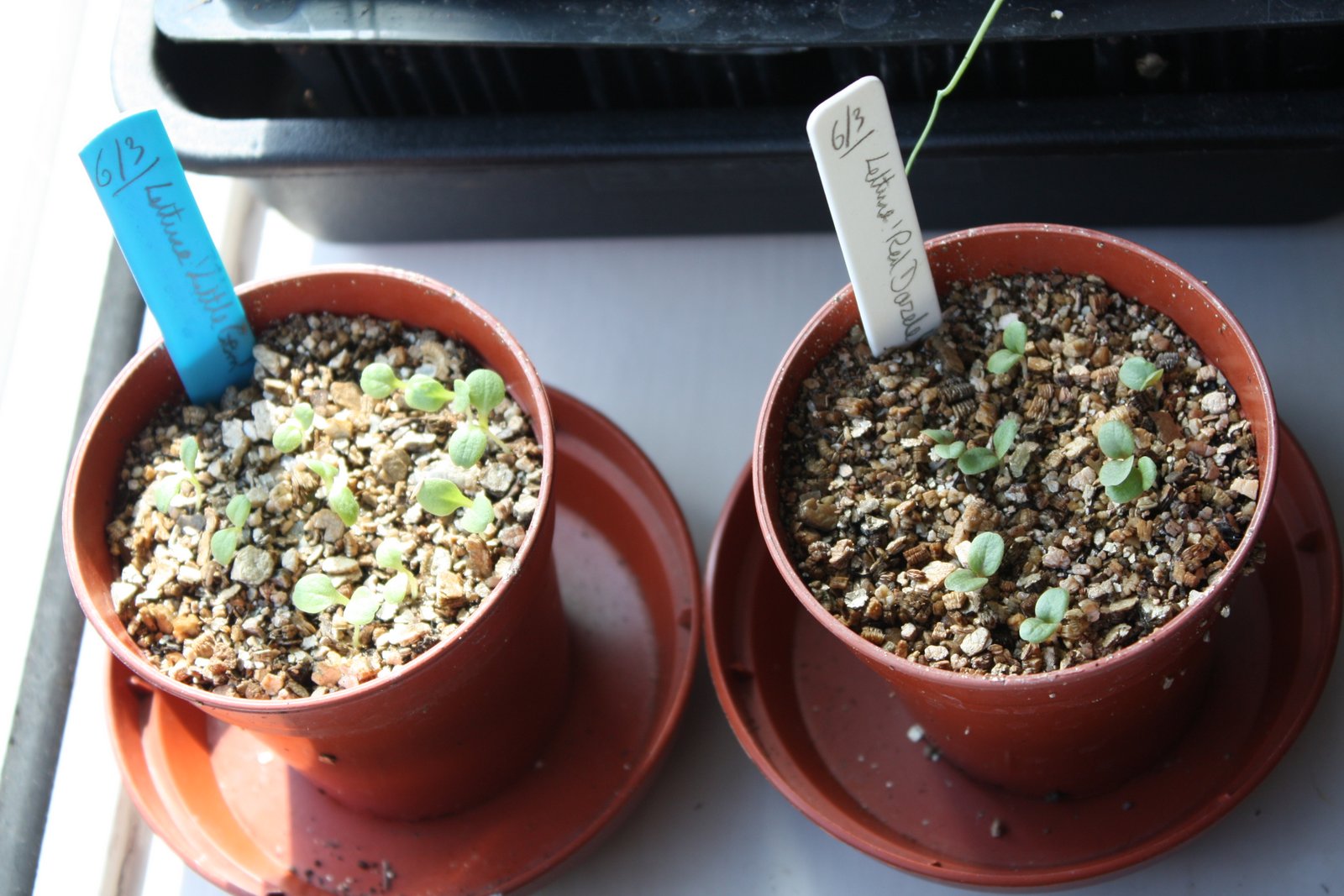
A heated propagator is a great help, but is not suitable for all seeds. Most seed packets will specify if extra heat is required and some seeds have very specific requirements, but a general rule of thumb is that if the final plant is something that will thrive in sunshine and heat (tomatoes, peppers, aubergines, squashes and flowers like dahlias and sunflowers) then some heat will help to stimulate quick germination. Our experience is that for leafier crops such as the brassicas then a slightly cooler, and thus slower, start to life gives sturdier (less leggy) seedlings. Lettuces are an interesting case as their seeds show dormancy in higher temperatures, so are best kept cooler. At this time of year a cool windowsill is ideal for lettuces.
Lettuce seedlings
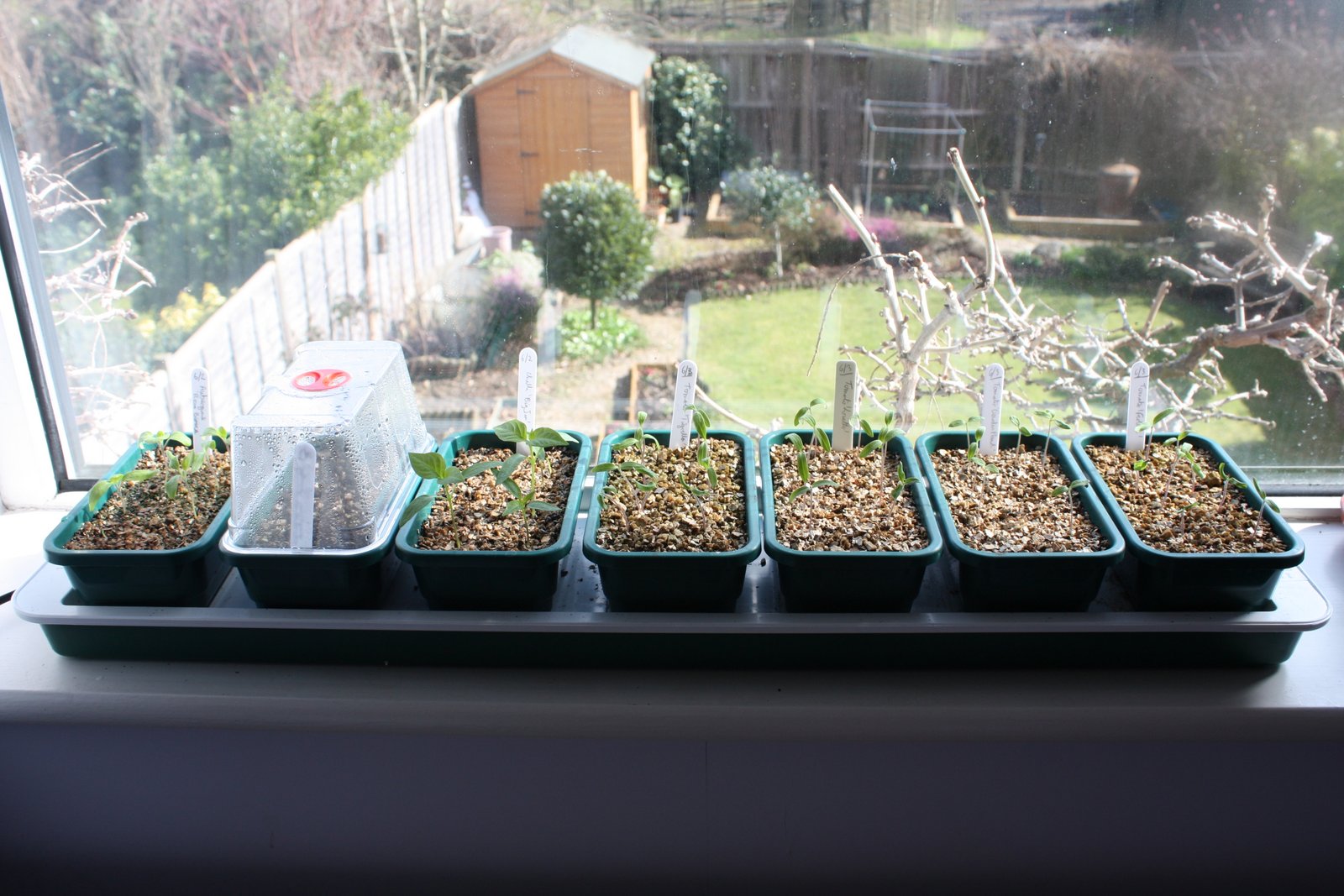
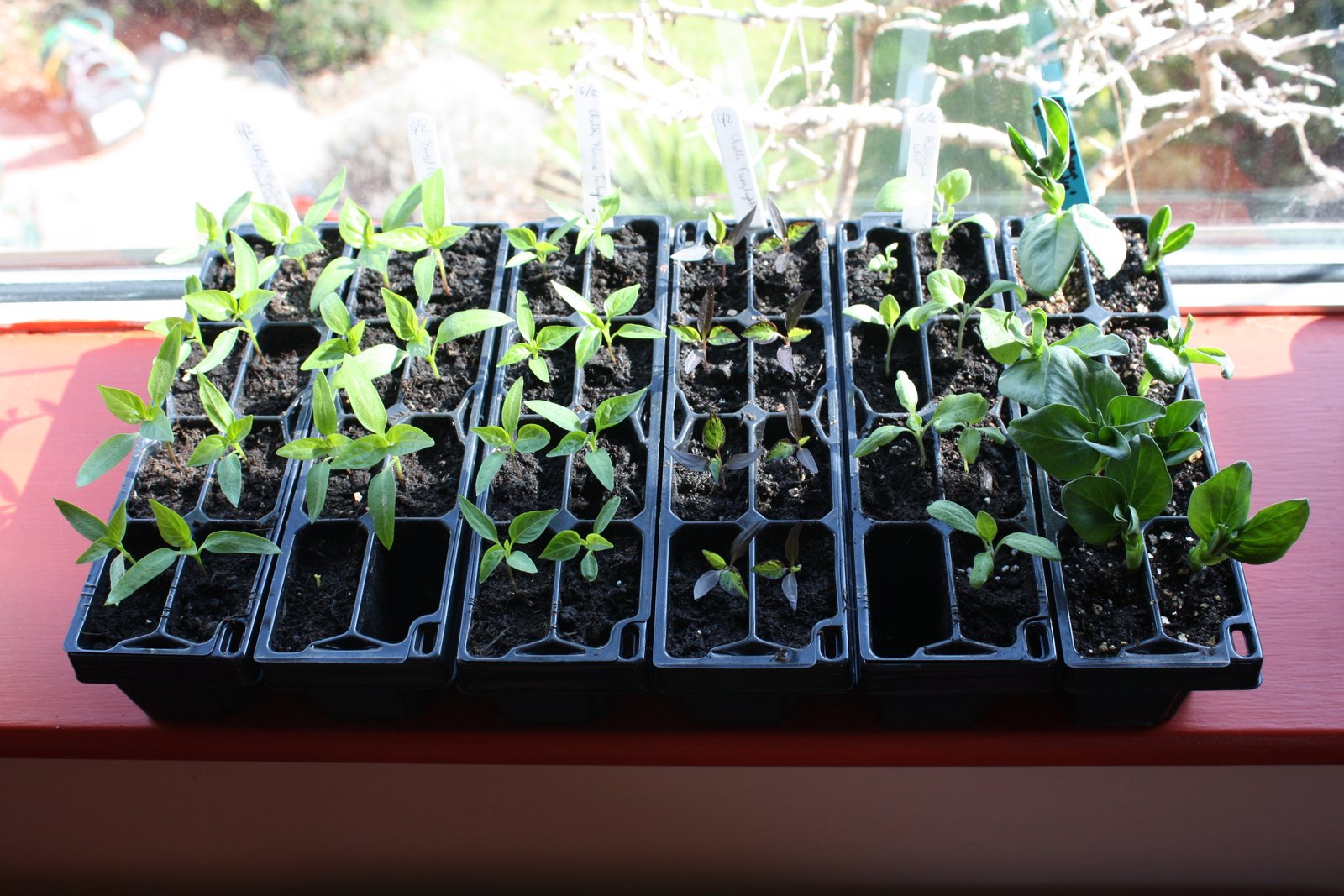
We don’t have a heated greenhouse or any external power, so much of our earlier seed sowing is inside the house. We have experimented with different propagators over the years and have found that temperature controlled propagators have proved unnecessary and that larger ones have been unwieldy on window sills. This year we invested in a simple long thin propagator tray with 7 seperate small seed trays with lids allowing us to control different plants development at a more individual level than in a larger propagator. So far this has worked well.
The new propagator
As the picture shows, this set up allows different treatment of different seeds as they start to germinate.
A key thing is to prick out the seeds before they get too big. The usual time is as soon as the true leaves start to appear. It is worth remembering that roots develop first and you want to be able to extract your new plants from the seed tray with as little damage to the roots as possible so that they settle into their new environment quickly.
On the subject of roots here is a quick diversion onto growing media. Compost for seeds doesn’t need high nutrient levels as a lot of the early fuel comes from food stored in the seed itself, what is important is the capacity to retain moisture and oxygen, so there needs to be a decent amount of porosity. We use commercial seed composts as they provide both decent water retention and good porosity, however we add vermiculite to increase the porosity, making it easier for the roots to grow. The coarse structure of vermiculite also helps to ensure that the seed coating is pulled off the emerging plants as the seed leaves swell. We always seive composts to get rid of the coarser lumps that would block root growth. Seed composts tend to have fewer of these, but they are still there. If you’ve never tried seiving compost, have a go and see just how much grot there is.
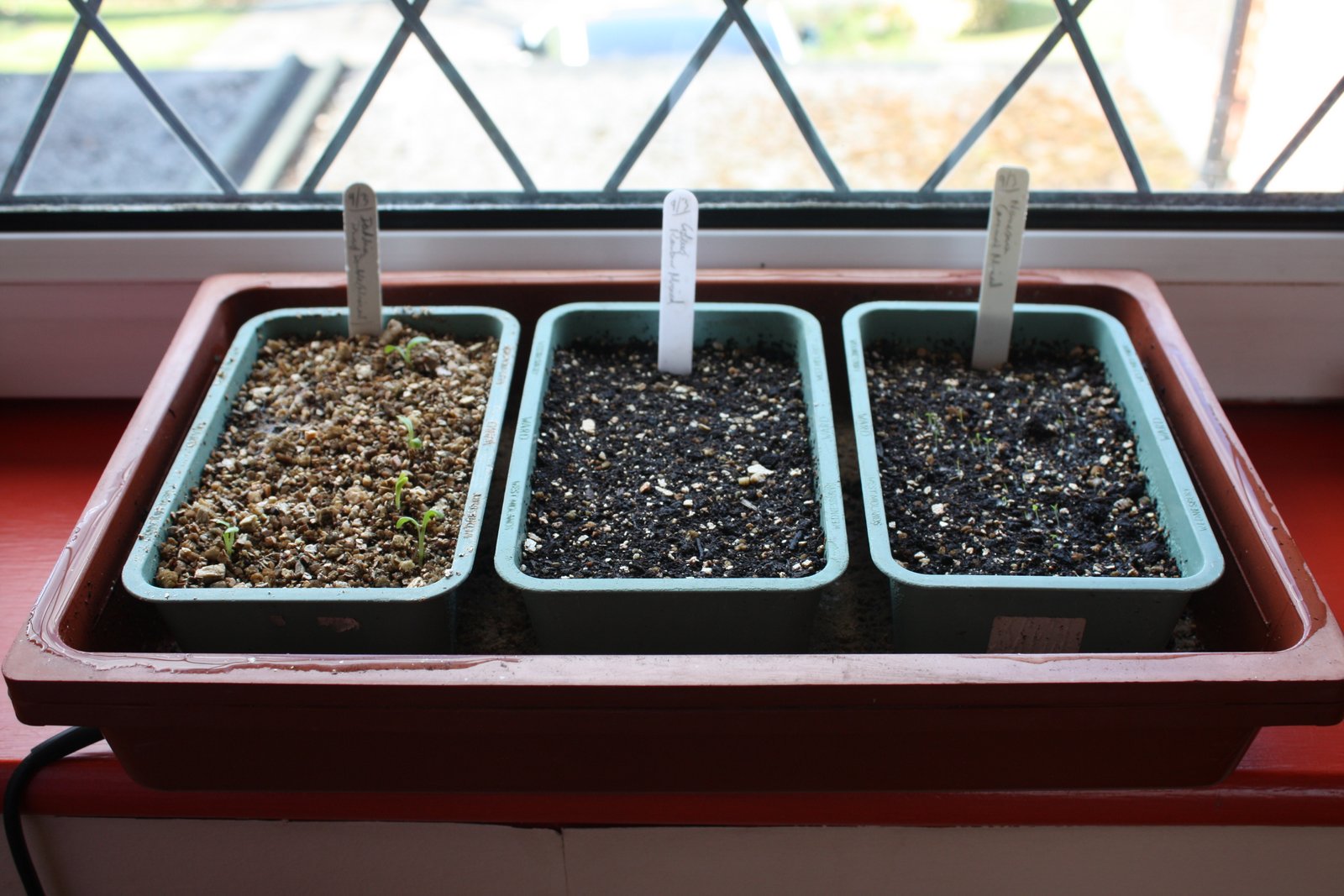
We also use a seed tray sized propagator, but again often use small seed trays or pots inside the propagator to allow us to control when the individual types of plants are removed.
Flower seedlings at different stages of development
The plants are pricked out into different types of container depending on the size of the seedling. Cucurbits (squashes etc.) develop very quickly, so these tend to go into individual pots. Peppers and aubergines come on more slowly, so we use smaller units that take up less space and allow the seedlings to develop into our version of plug plants.
‘Plug plants’ March 2013
As the weather warms up and the plants grow, we move them to less protected environments such as cold frames, the greenhouse and a warm spot on the patio to ‘harden off’. Of course in weather like we are having at the moment, this all gets a bit delayed and we are rapidly running out of window sills, so like all other gardeners we have our fingers crossed for a warmer spell.
Growing Potatoes
There was rather a flurry of news coverage last year about the role that amateur growers had played in spreading potato blight during last summer.
Allan Stevenson, Chairman of the Potato Council said. “… the blight risk is real and it would be preferable if people bought healthy, well produced potatoes from their retailer rather than grow their own.”
Some of the analysis at the time seemed to be over simplistic, suggesting that professional growers were the only ones who knew what they were doing. Whereas in reality the very different growing regimes require different approaches.
Amateur growers know that they have no serious chemical options available and therefore rely on good to minimise the impact, and spread, of blight and ensure a crop that can be stored. Good practice here is based on the level of individual plants.
Commercial growers have access to fungicides that control blight, but the scale of a farm-scale operation makes individual plant husbandry impractical. Good practice here is based on the crop as a whole.
So we have two different styles, both of which I would regard as equally valid.
However, in conversation with a farmer last summer I was told that the weather was so bad that sprays were being washed off before they had chance to work. Thus making the blight situation far worse than usual in the commercial sector.
This January, a comment piece by Liaa Leendertz in the RHS’s Garden Magazine advocated giving up “tricky annual crops” such as potatoes. This is a position with which I heartily disagree. On practical grounds, it is relatively easy to grow a reliable crop of potatoes (as an amateur) through careful selection of varieties and good husbandry. I know from conversations with other growers that we are not the only people still using sound potatoes stored from last year’s crop.
Practicality is only half the story. A main reason why we will continue to grow potatoes on the allotment is romance. The emergence of the fresh green shoots in April and May is a real sign that spring has arrived.
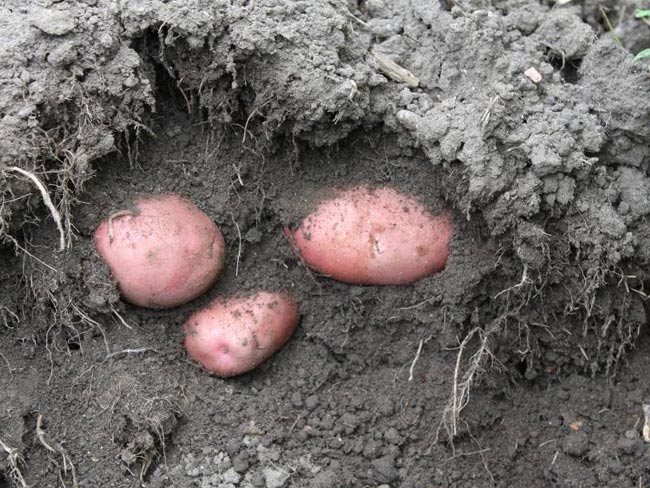
Then when it comes to harvest time, is there any crop that epitomises the accrual of buried treasure as much as potatoes. Root crops offer a venture into the unknown, but each carrot top is one carrot (however good bad or indifferent), whereas each potato haulm is a signifier of an unknown trove waiting to be discovered.
So our recommendation is be practical:
- choose varieties that are disease resistant;
- choose varieties that will grow well in your climate and soil;
- feed them well;
- stay on top of weeds and pests; and
- monitor carefully for signs of disease and act accordingly.
Then you can enjoy the romance of harvest time.
Potatoes
Despite the fact there have been mumblings about whether or not amateurs should grow potatoes (a sentiment with which we wholly disagree by the way), they are a key part of many allotments and vegetable gardens and a well managed crop can provide a staple that will last throughout the year.
Domestic potato harvesting usually takes place between early June and late September, with a general rule of thumb being that the later crops are the varieties that will store for the longest. Potatoes are easy to store, they simply need to be kept in a dry, cool (but frost-free) and dark place. The usual method is to keep them in sacks (either hessian or paper) in a garage, cellar or similar place. Do make sure that they are also protected from rodents.
Some people suggest that it is not necessary to clean potatoes prior to storage, but we strongly recommend that you do. The main reason for this is that the process of cleaning them provides an opportunity to inspect them properly and then sort them into those that are suitable for keeping (no damage, no signs of pests such as slugs and no signs of disease). The “one bad apple” adage applies just as much to potatoes as anyone who has discovered a sack of largely rotten tubers will testify. Storing only the sound potatoes is the first step towards having a crop that will keep. We also recommend inspecting your stored tubers every 4-6 weeks while tey are in storage and removing any that show signs of deterioration so that you can use them promptly.
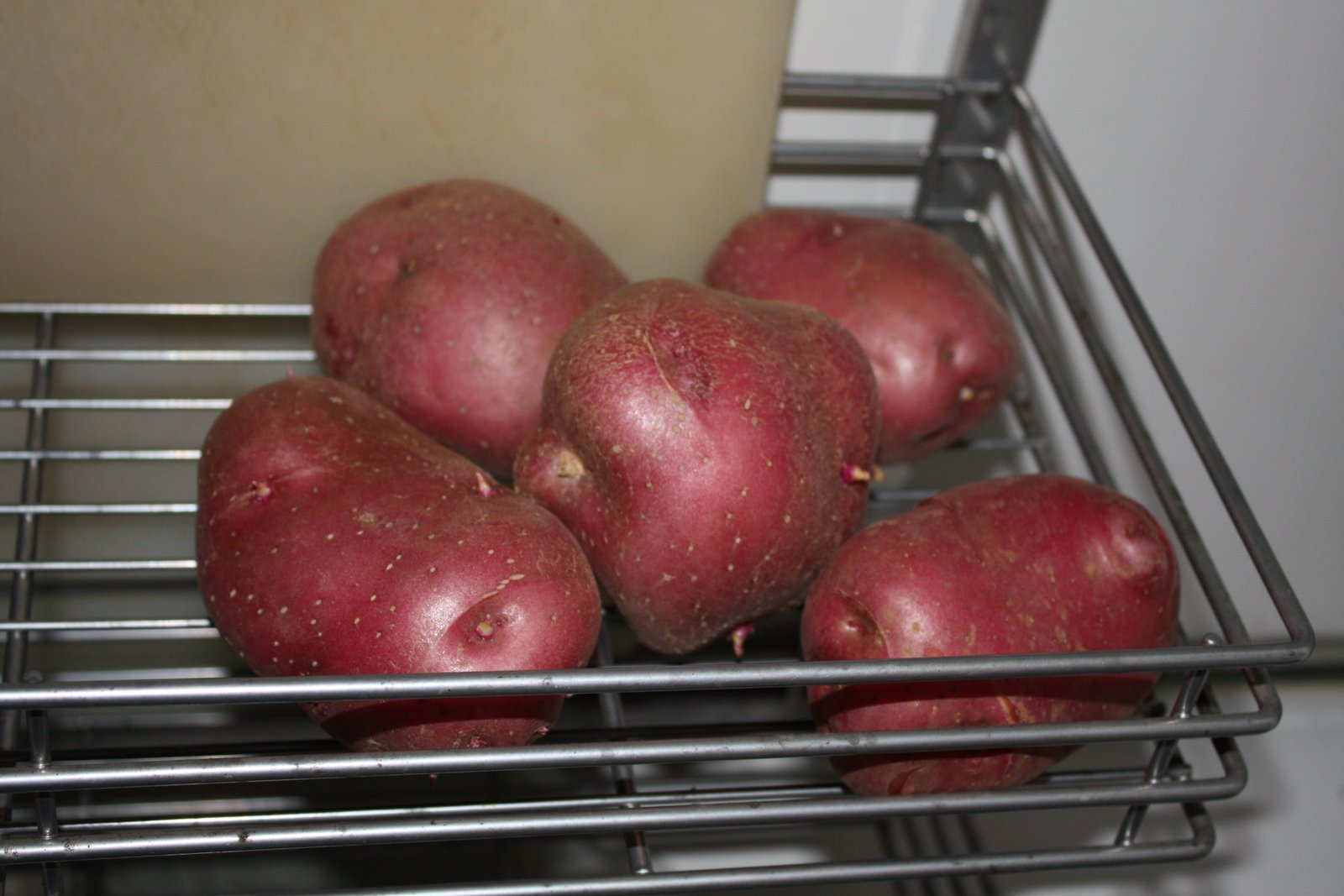
Using this approach, the potatoes that we had stored in our garage lasted until mid-April last year and having put less ground aside for them in 2012 we expect to finish off the last of the current crop in mid-March. Over the two years we have lost barely a handful of stored tubers to disease and the regular checking has meant that these have not had time to infect the others. We transfer them to the kitchen in small batches so that we don’t have to nip out every time we want a spud. The photo below shows that last year’s ‘Rudolph’ potatoes are still in good shape.
So far so good, but who grows a crop that is comprised only of sound, disease and pest free tubers? Well not us that is for sure. This means that at harvest time there is going to be a glut and this is most likely to come when you harvest the main crop varieties (grown for storage) and the last of the earlies (which won’t store that well anyway).
The first thing that you can do is to eat the tubers that are not good enough for storing, but bear in mind that you may well have been enjoying “new potatoes” for a couple of months by this time and that in the rare event of a British summer, you might not be ready to move onto winter fare like baked or mashed spuds. Another outlet is friends and family, ours are certainly grateful for gifts of fresh potatoes that may only keep for 3-4 weeks, but will be eaten far more quickly than this.
If, like us, you are trying to move to a situation where you don’t have to buy potatoes any more (we last bought some in the spring of 2011) then you probably want to make the most of of your crop, so alternate methods of preservation are important. To this end we invested in a deep freeze for the garage last summer, which opened up the opportunity to store potatoes in cooked form, where the options are legion
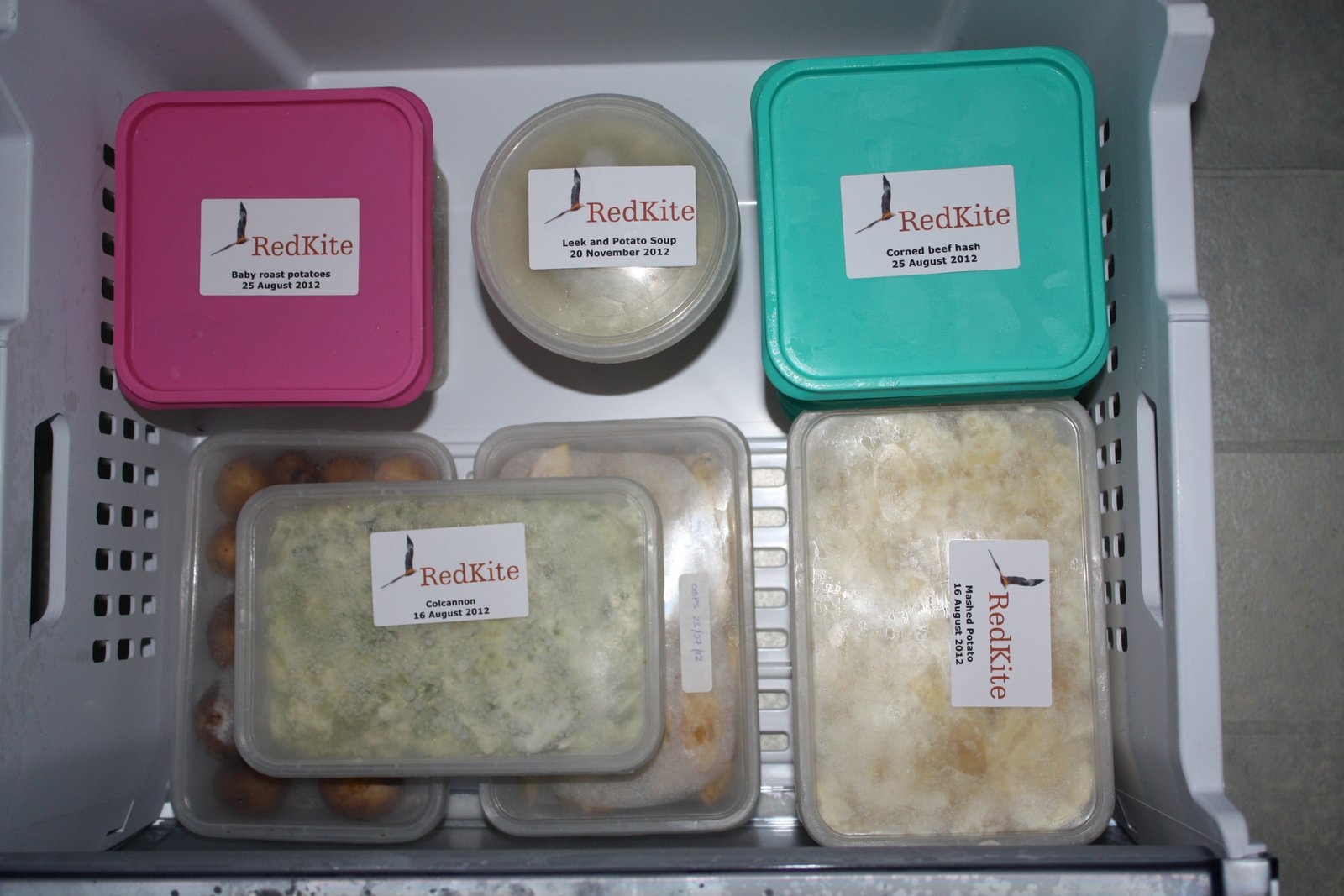
Probably the easiest way to freeze potatoes is to cook them and mash them and we have a few tubs of mash stored away, but a bit more work can give you corned beef has or colcannon (essentially mashed potato and cabbage, but with other ingredients and seasoning to personal taste).
Moving further up the effort scale are the dishes that are topped with mash – cottage pie, shepherds pie and fish pie are all classics. In terms of time, economies of scale really pay off here. It takes almost the same amount of time to prepare half a dozen of these as it does to produce one, and who wouldn’t want a “ready meal” of known provenance at the moment.
A household favourite is stuffed baked potatoes and again making a batch takes little more time than cooking a couple for dinner. The process is simple; bake the potatoes while preparing the other ingredients for stuffing. When the potatoes are fully cooked, scrape out the centres, mix with the other ingredients and stuff the resultant mix back into the skins. Once the potatoes are cooled they can be frozen, either individually wrapped or in plastic containers such as ice cream tubs.
The flavouring need only be limited by your imagination, some of our favourite ingredients include grated hard cheese (Cheddar, Red Leicester, Double Gloucester), onion, bacon, chorizo, smoked salmon, canned tuna, cream cheese, sweet peppers and herbs. A combination that produces real comfort food in the depths of winter is chorizo, cheese and onion. Careful selection of ingredients mean that stuffed potatoes work just as well for vegetarians as omnivores.
Another option that has worked for us has been to make chips. Part cooking them (deep frying), drying them off and then freezing in batches once they are cool, provides frozen chips ready for deep frying or oven baking at your leisure. A deep fat fryer is a clean way of cooking chips, but we don’t have one, so our biggest heavy-bottomed pan comes into play and the hob gets a wipe down afterwards.
We have also found a way to use those potatoes that are sound but seem to be too small to be useful. A roasting dish of hot oil with a bit of salt and pepper and a whole batch of “baby roast potatoes” can be prepared and then used a handful at a time. Indeed after writing this I think that a couple of handfuls will be coming out tonight to go with some cold pork and pickles (more of them later in the year, but for now here are the remnants of last year’s efforts).
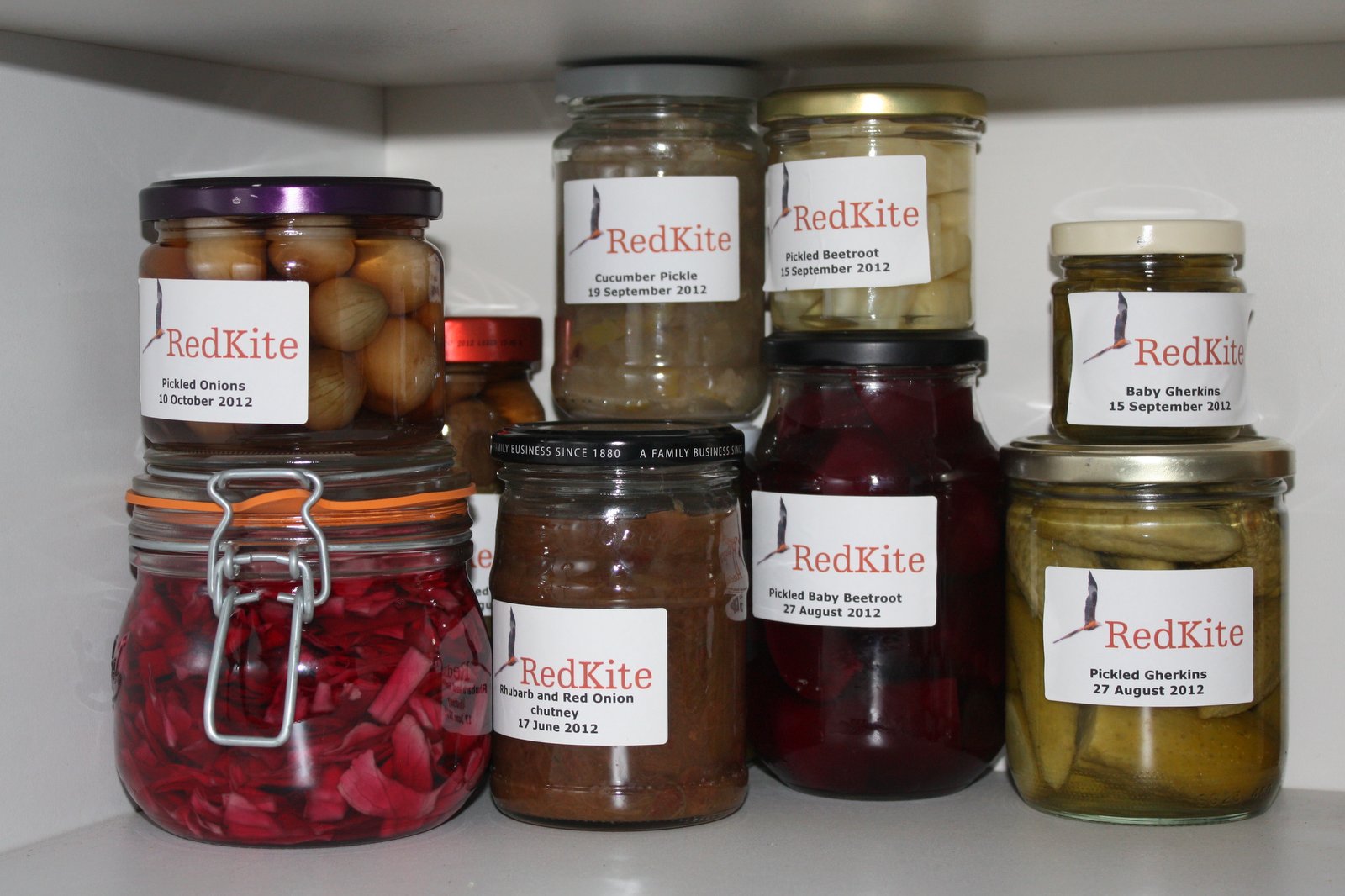
The final thing that we have tried is soup-making. Potatoes make a nice base for a variety of soups, but one of our favourites is simple potato and leek.
Our potato and leek soup – all measures approximate
- Peel and chop 1Kg (2.2 lb) of potatoes.
- Boil the potatoes in 1.5 Litres (2.5 pints) of water.
- When the potatoes aresoft, roughly mash (in the water) and then liquidise (a hand held blender will do this easily).
- Finely slice 250g (8oz) of leeks, including both green and white parts.
- Stir the leeks into the soup mix and cook for 10 minutes to soften the leeks.
- While cooking the leeks add flavourings to taste (e.g. rosemary, salt, pepper, cream). Keep tasting to get a flavour you like.
- Cool and freeze – remembering to leave some space in the container as the soup will expand as it freezes.
Other ingredients can be added to make a more luxurious soup, smoked haddock works very well as does boild ham, where the boiling water could be used as the soup base. Equally, a chicken or vegetable stock could be used instead of water to give a richer flavour. As with so much cooking your imagination is the only limiting factor.
To finish here are some of our stores.
Who doesn’t want to grow potatoes now?