Onions lifted and show preparation

So it turns out that 19th August was wet, and therefore the big day was delayed until 21st August. Show date is 17th September so this gives me less that four weeks to get the onions ready for showing… in hindsight I think I should have lifted them sooner, but they seemed to be growing on so well it would have been a shame. Lifting from the well cultivated soil and top layer of well rotted manure as mulch was easy and required only a hand fork. I trimmed off most of the leaves, leaving about 10cm to handle the bulbs with. I also roughly trimmed off the roots from the base plate at this stage. I wrapped the onions in tea towels and brought them indoors to tidy up.

As I’ve mentioned before, I’m a complete newbie to this and I found this video really helpful: https://www.youtube.com/watch?v=0CED-qjnJMU

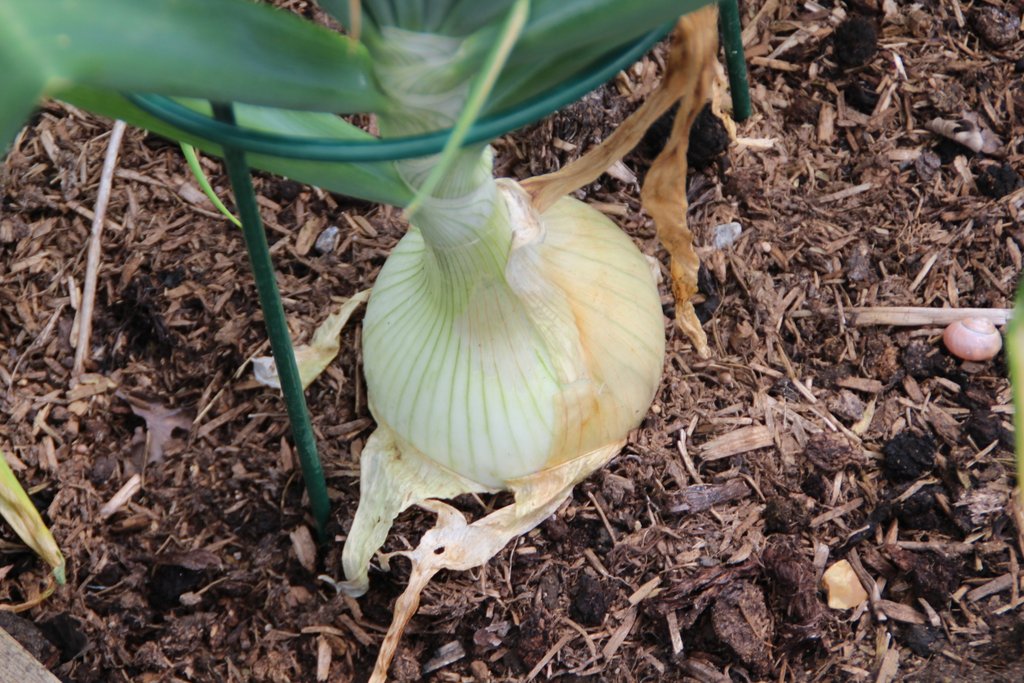
Once indoors I washed, skinned and trimmed the bulbs and then had a good look at them and weighed them to see if I could make up any decent groups for the show.

A few of the onions I lifted had started to split (where the central bulb divides into two), giving rise to odd shapes. My research leads me to believe that this is caused by irregular watering. Mea culpa – I drowned them when it was dry and did not water them when it had rained – a learning point for next time.

My heaviest onion weighed in at 720 grams. It may be small but it is perfectly formed. This is a very poor effort and I’m wondering whether it’s even worth entering it into the class. I don’t want the poor thing to be embarrassed!

I have four onions around 600 grams. Typical luck is that two are almost identical in shape, whereas the other two are distinctly different – one is flatter and squatter, the other is more bulbous on one side that the other.

There are some smaller groups at around 400 grams (both red and white). I’ll see how they ripen up and then make a decision on which three would look best.

I’ve allocated some space in racking in the garage. I’ve put down a thick towel and then a muslin cover to try and prevent them from getting damaged during storage. I’ve also liberally dusted them with talcum powder which apparently helps the skins to dry out. Let’s see how they go.
 

Onions Nearly Ready for Lifting

I know my onions are weedy and insignificant compared to “proper” growers, but even so I’m really pleased with how most of them are looking. To me, they are beautiful. Even if they don’t win, I know that one alone will make a substantial amount of onion jam which will go into family Christmas hampers.

I have “lifting day” pencilled in for 19th August – fingers crossed for a dry day.

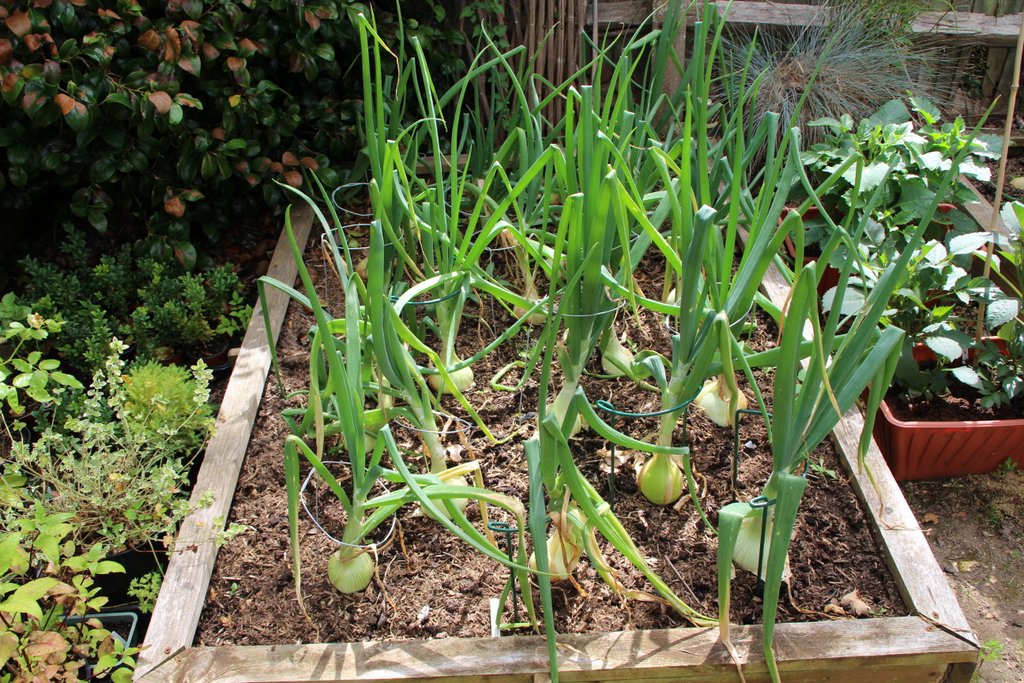
White Onion

White Onion

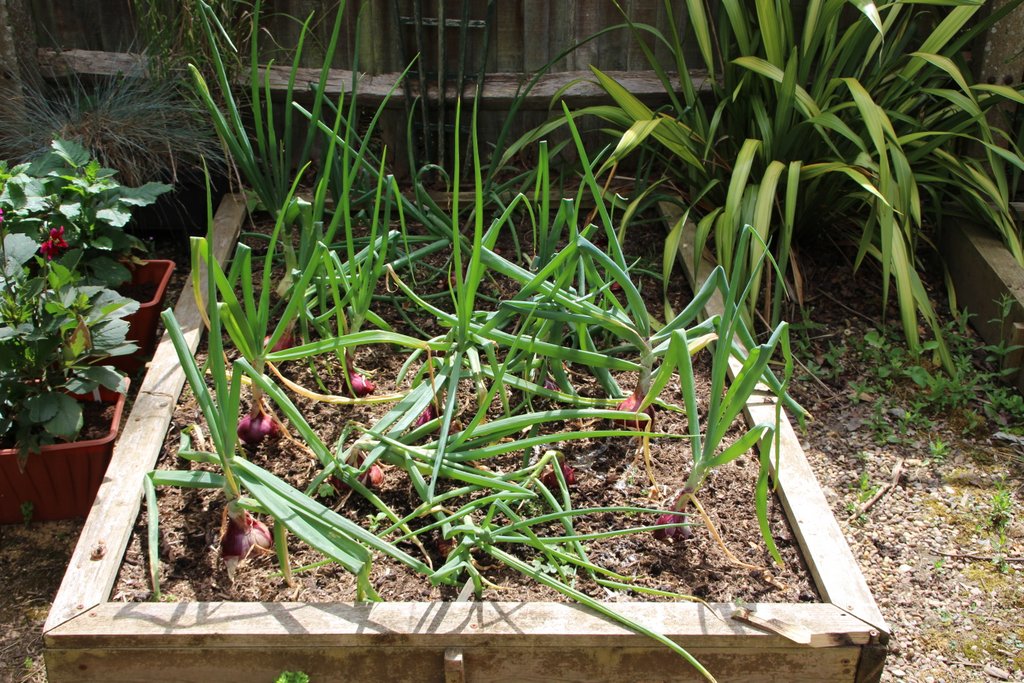
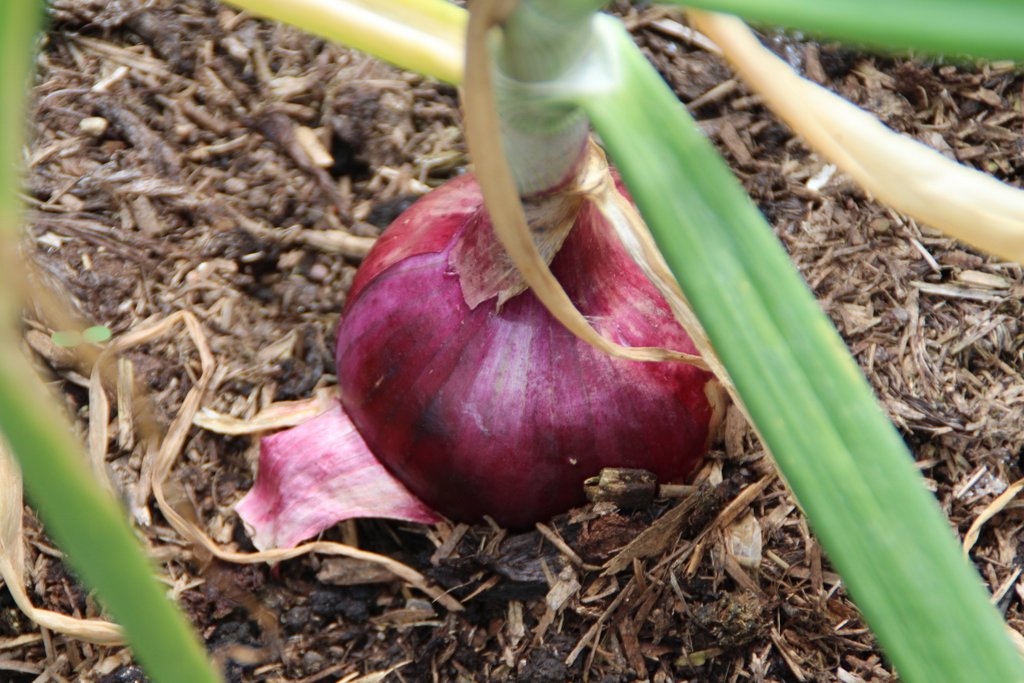
Red Onion

Red Onion

Planning Onions for the Show

After checking the schedule for our village show, it seems there are three categories for onions:

Heaviest onion

3 onions

5 onions to pass through 3 inch ring

In hindsight, it would have made sense to check the competition schedule before beginning the whole growing process, but never mind.

By some fluke I realise that one of my pastry cutters is a 3”dia. circle, so at least I have a ready-made measure when the time comes.

The onions are growing on well but I will be way short of the 4lb mark which I believe would be a starting point to contend for heaviest onion [ to put this into context, the world record is currently over 18lb!). The reds are generally smaller than the whites, and because of the earlier “leaning” snag, some of them are not symmetrical. I think finding a matching set could be tricky.

White onions 25 July

White onions 25 July

Red onions 25 July

Red onions 25 July

It seems that preparing the onions for show is a whole new game. Typically onions are lifted four weeks before showing to allow sufficient time to develop the lovely even, brown skin. In order to get matching sizes, growers measure the circumference of the best onion when lifted and leave others to grow on until they catch up. I’m not sure I’ve got enough onions to make this work.

There is also the art of cleaning, skinning and trimming, applying talcum powder to aid drying of the skin, where to leave them to brown off, what to put them on when they are drying, softening the neck and tying raffia around it to RHS standard. Oh my word, this is not going to be easy.

Dahlias

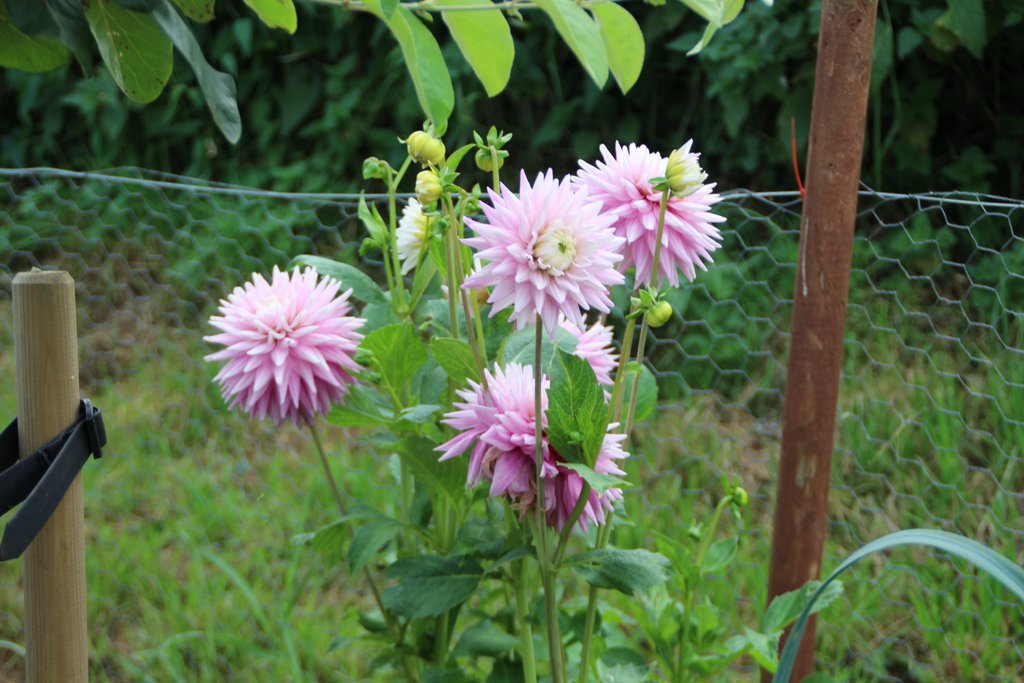
We’ve written before about growing our own Dahlias and over the years we’ve been trying to refine our collection so that there is a bit more colour co-ordination and less of Mark’s “vibrant mixes”.

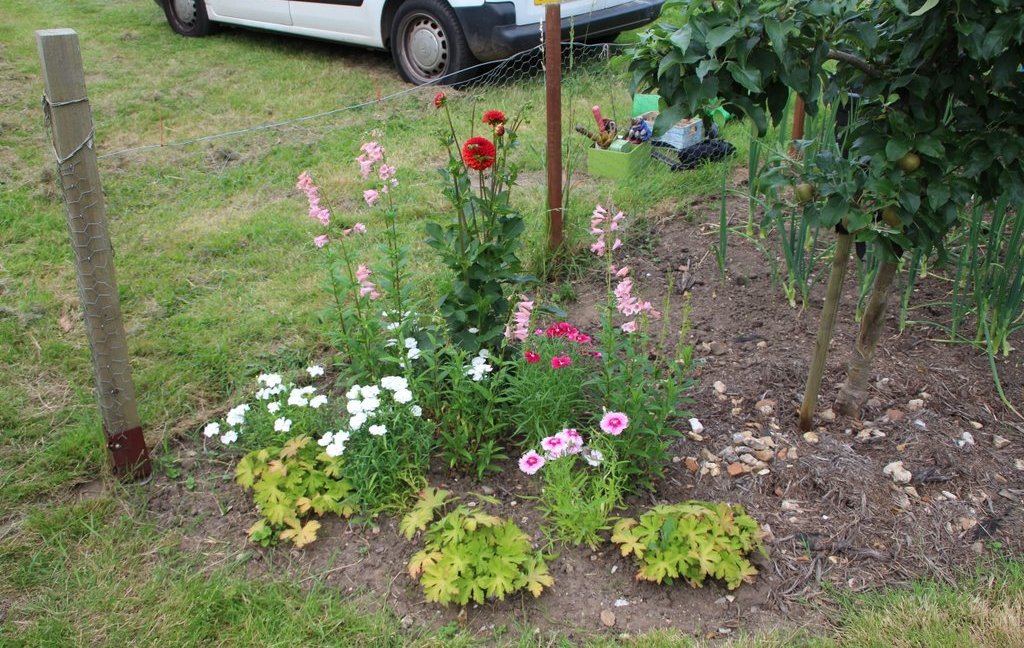
We’ve got a few spaces dedicated to flowers in the allotments.  We like the idea that the plots should be decorative as well as functional and there are times when we simply want to enjoy the surroundings.


Flower Bed 21 July 2016

Flower Bed 21 July 2016

Dahlias 21 July 2016

Dahlias 21 July 2016

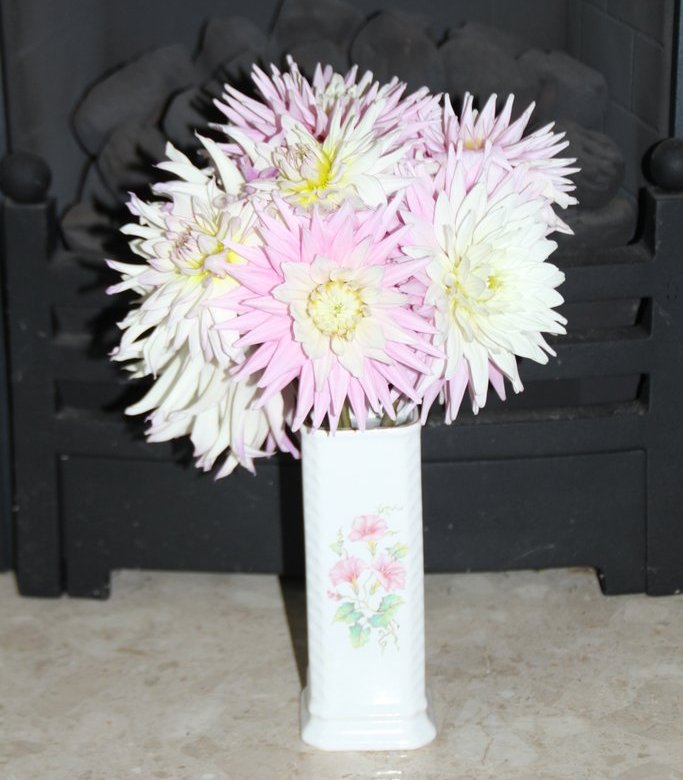
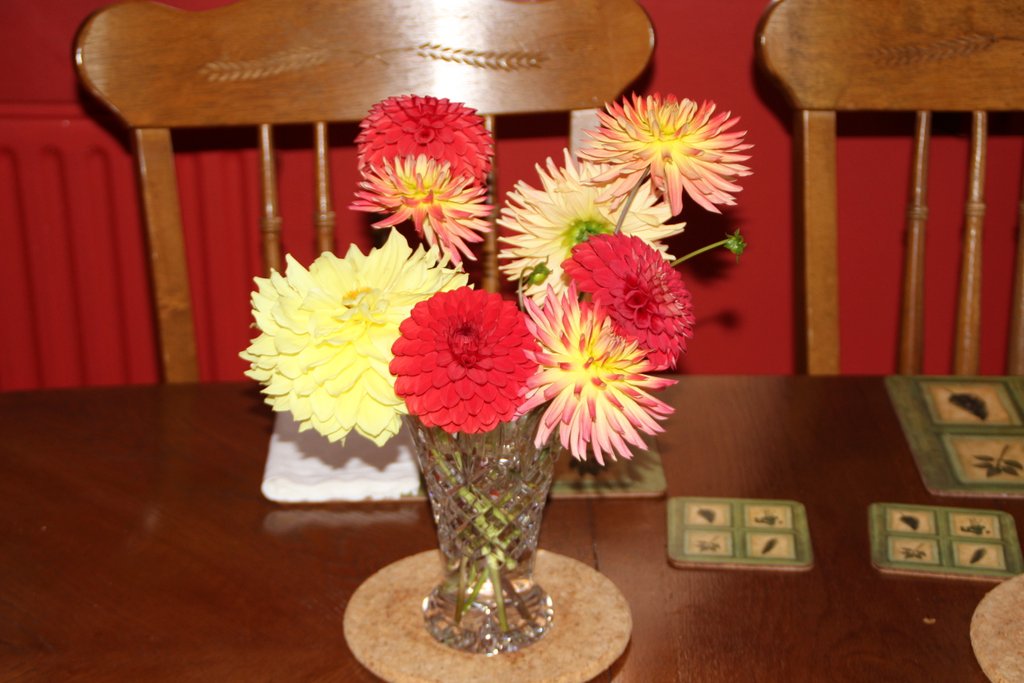
The Dahlias need regular dead-heading to keep the flowers coming and this means a regular flow of cut flowers for the household.

Dahlias 26 July

Dahlias 26 July

Dahlias 26 July

Dahlias 26 July


Summer!

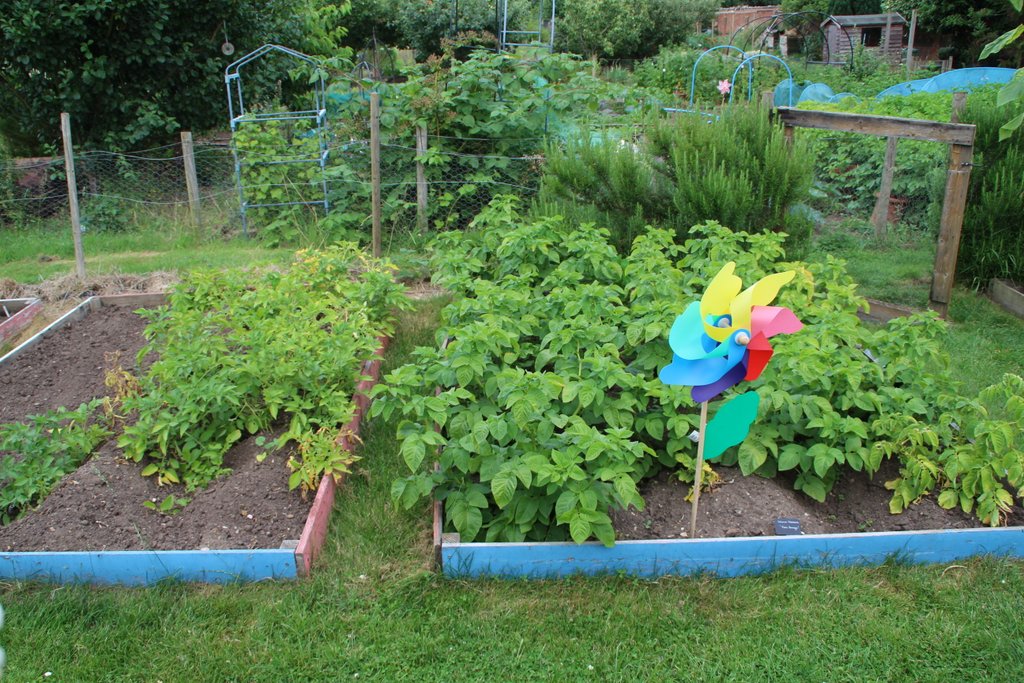
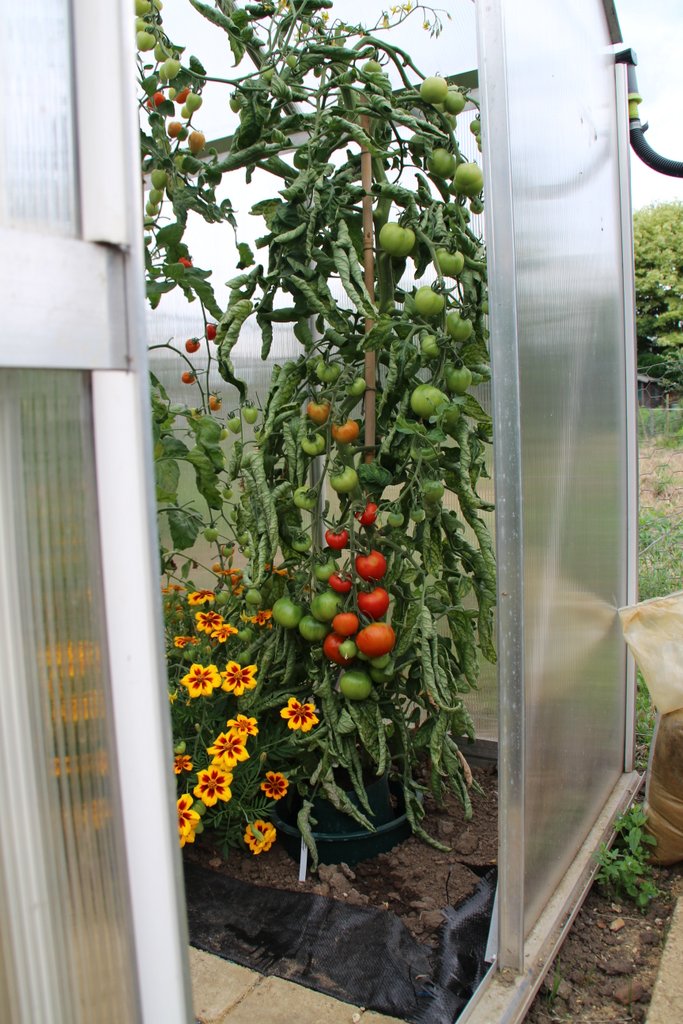
Summer has arrived in the allotment over the last few weeks.  Harvesting has started, with almost half of the early Anya potatoes now dug and the greenhouse tomatoes are ripening nicely.

Spuds 21 July 2016

Spuds 21 July 2016

Ripening tomatoes 21 July 2016

Ripening tomatoes 21 July 2016

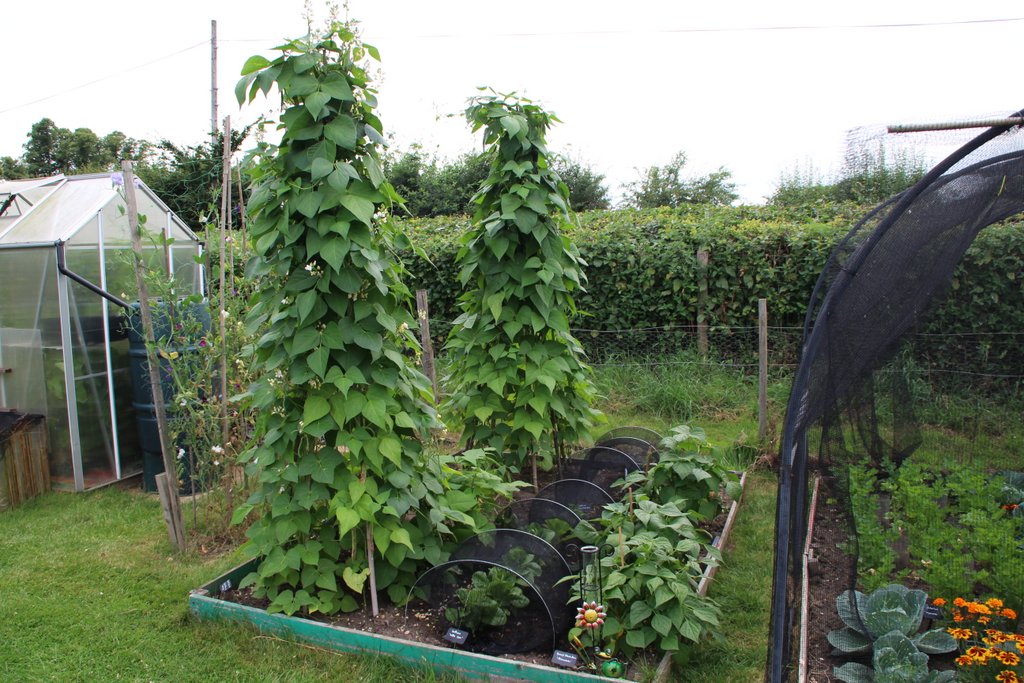
The beans are growing strongly, with most of those in the picture below being Borlotti Beans that we grow for drying and storage – they’re great for winter casseroles.  We do grow a few runner beans as they are delicious fresh from the plant but for two of us more than 3 or 4 plants means that it is bean glut time.

Beans 21 July 2016

Beans 21 July 2016

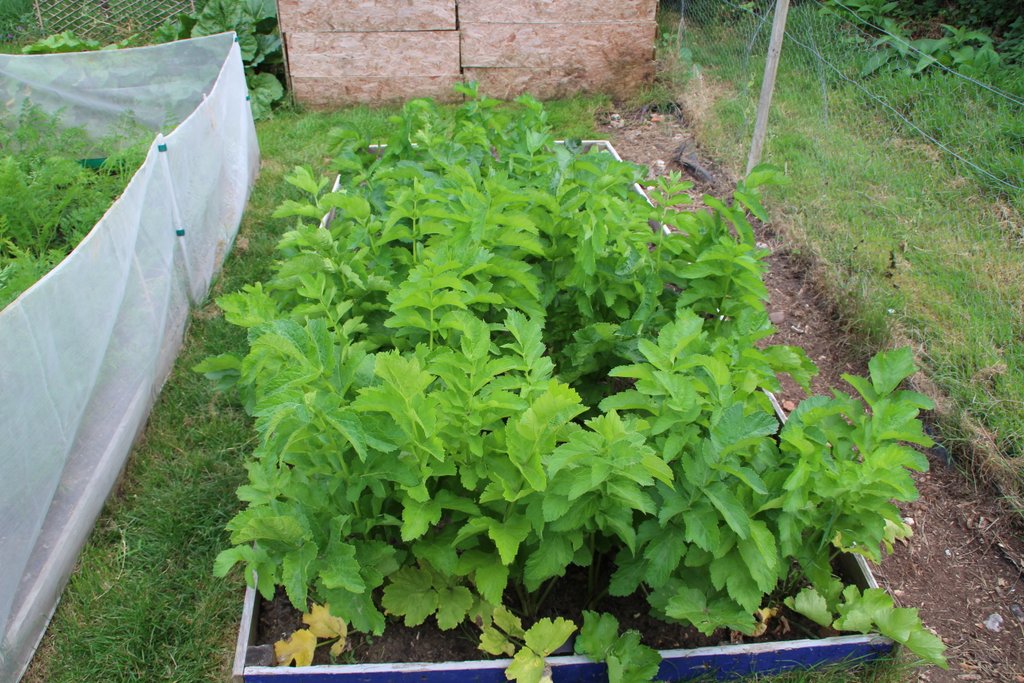
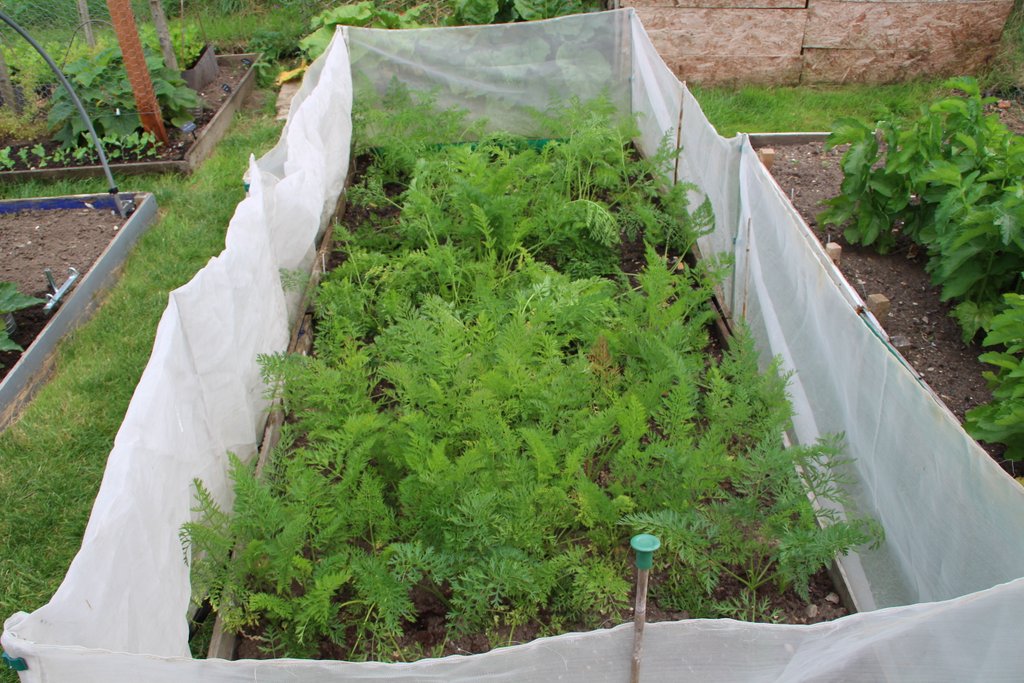
We’ve also started pulling the first carrots and the parsnips are promising a good autumn and winter harvest.  One of our long-standing goals, going back to the days of just three 6ft by 4ft raised beds in the garden, has been to have our own roasted parsnips on Christmas Day.

Parsnips 21 July 2016

Parsnips 21 July 2016

Carrots 21 July 2016

Carrots 21 July 2016


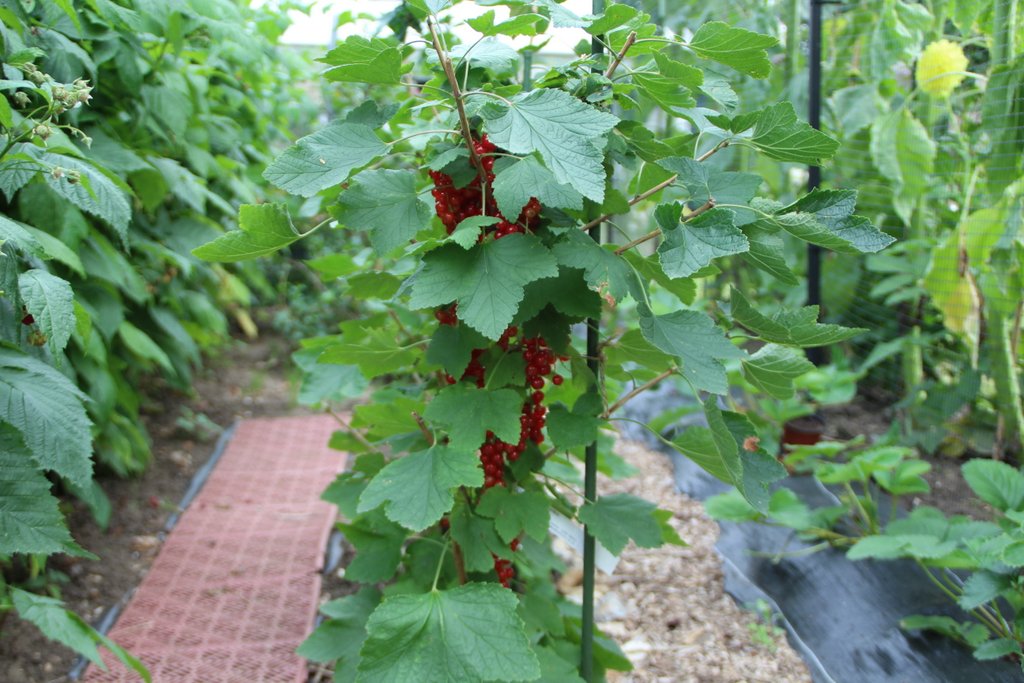
Most exciting of all is the first crops from our new soft fruit cordons.

Redcurrants 21 July 2016

Redcurrants 21 July 2016

Sunflowers

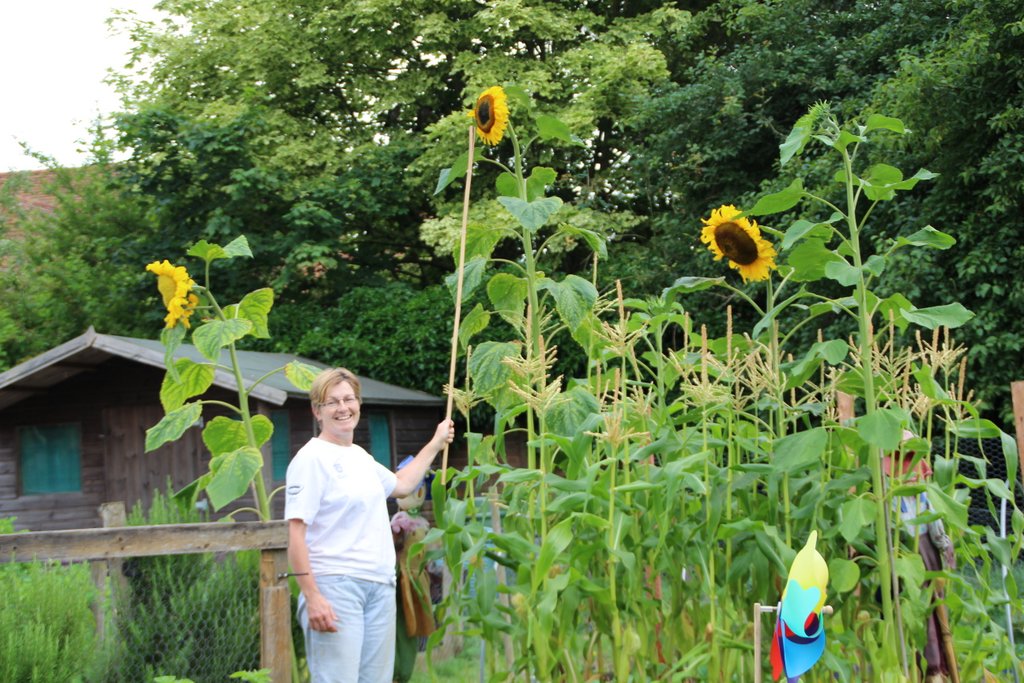
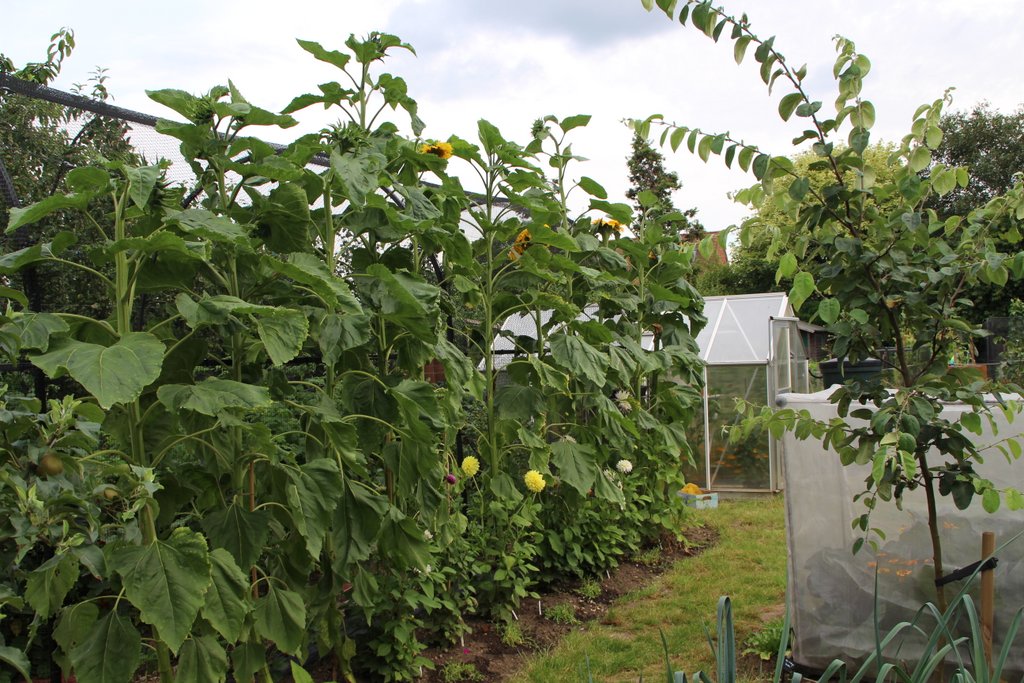
Earlier in the year we talked about growing giant vegetables, but we’ve also tried some big sunflowers as well.  we haven’t grown any champions, but we’re pretty pleased with the display that we’ve had.  They have sprinted past the sweetcorn in the old plot and reached the top of the fruit cage in the new one.

Can't reach the top

Can’t reach the top

Sunflowers by the fruit cage

Sunflowers by the fruit cage

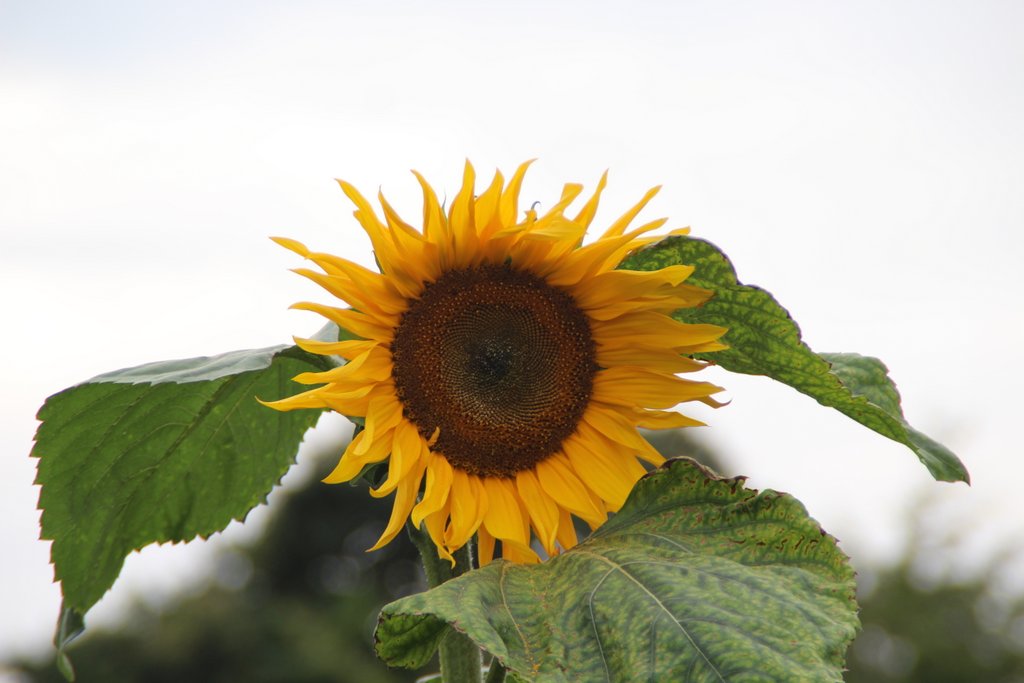
as well as providing a splash of high summer colour, we’ve found that we tend to get quite a lot of bees on the flowers (although none posed for photos this week) and later on the birds like the seeds.

Ready for the bees

Ready for the bees