New Garden Update 6

As summer has turned to autumn in our neck of the woods, we’ve been getting some useful amounts of rain and have started to make progress with planting in the back garden.  The saved plants (standard bay, Camelia) and some new ones that had been in pots (apple tree, Wisteria) had to go in as soon as the ground was prepared, so required some additional watering at first.  Now that the autumn rains are allowing water to penetrate to greater depths we’re working on filling up the planting spaces.

This overview shows that there is still a long way to go, but things are taking shape.  The saved Camelia now takes centre stage and we’ve lifted the canopy to make a better shape.  This plant and a new Sorbus are designed to give a stopping off point/hiding place for birds on their way to the bird feeder.
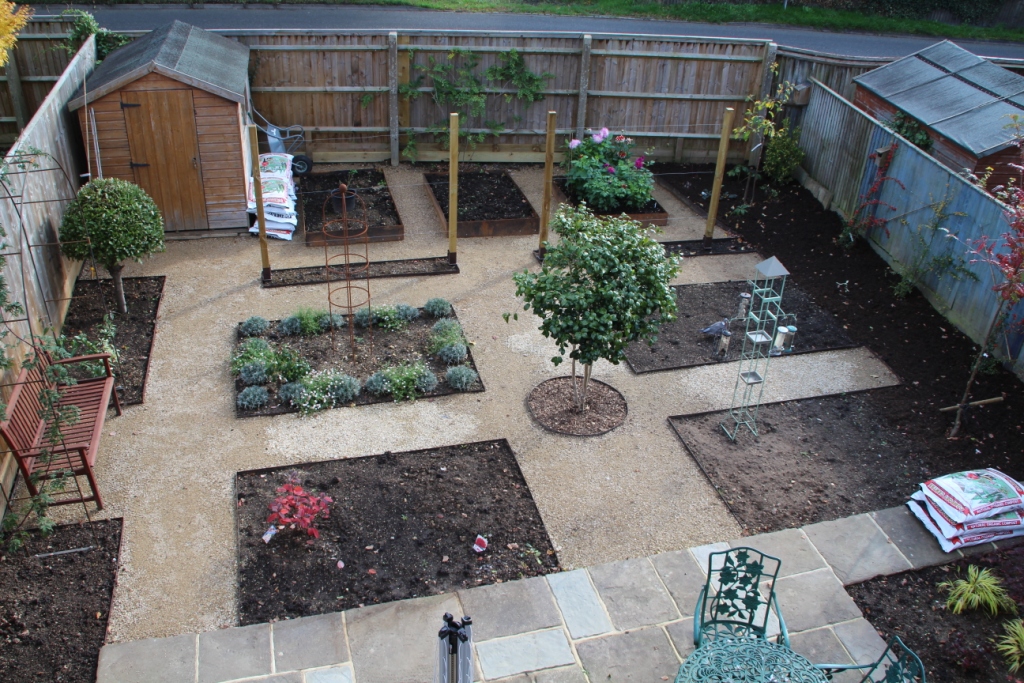
Looking down 22 Oct

Looking down 22 Oct

Also to provide cover and food for birds, we’ve put in a row of Pyracanthas down one fence.  the plan is to let these cover the fence, but to keep them trimmed back to a width of about 30-40 cm so that they are large enough to hide birds and their nests, but do not sprawl across the entire border.
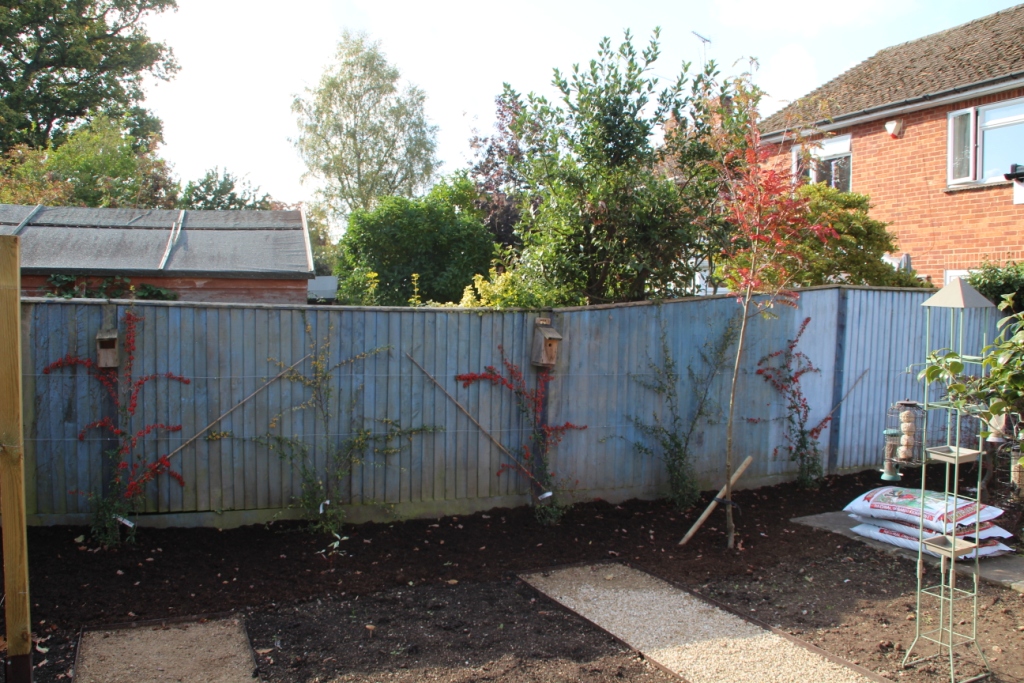
Southern fence 22 Oct

New Pyracanthas and Sorbus

We decided that we really didn’t want a garden without roses, so one bed is a rose bed (bordered by lavender (Munstead) with Erigeron winding through it).  We have one rose in there so far (a present from Mark’s Mum and Dad) but have four more bare-rooted ones arriving later in the autumn, including one to climb up the central obelisk.
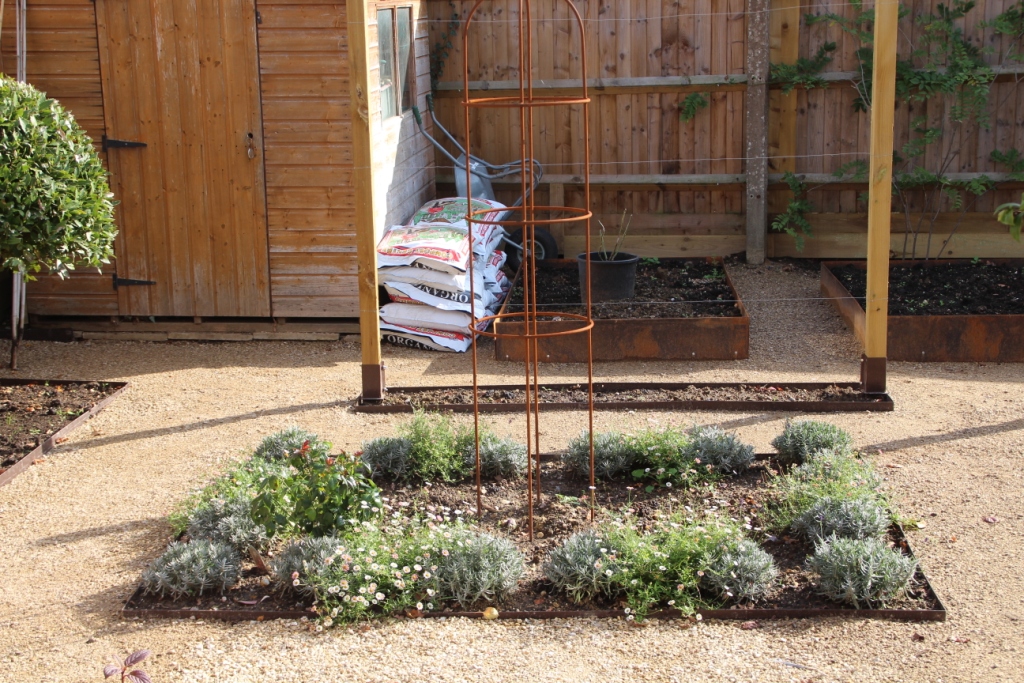
Rose bed 22 Oct

Rose bed 22 Oct

We’re trying to get different heights into the garden, with structures and trees.  So along with the obelisk we’ve put in an arch, which has our blackberry coming up from one side and a honeysuckle (Copper Beauty) on the other.
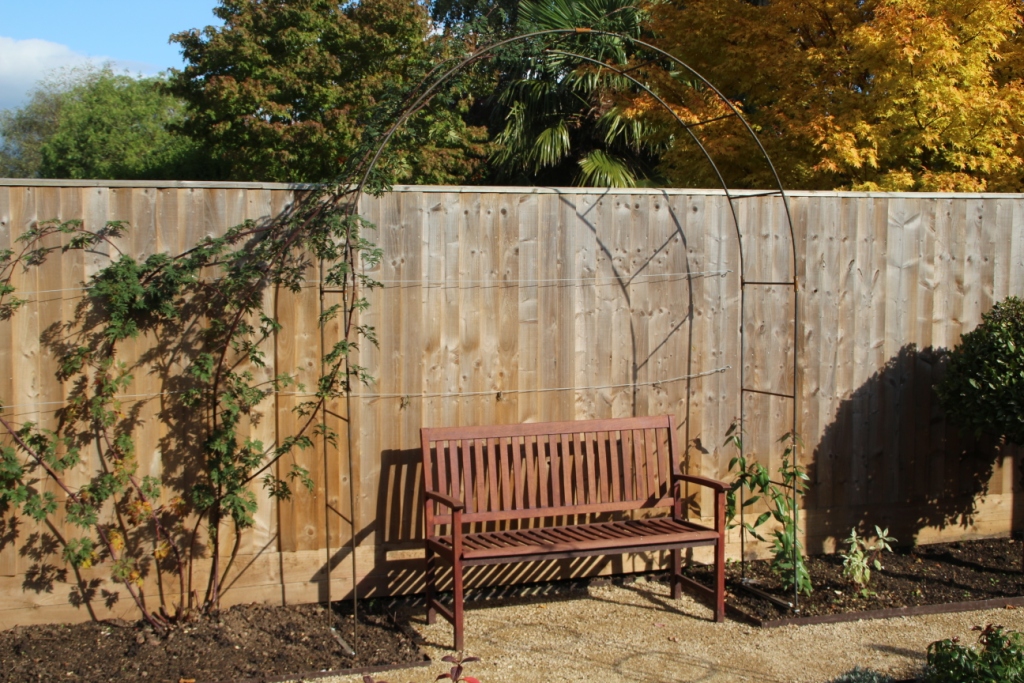
New Archway

New Archway

We are planning to have some space for cut flowers, which may or may not be the bed currently hosting some of our Dahlias, but they were available and guaranteed some colour for this year.
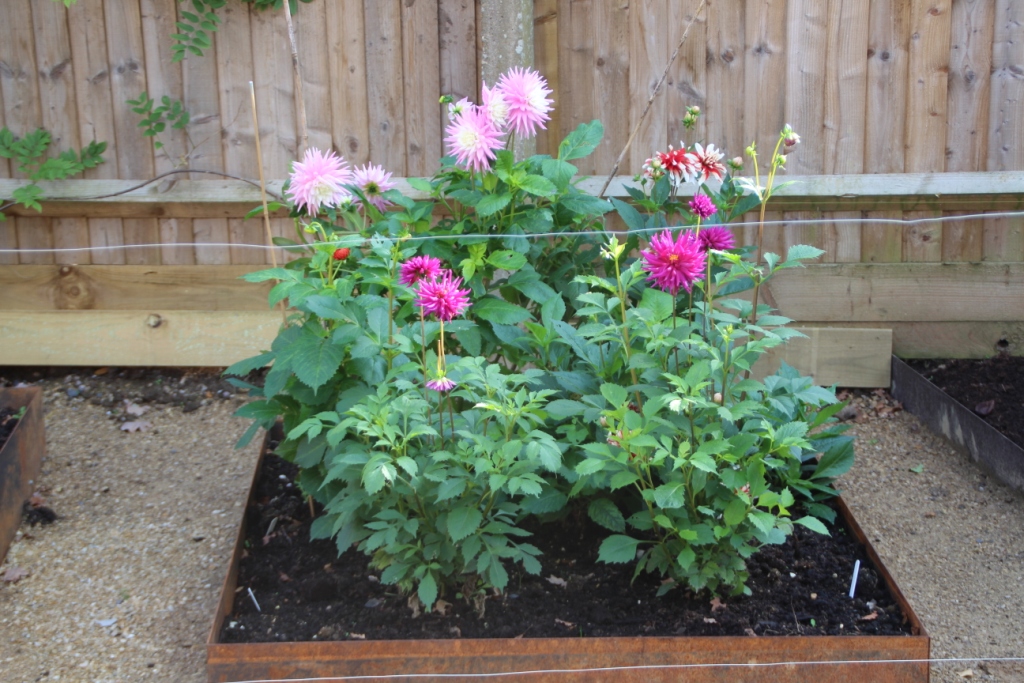
Our Dahlias 22 October 2019

Our Dahlias 22 October 2019

One area that is pretty much fully planted is our Acer bed – featuring two rescued Acers.  We’ve gone with dark Sedums (Hylotelephium as we should now call them) to complement the Acer foliage and then grasses for contrast.
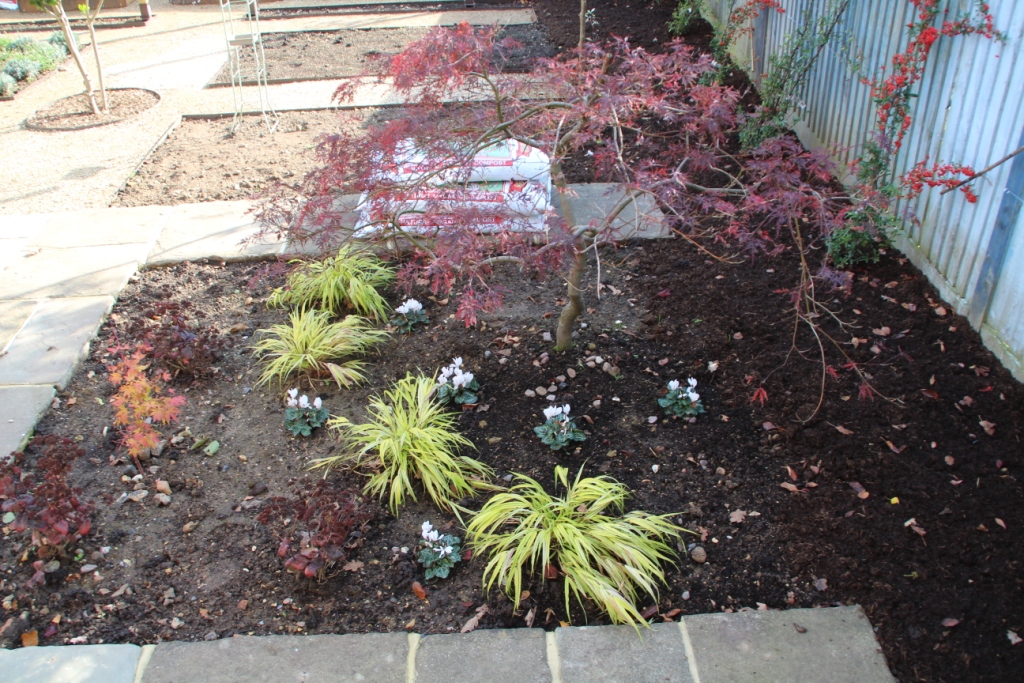
Acer bed 22 Oct

Acer bed 22 Oct

To augment the Cyclamens, we have put in white crocuses and white narcissi and will be adding white tulips in November so that there will be about 6 months of white flower in this area during the darker months of the year.
Garden Tips – October 2019

Well done to everyone who entered the village show last month, the hall looked splendid. Hopefully, everyone (especially first-timers) enjoyed themselves and got a certificate or two to reward their efforts. We certainly met some people who were having a first go and had surprised themselves with how well they’d done.

Now it is back to general garden care. October marks the change from late summer to early autumn. While there may be glorious days, we will start to get much colder nights and could see the first frosts.

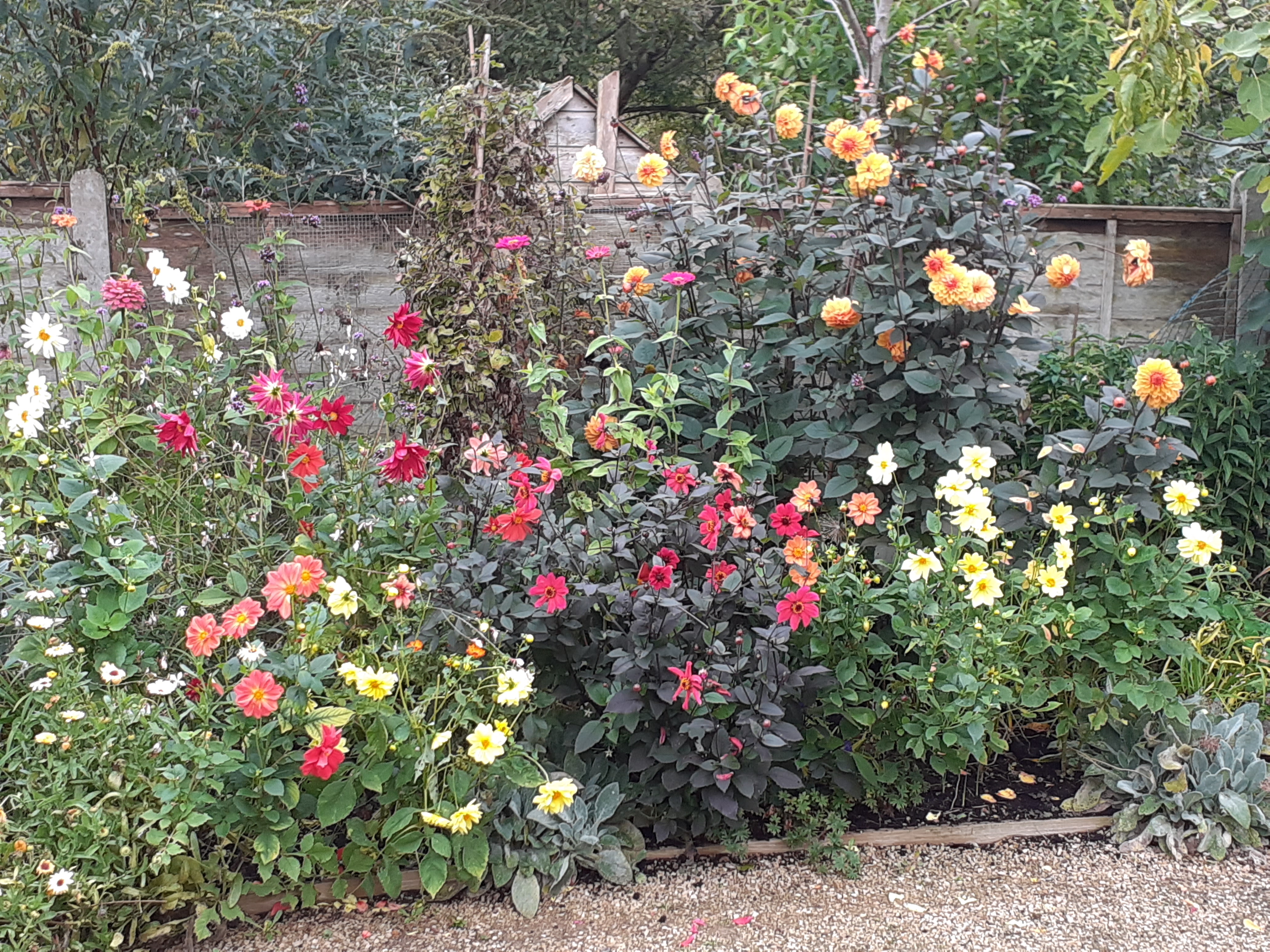
Until the frosts arrive, flowers like Dahlias, Echinacea, Rudbeckia and Gaillardia will all continue flowering. Keep dead-heading to prolong the welcome colour they provide. Similarly, roses might still be flowering, but reduce the height by about a third so that they won’t rock in the autumn winds and disturb the roots. If you have had any blackspot, make sure that you clear away all the foliage and dispose of it (not to compost) so that spores cannot over-winter.

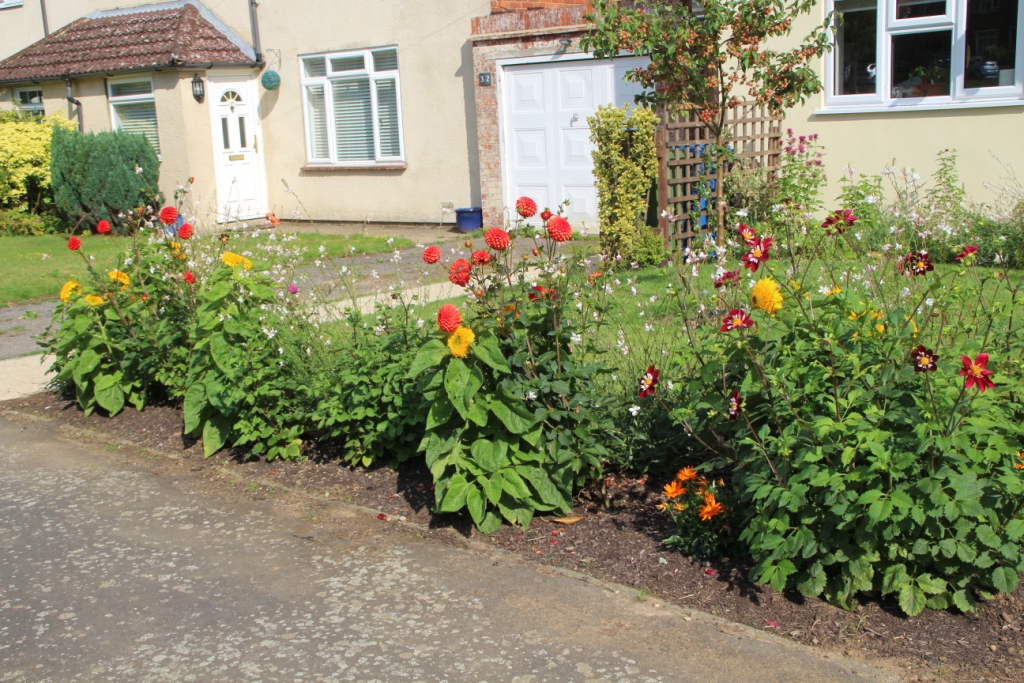
A Cookham flower border  in mid-October

A Cookham flower border in mid-October

Our Dahlias 22 October 2019

Our Dahlias October 2019

Once we’ve had the first frost, then the foliage of Dahlias will die back almost immediately and you can then cut back the top growth and either lift or leave the tubers as you prefer.  Classically, Dahlia tubers were lifted and stored over the winter, but in our area they have a pretty good survival rate if left in the ground.  The tubers won’t tolerate prolonged wet and cold, so if your garden is likely to have these conditions, then best to lift.

Grass growth slows down as the temperature drops. Even if you don’t want to treat your lawns with a fertiliser/weed killer, it’s a good time to scarify and aerate. This will allow both air and light to reach the base of the plants.  For small areas a lawn rake and a bit of effort will give good results, but for larger lawns it is worth trying a machine.  Scarifiers can be hired for about £40 per day.

Finally, start looking forward to next year by planting spring flowering bulbs. The earlier you get them in the ground, the more their roots will develop this year, leading to better displays come the spring. Hold off planting tulips until November to reduce the risk of tulip fire.

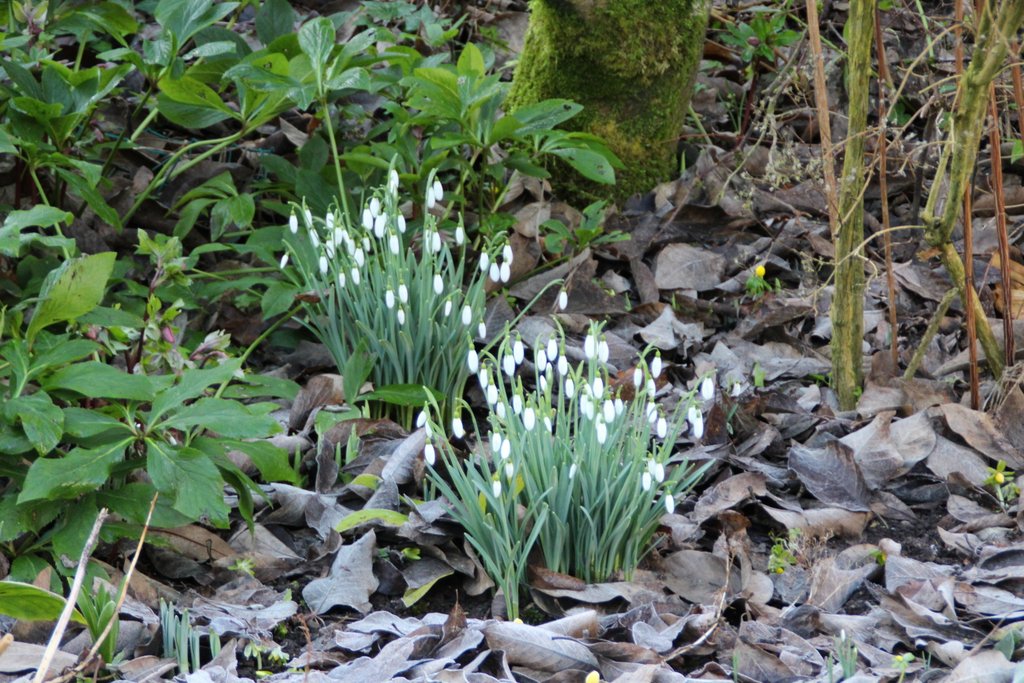
Snowdrops January 2018

Snowdrops in January – a sign that the next spring is on its way.

Growing for Show – September 2019

Now is the time to get your entries ready, so first and foremost don’t forget to actually enter. Entry Forms are in the Cookham Dean Fete programme.  This delivered to some parts of Cookham, but is also available online here. Entries need to be with Janet Shanks by 6pm Thursday 12th September at 144, Whyteladyes Lane Cookham Rise SL6 9LA with entry fees (50p per class).  Further information and hard copies of the Fete programme are available from Janet (01628 525576 or penfoldshanks@btinternet.com).

In the week or so before the deadline look at your produce to see which classes you can enter, taking careful note of the schedule and the numbers required for each class. A bit like politics, the first requirement of showing is the ability to count.  Three carrots means three, not “the two best ones I’ve got” or “four because I’ve got loads of lovely ones”. If you have got spares then take them with you for set up on the morning of Saturday 14th in case of damage in transit. Flowers in particular are fragile.

As well as counting your exhibits, don’t forget to read the rules (also in the Fete programme).  For example in the “Top Tray” collection class, the rules state that “The vegetables must be displayed within an area measuring 18″ by 24″ without bending any part of them“.  Other rules state that “Carrots and parsnips should have foliage trimmed back to 3“, “Peas and beans should be displayed with some stalk attached” and  “Tomatoes must be displayed with calyxes (the green flower bud case)“.

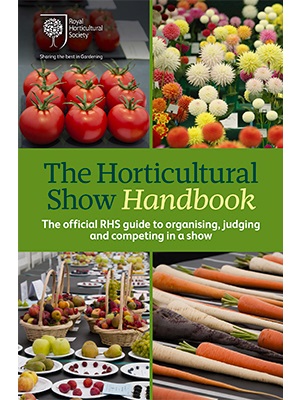
The show is judged by RHS rules, so the true nerd could get a copy of the Society’s Horticultural Show Handbook.

RHS Horticultural Show Handbook

RHS Horticultural Show Handbook

This very helpful little book gives advice on preparing fruit, vegetables and flowers for show and also explains the judging criteria.  For example for dessert apples, the merits are described as “Optimum-sized shapely fruits with eyes and stalks intact and clear unblemished skins of the natural colour characteristics of the cultivar“.  Defects are described as “Fruits that are too small or too large, mis-shapen, over-ripe or soft or that have damaged eyes or lack stalks or are not well coloured, or have any blemish, including evidence of any physiological disorder such as bitter-pit or glassiness“.  Then the available points for an exhibit are set out as follows:

  • Condition 6 Points
  • Uniformity 6 Points
  • Suitability of size 4
  • Colour 4 Points
  • Giving a total of 20 points.

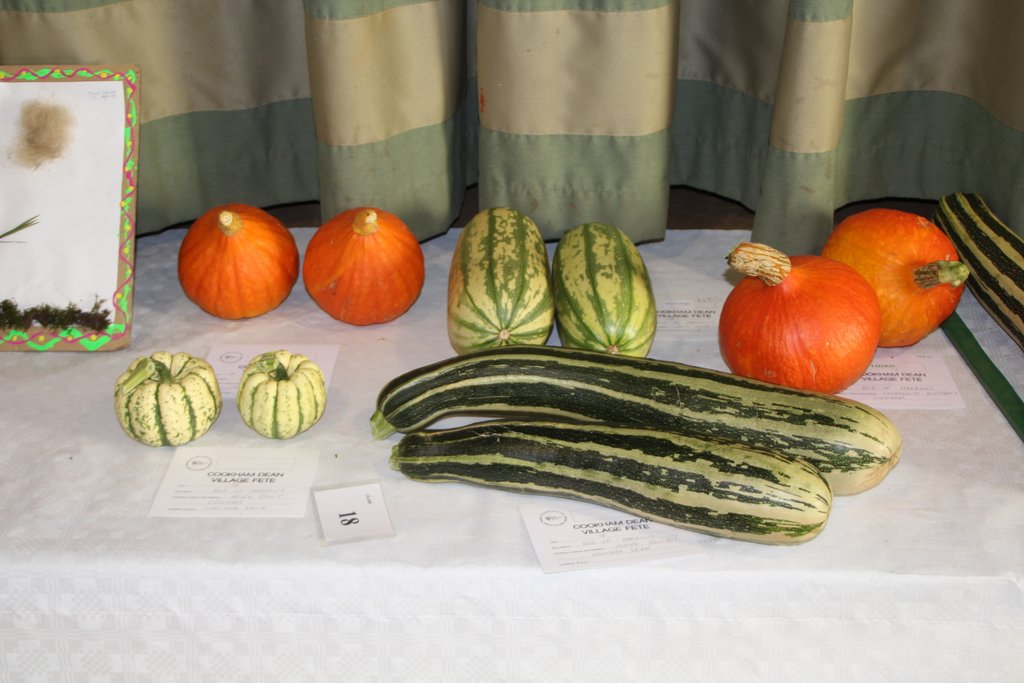
There are similar scoring systems for all classes, so to get good scores you are looking for pest and disease free and matching sets. Better to have six identical runner beans than your biggest six, which happen to be different shapes and sizes.  The picture below shows the squashes from the 2017 Cookham show, first prize went to the ones at the back left, which are certainly not the largest, but are in good condition and are easily the best matched pair.

Squashes at the 2018 show

Squashes at the 2017 show

Clean, but don’t polish fruit and veg. If you are entering alliums, tie up the necks of onions and garlic with raffia, similarly with root vegetables leave three inches of the leaves and tie them up. For the giant classes weight is all that matters; so don’t bother prettifying these.

For most entries freshness matters, for example one of the runner beans will often be snapped by the judge to check freshness.  This means that if you can, it is a good idea to put aside some time on Friday 13th for harvesting and preparing. Wrap beans and carrots in damp tea towels and pop them in the fridge overnight to keep them crisp.

There is a two hour slot for staging exhibits between 9am and 11am on Saturday the 14th, when there will be people from the Cookham Horticultural Society around to help if you need it.  The hall will be cleared at 11 for judging, so it is probably best to arrive early if you can.

Most importantly, if you are having a bash at the show this year, have fun and good luck to all of you.

New Garden Update 5

Summer has arrived and some very welcome rain in June helped the new front garden to get established, but the generally dry weather has meant that we have still had to water the new lawn occasionally to make sure that it gets through the first summer.  Once it has bedded in for a full year it will be much more resilient and we shouldn’t need to water it next year.

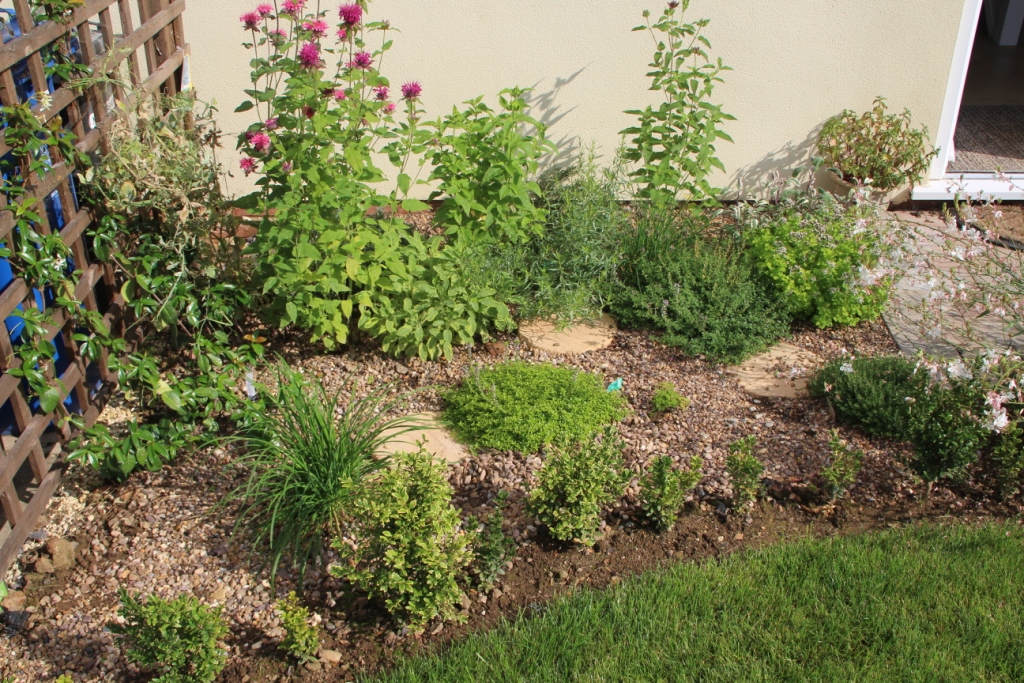
The herb garden is now properly established and it is a real treat to be able to just step out of the front door and harvest whatever we fancy.

Herb garden 19 August

Herb garden 19 August

The flowers that we put into the front border as a stop gap while we work out a long-term structure benefited from the wet June and the subsequent sunshine and are now a riot of colour.  The sunflowers are an interesting short cultivar called Teddy Bear and these and the Gaura provide a backdrop to the assortment of orphaned Dahlias liberated from the allotment.  In the background you can see that the crab apple has settled in well.

Flowers 19 August

Flowers 19 August

The ripening crab apples do however signal that even though the sun is still shining, the days are getting shorter and autumn is on the way.

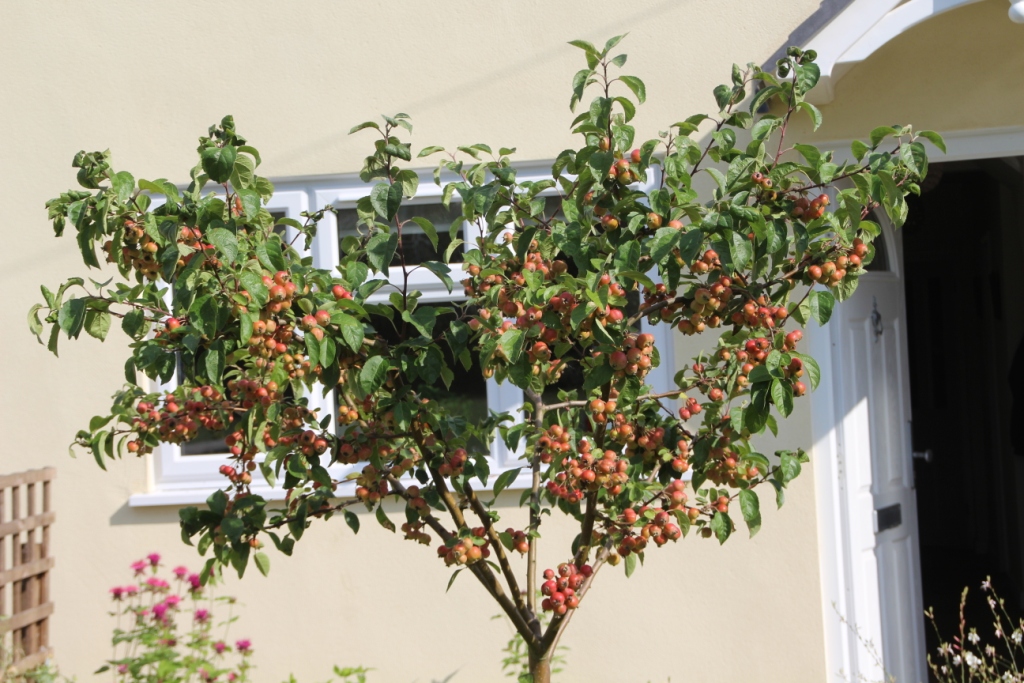
Crab apples 19 August

Crab apples 19 August

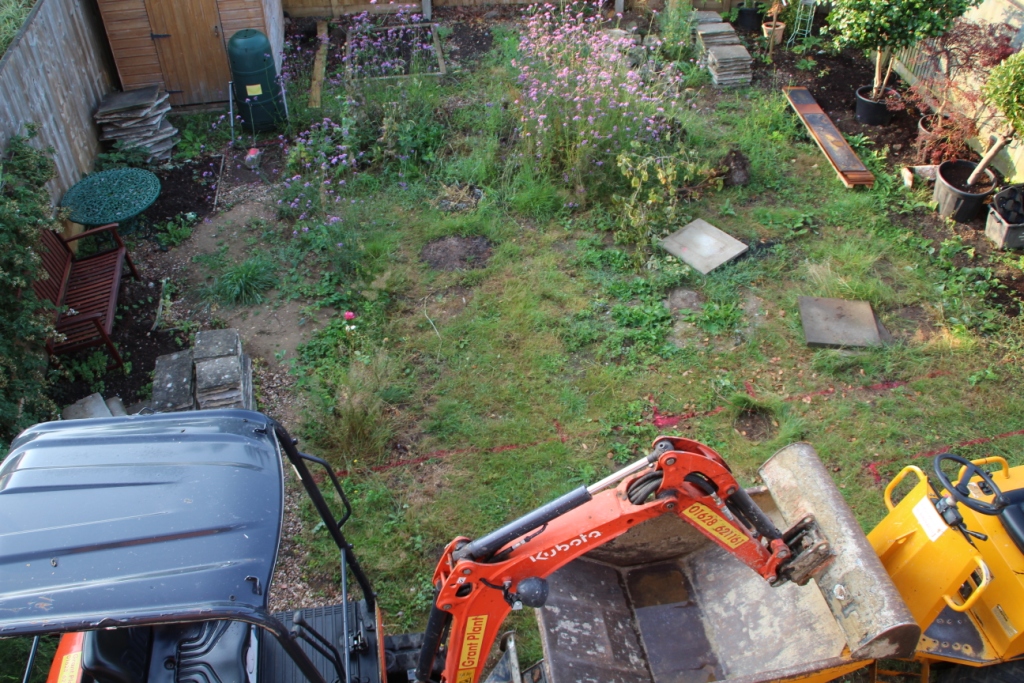
In the back garden the landscapers started work in late July.

Diggers at the ready

Diggers at the ready

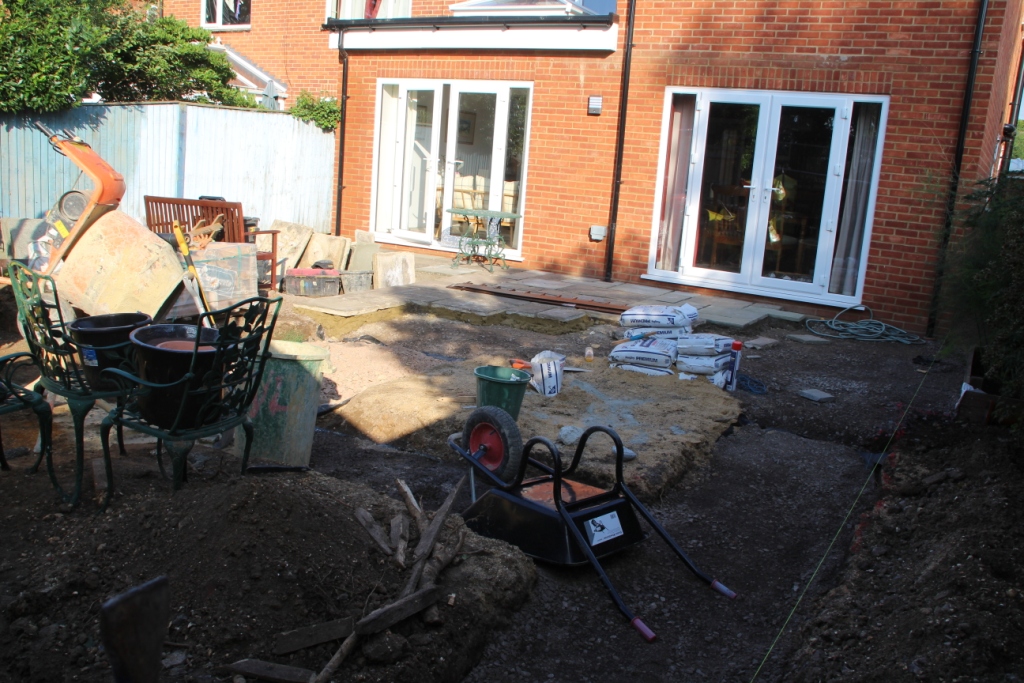
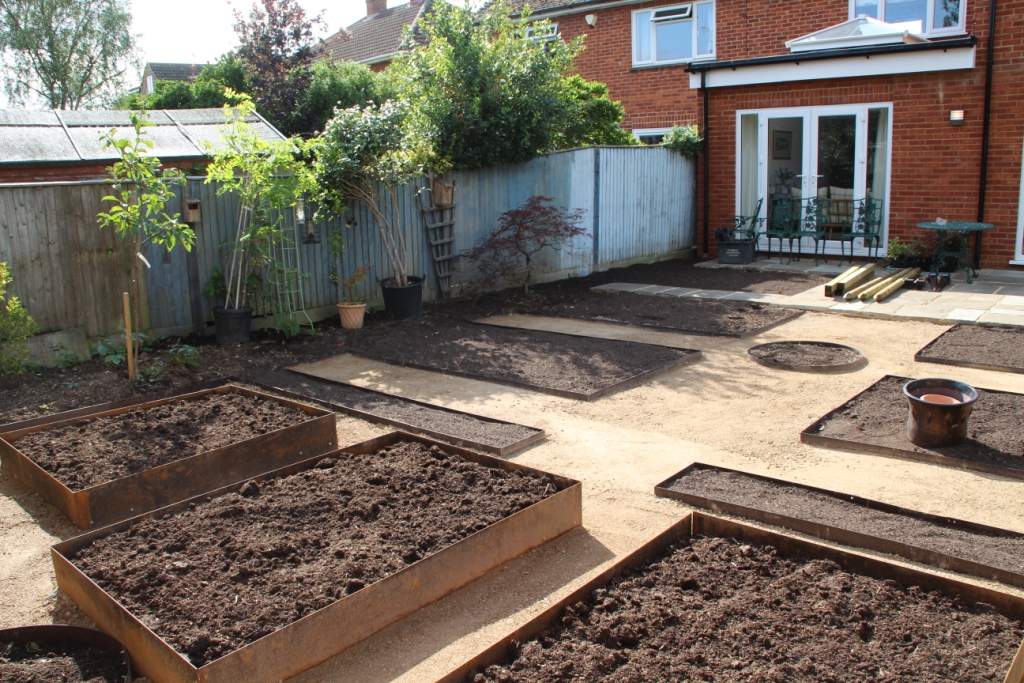
Clearance was pretty quick and by the beginning of August the patio was starting to take shape and we were really pleased that the builders had managed to save so many of the old slabs for us as we had an already aged look to the patio.

Emerging Patio 1 August

Emerging Patio 1 August

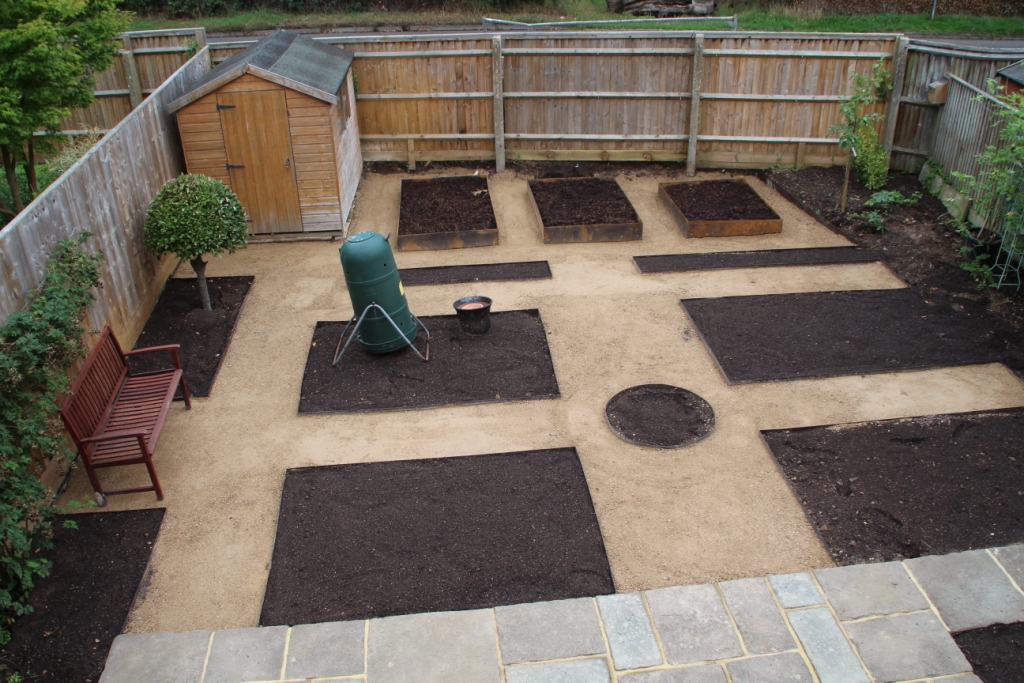
As per the plan we went without a lawn and have used permeable self-binding gravel to separate growing areas and by mid-August the framework was just about complete.

Nearly there 18 August

Nearly there 18 August

Back garden 19 August

Back garden 19 August

The first job will be to get the saved plants (in assorted pots) back into the ground.  we will then do the bulk of the planting in the autumn once the weather gets cooler and damper so that new plants will be under minimal stress, but the soil should still be warm enough to encourage good root growth.


New allotment update August 2019

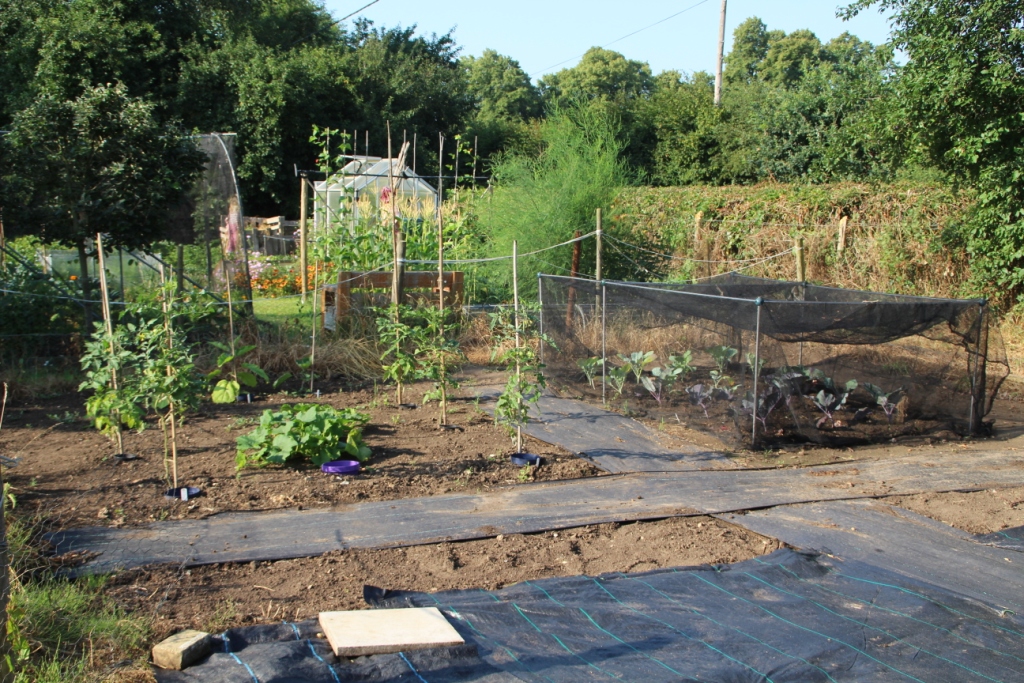
Over the past month or so, we have been putting some effort into getting the newest part of our allotment into production, by getting some summer and autumn crops into the ground.  So far we’ve only got about a third of the area planted up as at this time of year the existing plots need a lot of care with weeding, harvesting, feeding and watering all high on the agenda.

Nonetheless the new plot is starting to take shape.

New plot 24 July

New plot 24 July

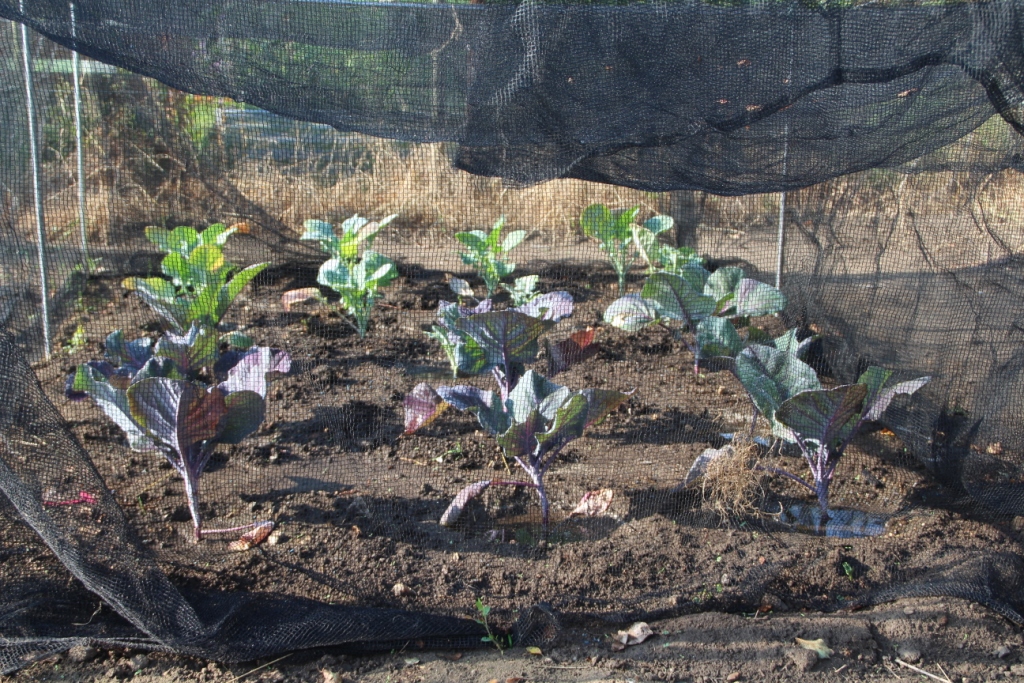
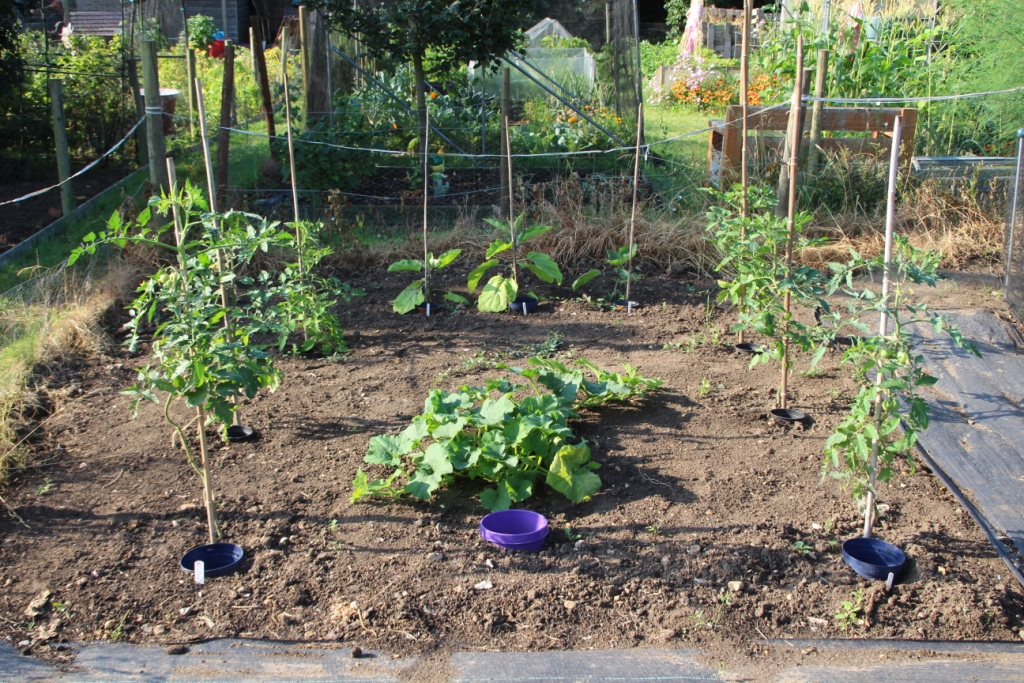
We’ve rigged up a brassica net in one part and have got spare tomatoes and aubergines along with a squashkin (Autumn Crown) in a second patch.

Brassicas July 2019

Brassicas July 2019

Summer crops 24 July

Summer crops 24 July

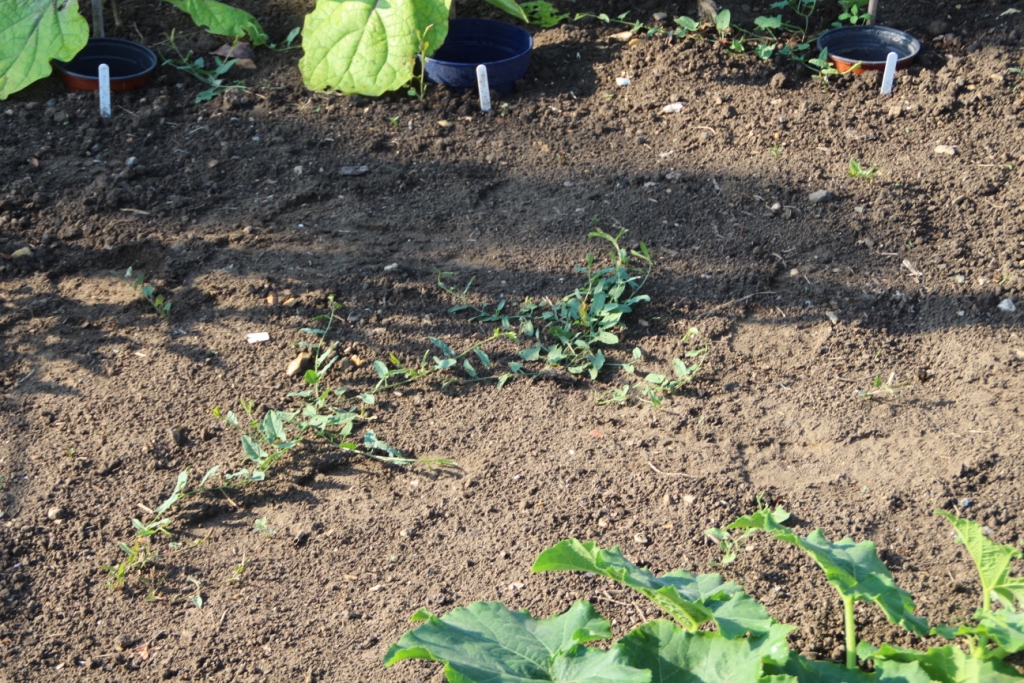
As usual, we’ve put watering pots in to support the thirstier plants. As well as ensuring that we’re getting water down to the plants’ roots, not splashing water all over the soil surface will help to reduce weed growth while the weather remains dry and warm.  We know that we will have weed problems to overcome in this plot.  In addition to the annual weeds that had colonised the site while it wasn’t being worked, we have mare’s tail (Equisetum arvense) and field bindweed (Convolvulus arvensis).

Field Bindweed

Field Bindweed

Growing for Show – August 2019

With only weeks to go until the Cookham Show, everything is now on the way. “All” that is left to do is to make sure that your flowers, fruit and vegetables are in the best possible shape for the 14th of September.

It is more important that exhibits are as healthy as possible than simply growing whoppers. It is therefore crucial to keep going with weeding, watering and feeding and checking for pests and diseases. Pest and disease free is a major consideration for judges.

Even if it seems dry, don’t water root crops as this may cause forking and splitting, instead you can rely on the tap roots of carrots and parsnips to keep driving down searching for water.  On the other hand, members of the cucurbit family (squashes etc.) and beans are extremely thirsty and may need additional watering to keep them healthy.

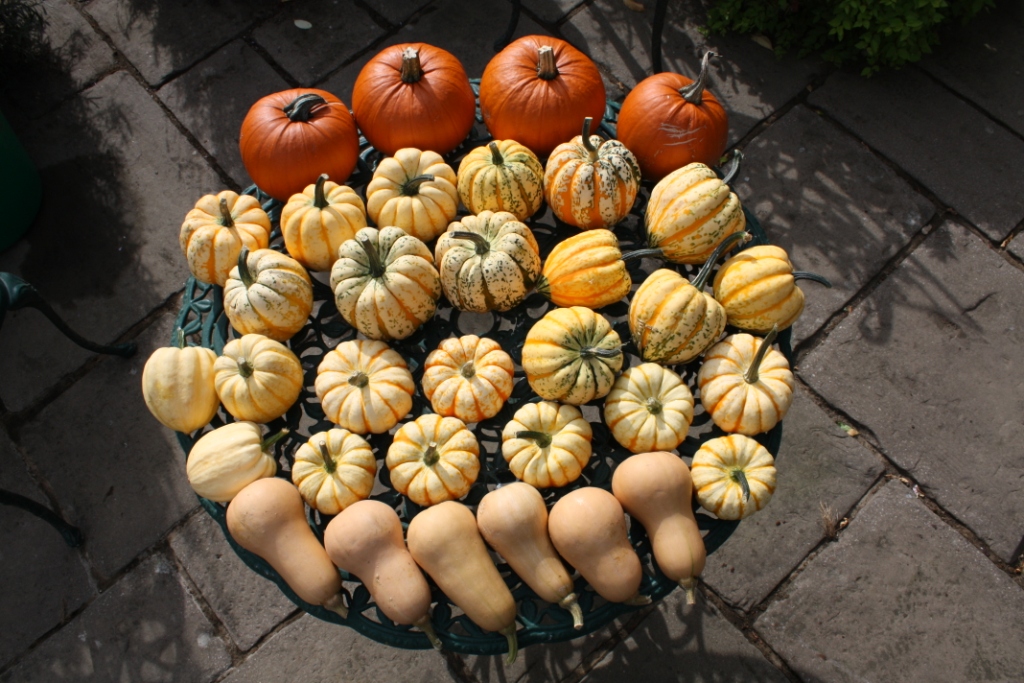
You can start harvesting some exhibits now. Hard skinned squashes such as butternut and Uchiki Kuri will be ripening in August, so start looking for matching pairs.

Is there a matching pair here?

Is there a matching pair here?

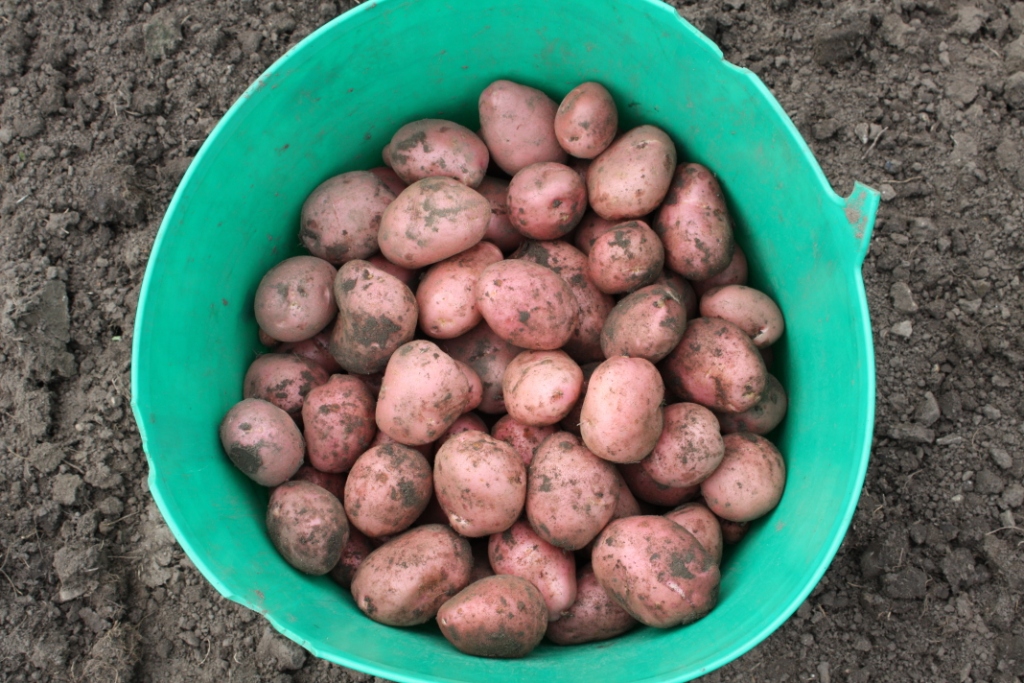
You may well be lifting main crop potatoes. While cleaning them up ready for storage, look for matching sets of three that you can put aside for the show (about 200g is the perfect size).

It is surprising how hard it is to find three that match in a bucket of spuds

It is surprising how hard it is to find three that match in a bucket of spuds

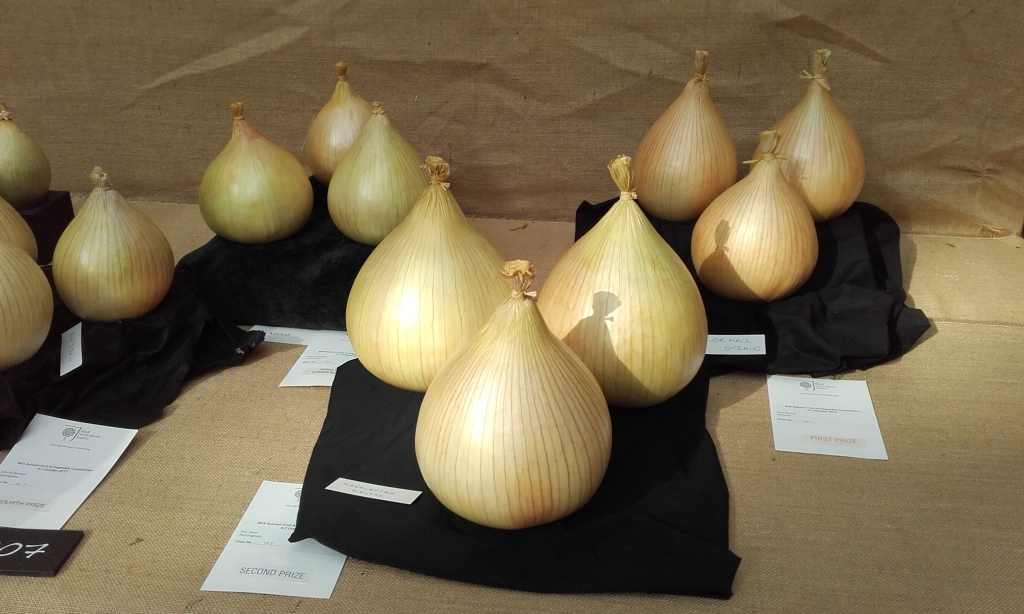
Onions, shallots and garlic should all be drying for storage (and showing) so your entry list is growing already. You may also be picking early maturing apples.

Onions from an RHS show

Onions from an RHS show

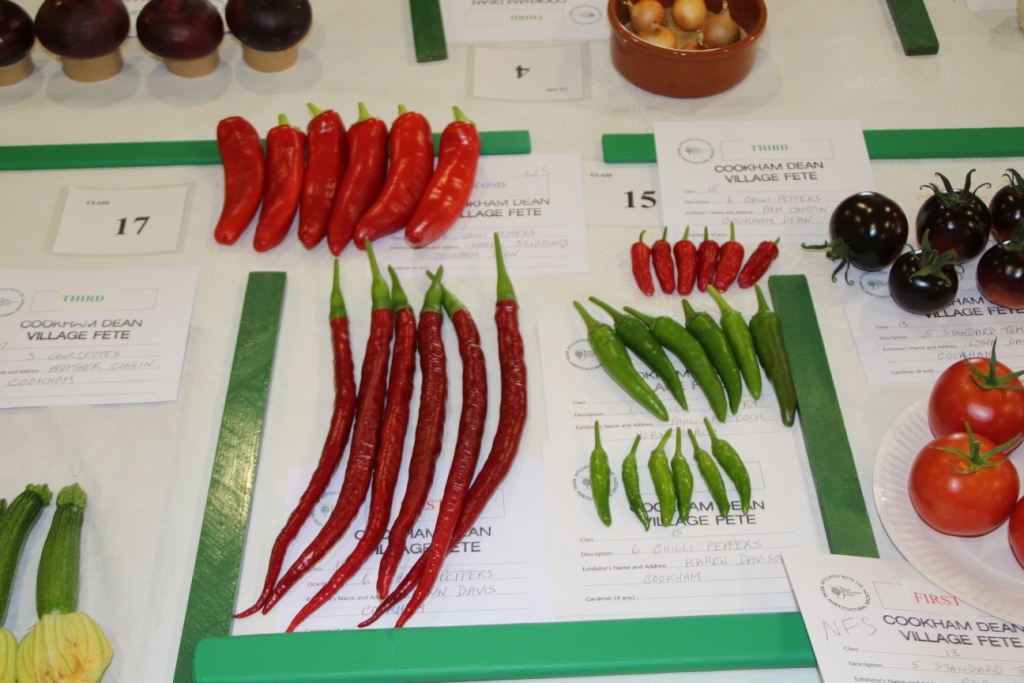
However, for many entries, freshness is vital so select root crops, beans, tomatoes and soft fruit in the days before the show. For sweet and chilli peppers ripeness is a factor, so leave them on the plants as long as possible to get full colour change.

All things being equal the prizes will go to the ripe ones

All things being equal the prizes will go to the ripe ones

Next month – final preparations!