New Garden update 8

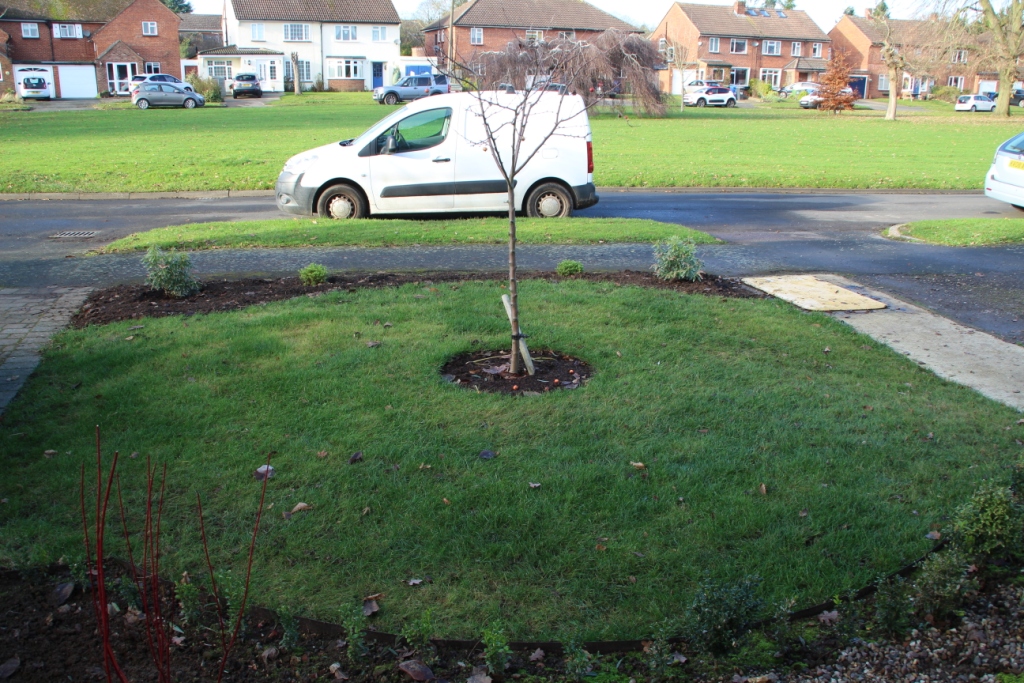
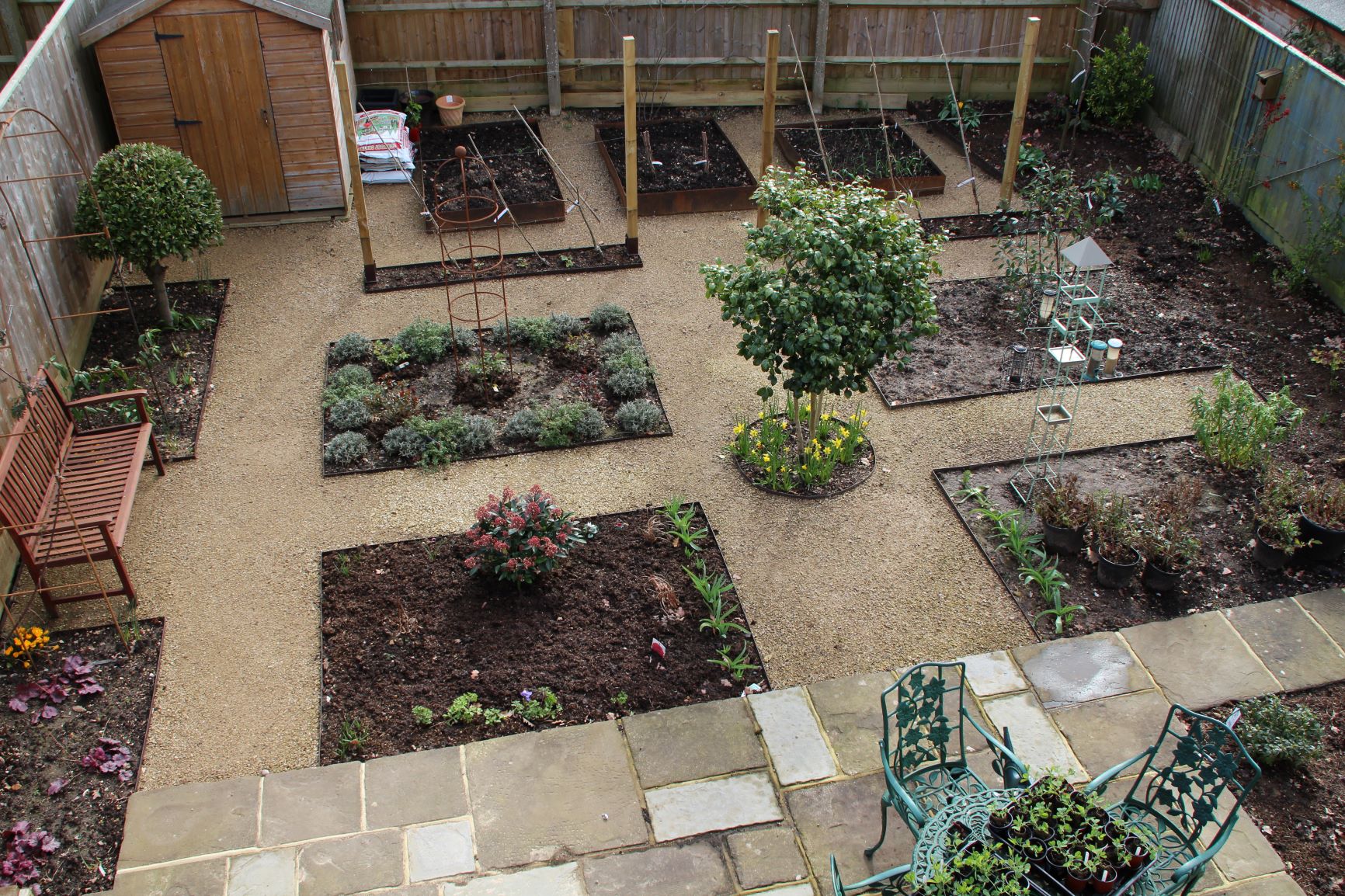
Spring is arriving in the garden and the wet winter should certainly have helped both the new and re-planted trees and shrubs get established.  One of the main viewing points is from the bedroom window, so the garden has to work from above.

7 March 2020

7 March 2020

Equally we want to be immersed in it when are actually in it.  At this time of year there isn’t that much growth, but as the year progresses we are hoping that we will feel much more enclosed by the planting.

Garden 18 March 2020

Garden 18 March 2020

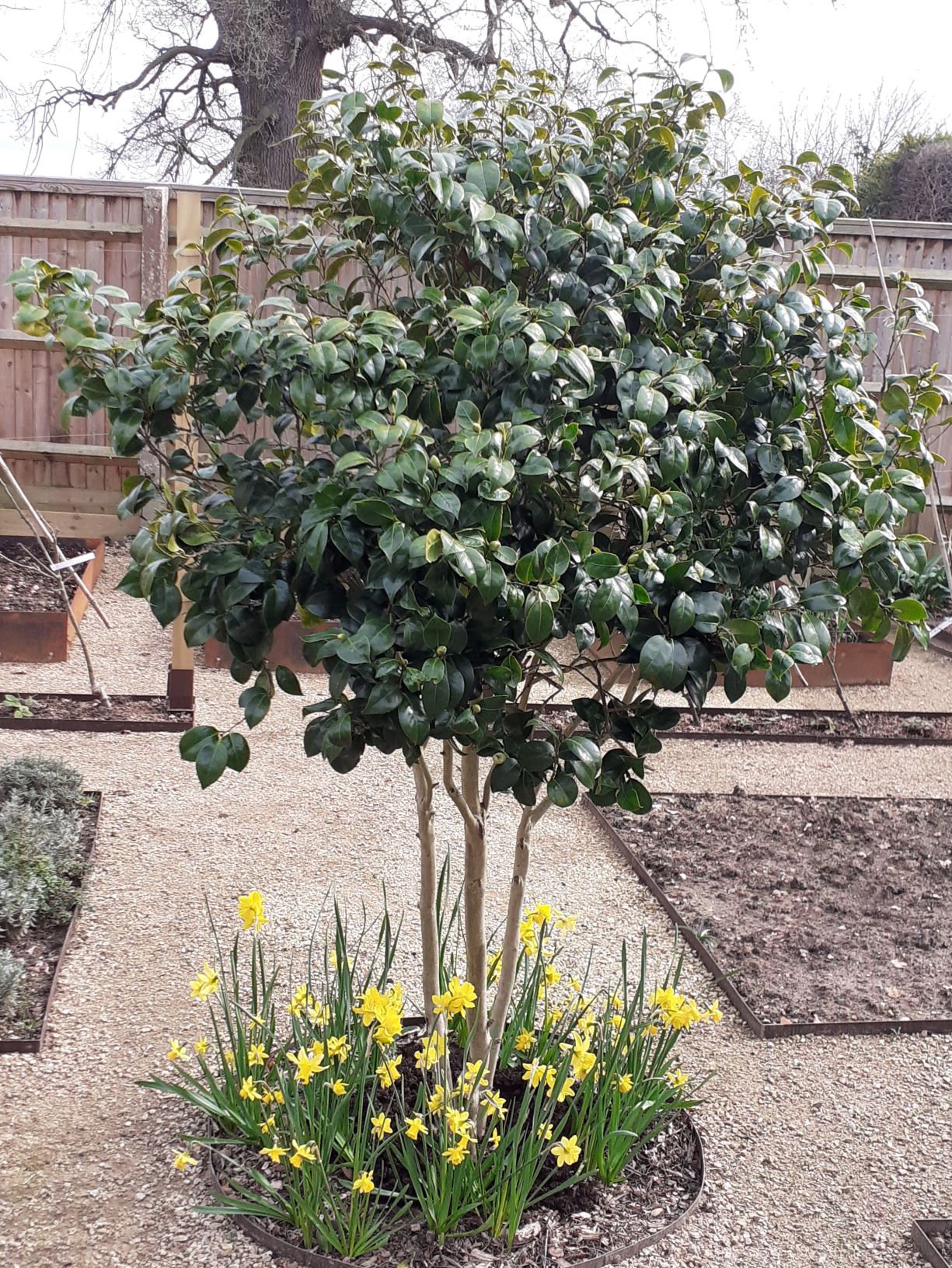
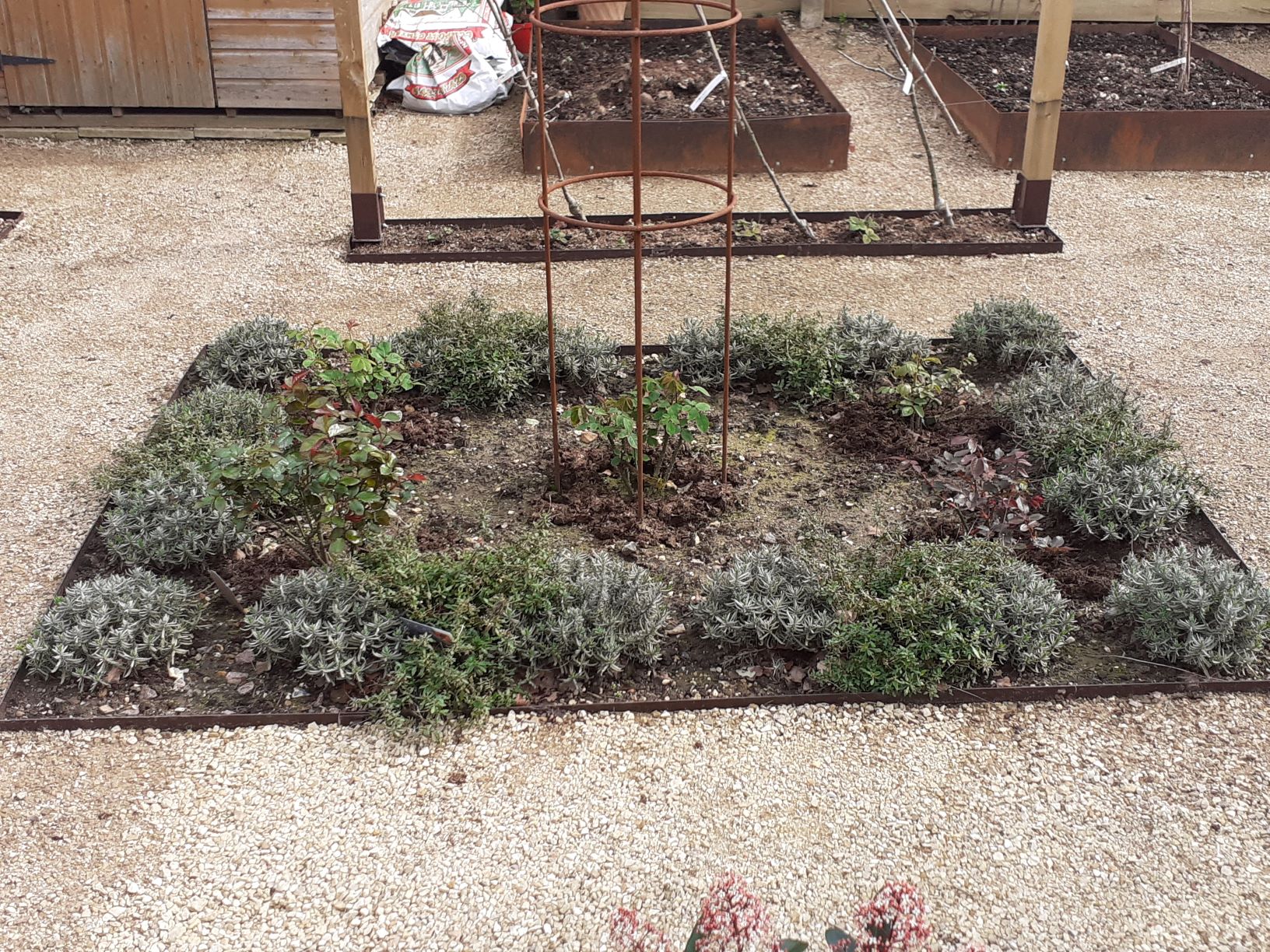
The Camelia under-planted with bulbs is intended to provide a focal point and we are hoping that the rose bed edged with lavender will provide summer long fragrance for the re-sited garden bench.

Camelia 18 March 2020

Camelia 18 March 2020

Rose bed 18 March 2020

Rose bed 18 March 2020

Garden Tips – March 2020

The days are getting longer, spring is on its way and lots of plants will do much better this summer with some care and attention over the next few weeks.  Mind you, you might have to be patient given the very wet February that we’ve experienced, steer clear of lawns and borders that are very wet as you may end up compressing the ground and damaging the soil structure.

It is a great time to work on herbaceous perennials. Cut back any dead growth to create space for this year’s shoots and if clumps are over-crowded or too big it is the perfect time to divide them.  Geraniums (cranesbill), Sedums (or as we should now call them Hylotelephiums) and grasses are all good candidates.  This is not a difficult job, lift the whole plant and cut the root ball into a number of smaller pieces, making sure that you’ve got both roots and shoots on each piece. A spade or an old saw are perfect tools for the job. Select the pieces with the most vigorous growth and re-plant the selected divisions immediately and despite the recent rain, water in well.

You will probably end up with more plants than you want to re-plant in the original space.  This may be a good time to populate sparser parts of the garden, or maybe you can share a favourite plant with friends.  For the less vigorous pieces don’t be afraid to consign them to the compost heap.

While preparing plants for a surge of growth in spring cut back semi-evergreen perennials such as Penstemons to a low framework of sturdy stems and prune back Cornus as it is the newer growth that gives the best colour.  Most types of Cornus will happily stand very hard pruning, the exception is sanguinea (‘Midwinter Fire’ is a popular cultivar) which should be pruned more gently.  Take out old and congested stems, but leave the remaining stems longer than you would for other types of Cornus so that you retain the gradation of colour that is the mark of ‘Midwinter Fire’.
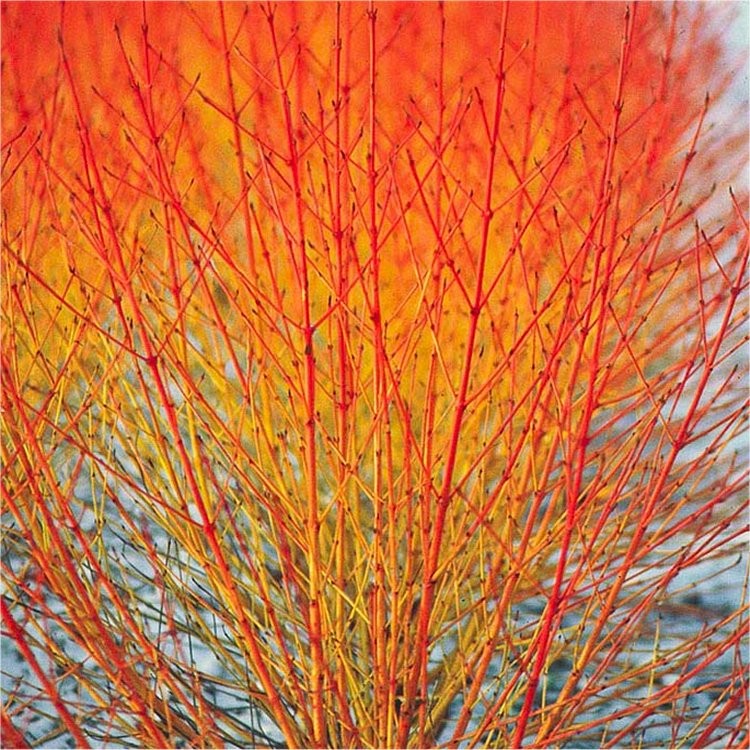
Midwinter Fire
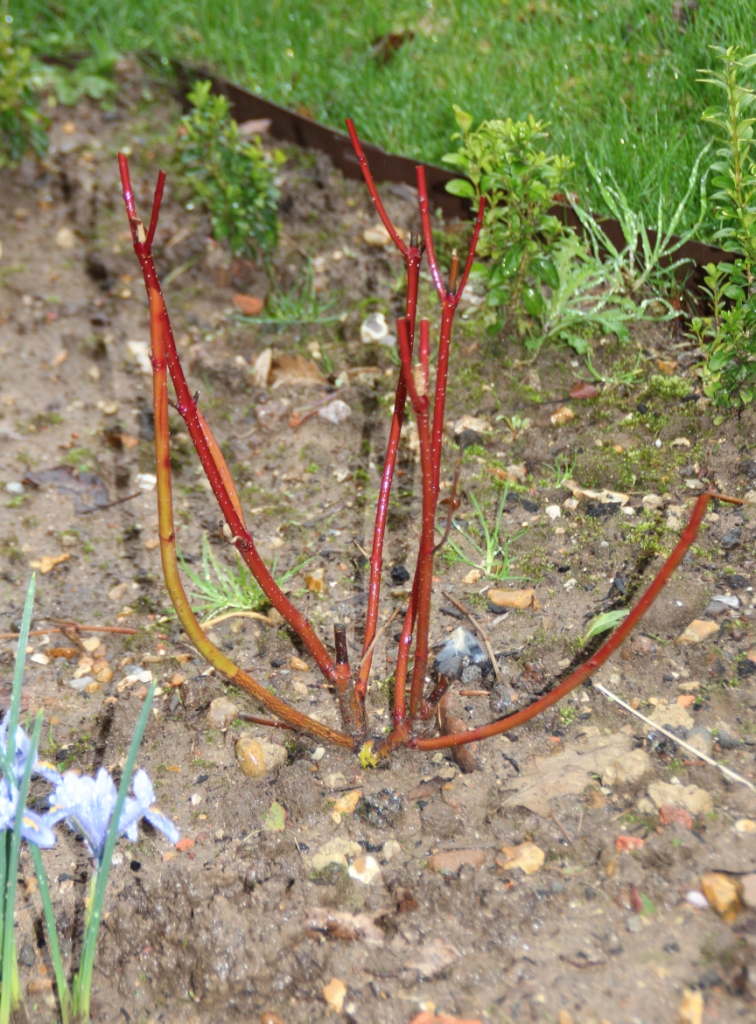
Midwinter Fire

Pruned Cornus Alba

Pruned Cornus Alba

Early March is widely regarded as the perfect time for pruning roses, cut them back to five main shoots about 15cm high just above an outward facing bud, then feed and mulch.

On the topic of feeding, it is also a good time to give permanent containers a boost, scrape away the top couple of cm of older compost, top dress with new compost with some slow release fertiliser mixed in.

In the kitchen garden, the soil is likely to be a bit cold for direct sowing, but March is ideal for indoor sowing of all sorts of crops, including brassicas, celeriac, peas and greenhouse crops like tomatoes and aubergines.

Outdoors, it is a good time to plant asparagus crowns and globe and Jerusalem Artichokes.  Once perennial vegetables are established they tend to be lower maintenance than the ones we grow each year so are a useful addition to vegetable plots.  Because they are long term planting, they will reward you for good ground preparation.  Weed the area thoroughly and add plenty of well rotted organic matter to improve drainage, nutrient retention and soil structure before planting.
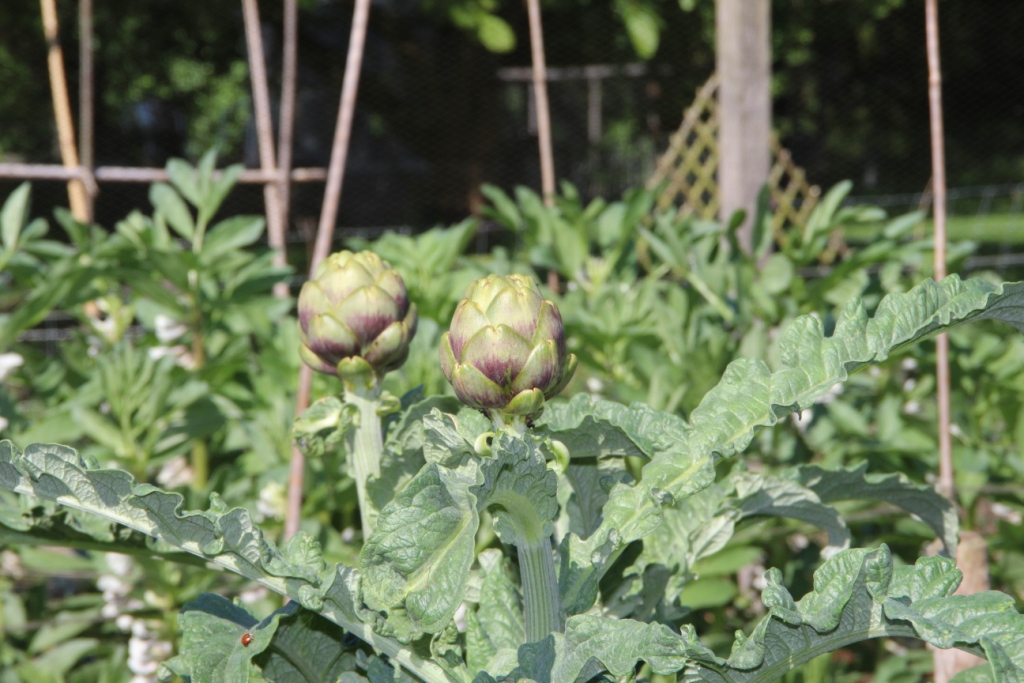
Artichokes ready for harvest

Artichokes ready for harvest in May

Asparagus ready for cutting in late April

Asparagus ready for cutting in late April
Garden Tips – February 2020

As usual at this time of year we’d urge you to remember that it is still winter (despite the lengthening days and occasional bursts of warmer weather). There is plenty that you can do, but don’t worry about postponing things if the ground is waterlogged or frozen. You’ll only damage the soil structure if you put weight on it.

In the better weather; it is still a good time for planting bare root shrubs and trees, and of course container grown plants can go in at any time. Even in a generally soggy time of year, don’t forget to keep new plants well watered.

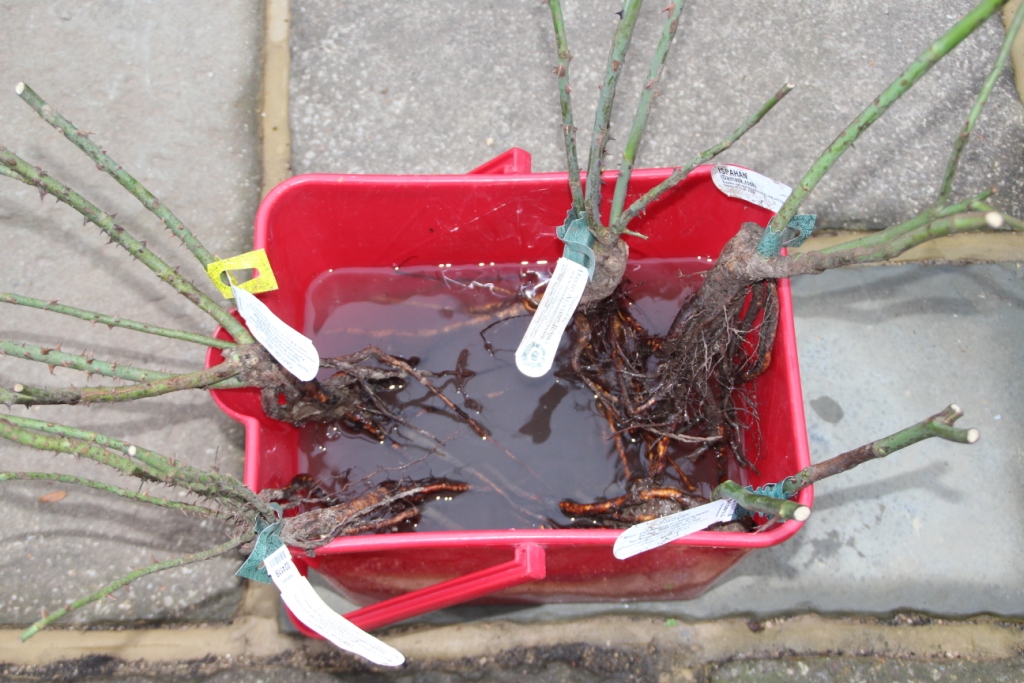
Bare root roses soaking prior to planting

Bare root roses soaking prior to planting

This year’s snowdrops will be starting to go over by the end of February. If you’re lucky enough to have good colonies of them, this is the perfect time to lift and split clumps, allowing you to start building up stocks in different areas. Also have a look around the garden to check whether you have other things in flower, if not think about adding plants like primulas that provide nectar for early foraging bumblebees.

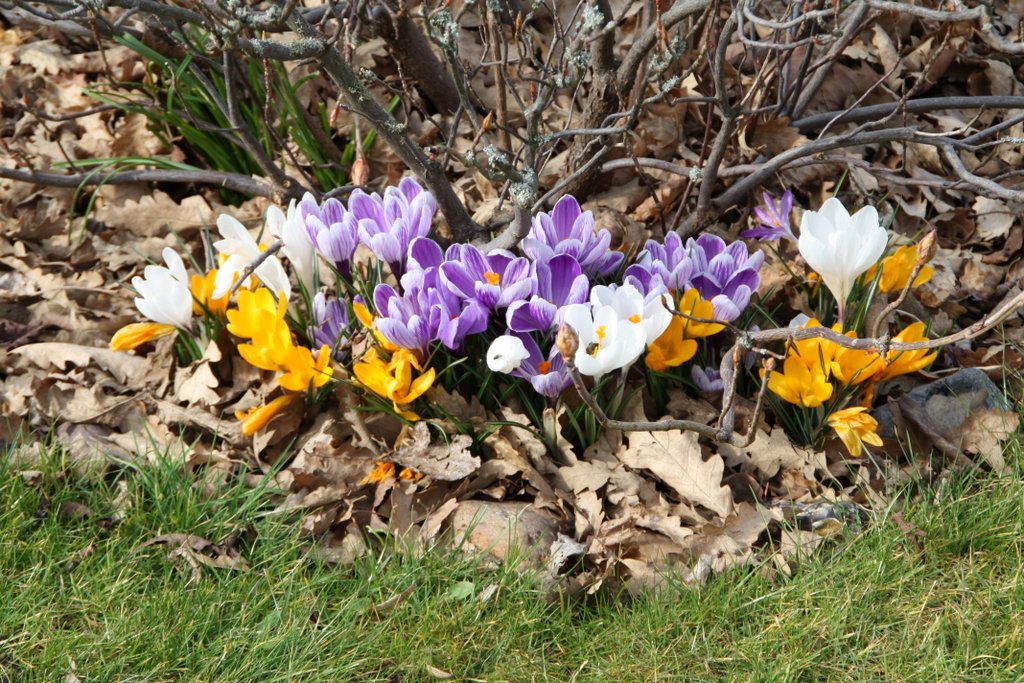
Depending on the weather and cultivars you are growing, crocuses, narcissi and Iris reticulata will all bloom this month, take time out to enjoy these flashes of colour and heralds of spring.

Crocuses among leaf litter

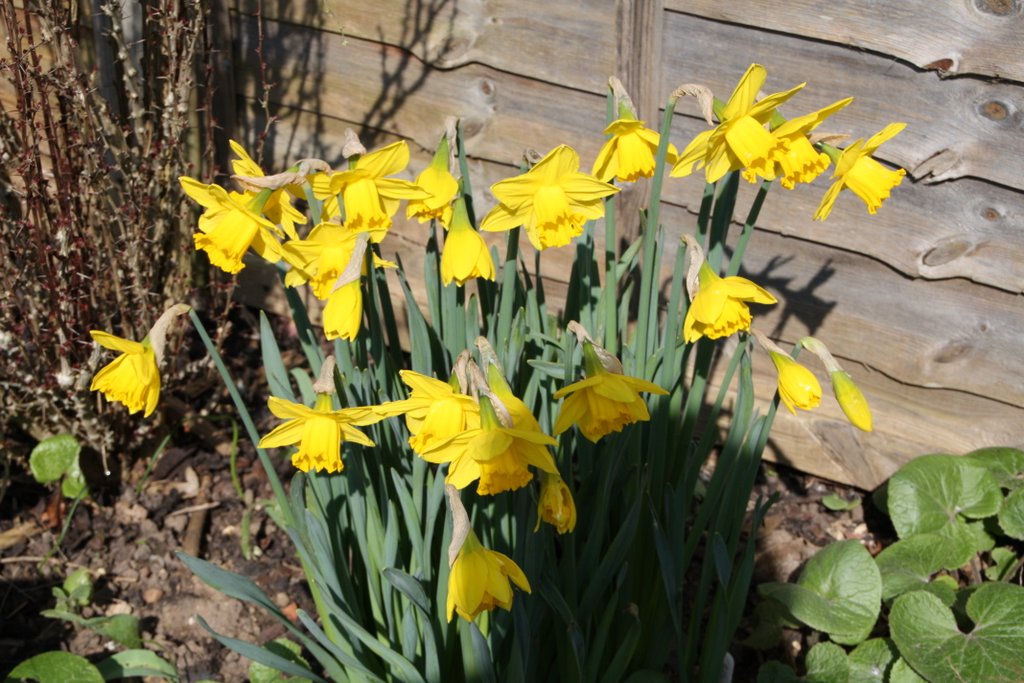
Daffodils in the sun

Daffodils in the sun

Seed sowing time is arriving for both flowers and vegetables. Use propagators and warm windowsills where appropriate, but don’t forget that you can start hardy annuals in less protected environments.

Finally, for those soggy days; spend some time cleaning and sharpening your tools. As well as extending their lives, using well maintained tools is much easier.  It is also human nature to keep clean things clean.  Wiping one session’s mud off a spade is far less of a task than cleaning a season’s worth of accumulated grot.  As usual the RHS provides good detailed advice.

New Garden Update 7

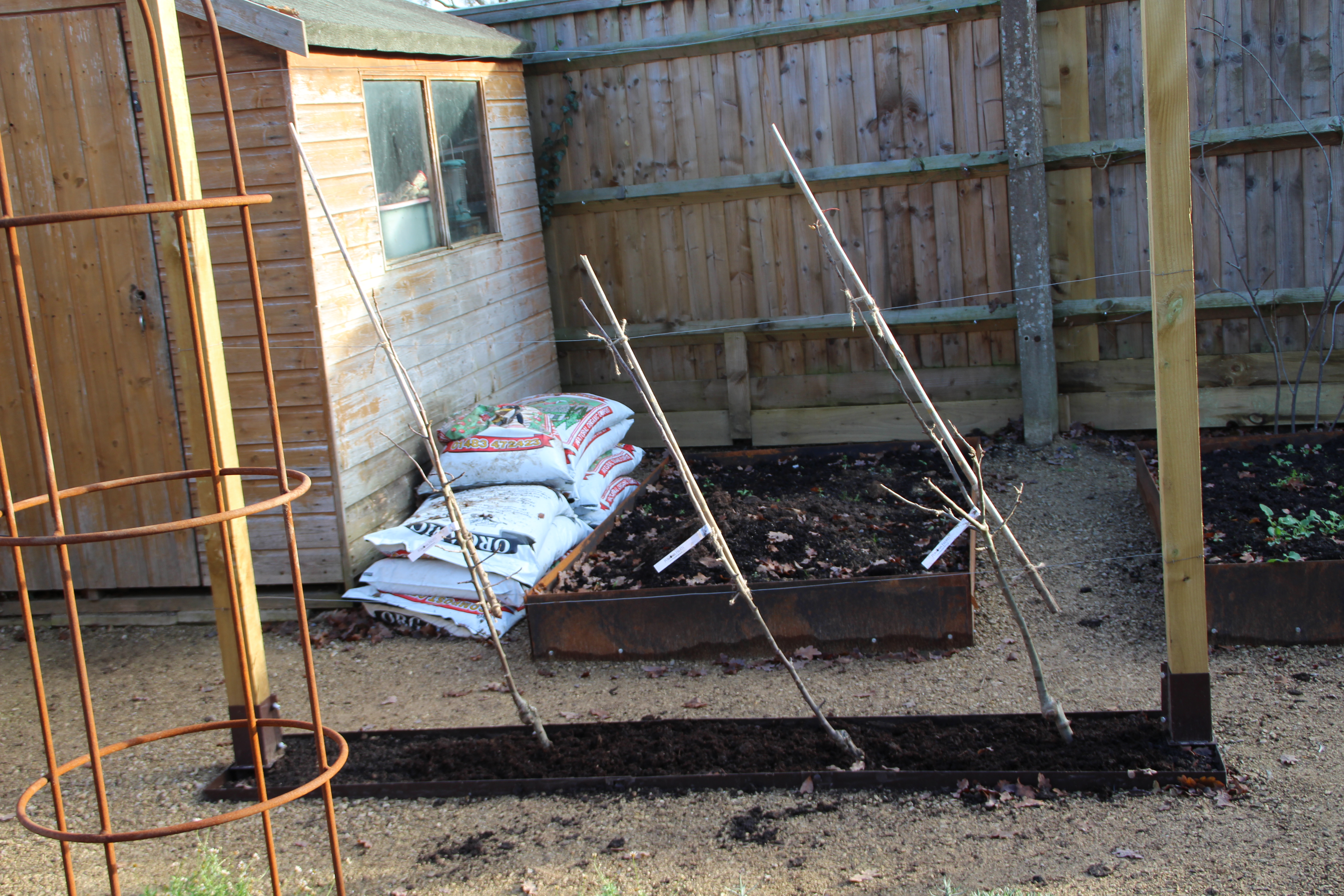
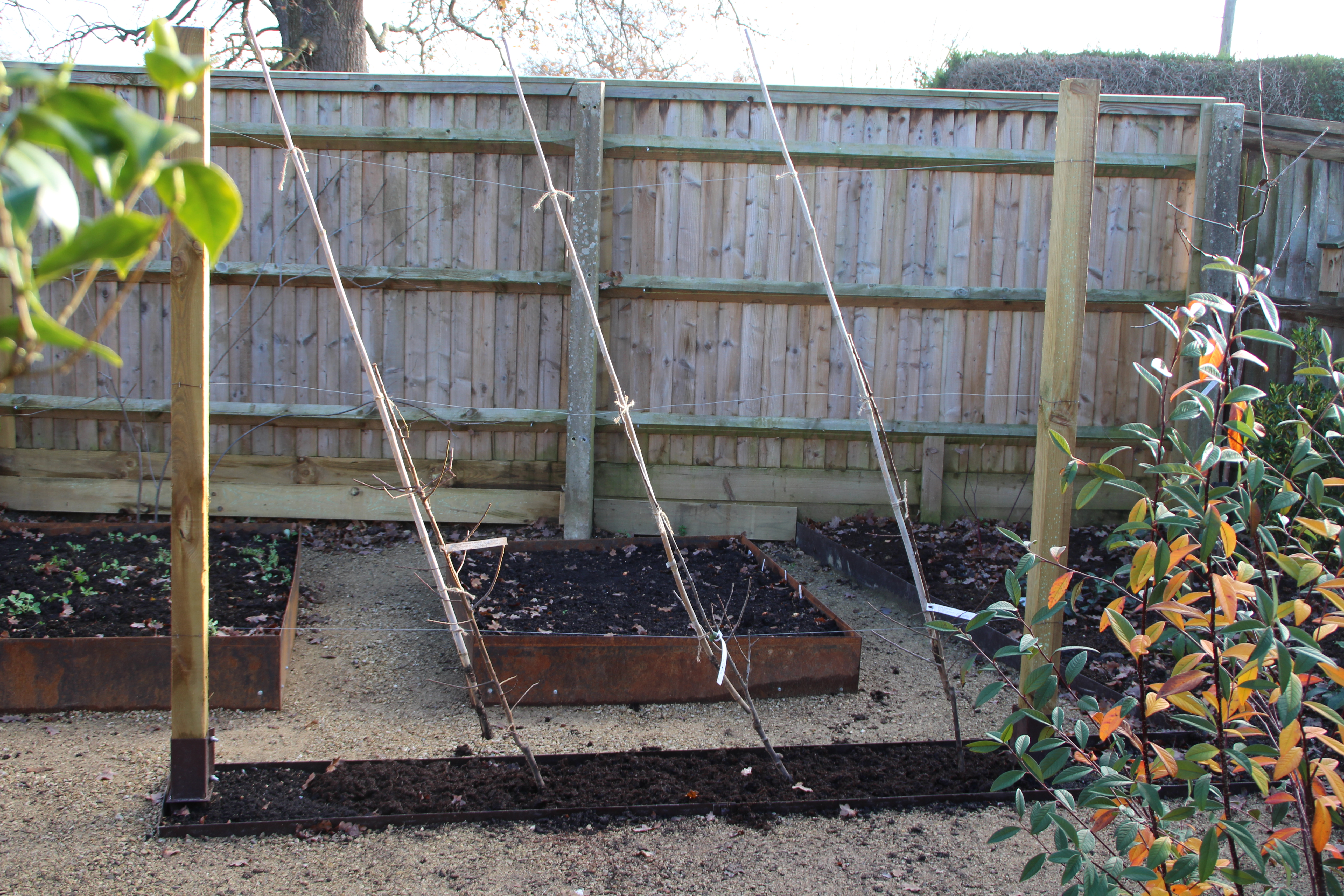
The dry summer now seems ages ago as it has barely stopped raining since October and the river levels are rising.  However, this has meant a good planting autumn and the last bits and pieces for this year have gone into the back garden.  The most notable additions have been two sets of fruit cordons – three apples and three plums.

Apple cordons 3 December 2019

Apple cordons 3 December 2019

Plum Cordons 3 December 2019

Plum Cordons 3 December 2019

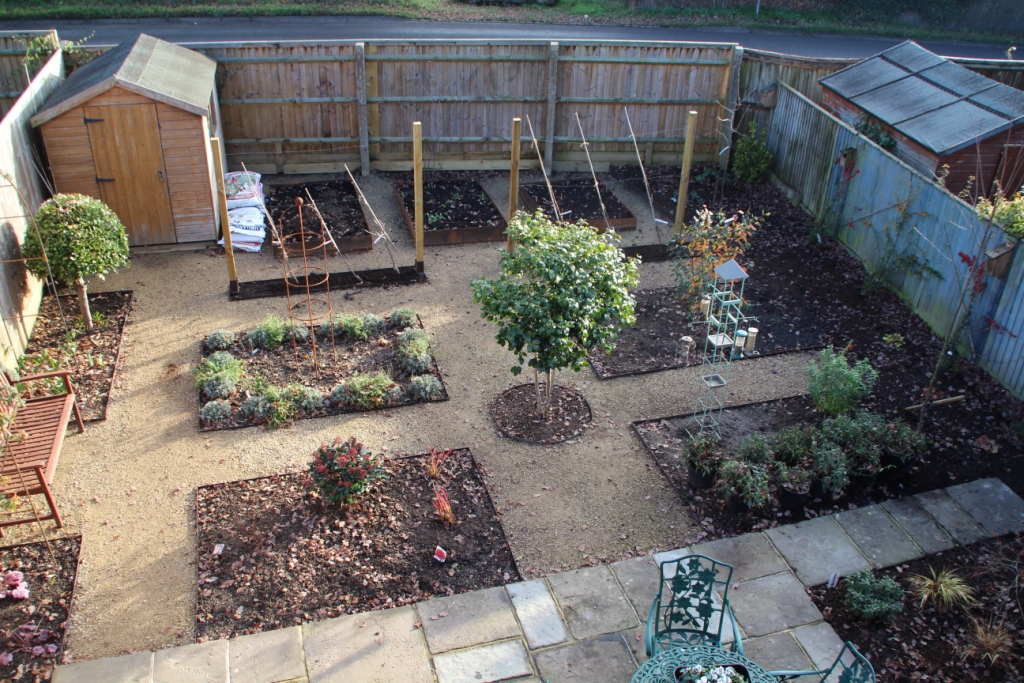
Overall, the garden is now looking like this.

Back garden 3 Dec 2019

Back garden 3 Dec 2019

The large number of Gaura in pots have been saved from the front garden, where we’ve lifted all of the instant colour that we put in for the summer in order to get some structural shrubs in over the autumn.

Front garden Dec 2019

Front garden Dec 2019

We will be returning some of the Gaura to the front and putting some in the back in front of the Pyracanthas and also putting back some of the Dahlias, which are over-wintering in the greenhouse.  Other Dahlias will find new homes on the allotment.

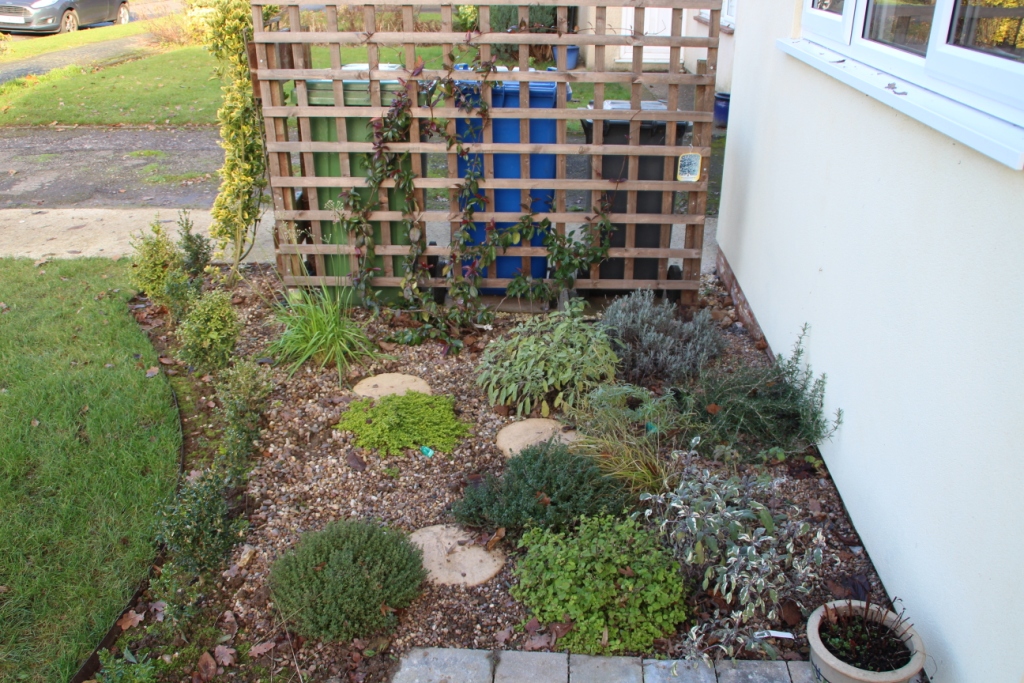
One element of the front garden that has matured very quickly is the herb garden and even in the depths of winter we are getting plenty of fresh herbs for the kitchen.

Herb garden Dec 2019

Herb garden Dec 2019

We are starting to notice the first signs of emerging spring bulbs, so we will be checking up on these as spring 2020 progresses to see whether there are gaps that will need filling next autumn.  One of the great joys of gardening is that you’re always looking forwards, making it an innately optimistic pastime.

Garden Tips – December 2019

Winter is often thought of as being a time for “jobs” such as digging, tidying up perennials, cleaning greenhouses – so far so mundane and fairly uninspiring. This approach tends to push gardening into the category of things we should do rather than things we want to do. A recent piece on “Gardeners’ Question Time” railed against the gardening obsession with jobs, suggesting that a cookery programme that highlighted “a good time to clean the oven” might not expect a particularly long run.

Let’s be positive and look to make the most of bright and dry days in December and January with more creative tasks.

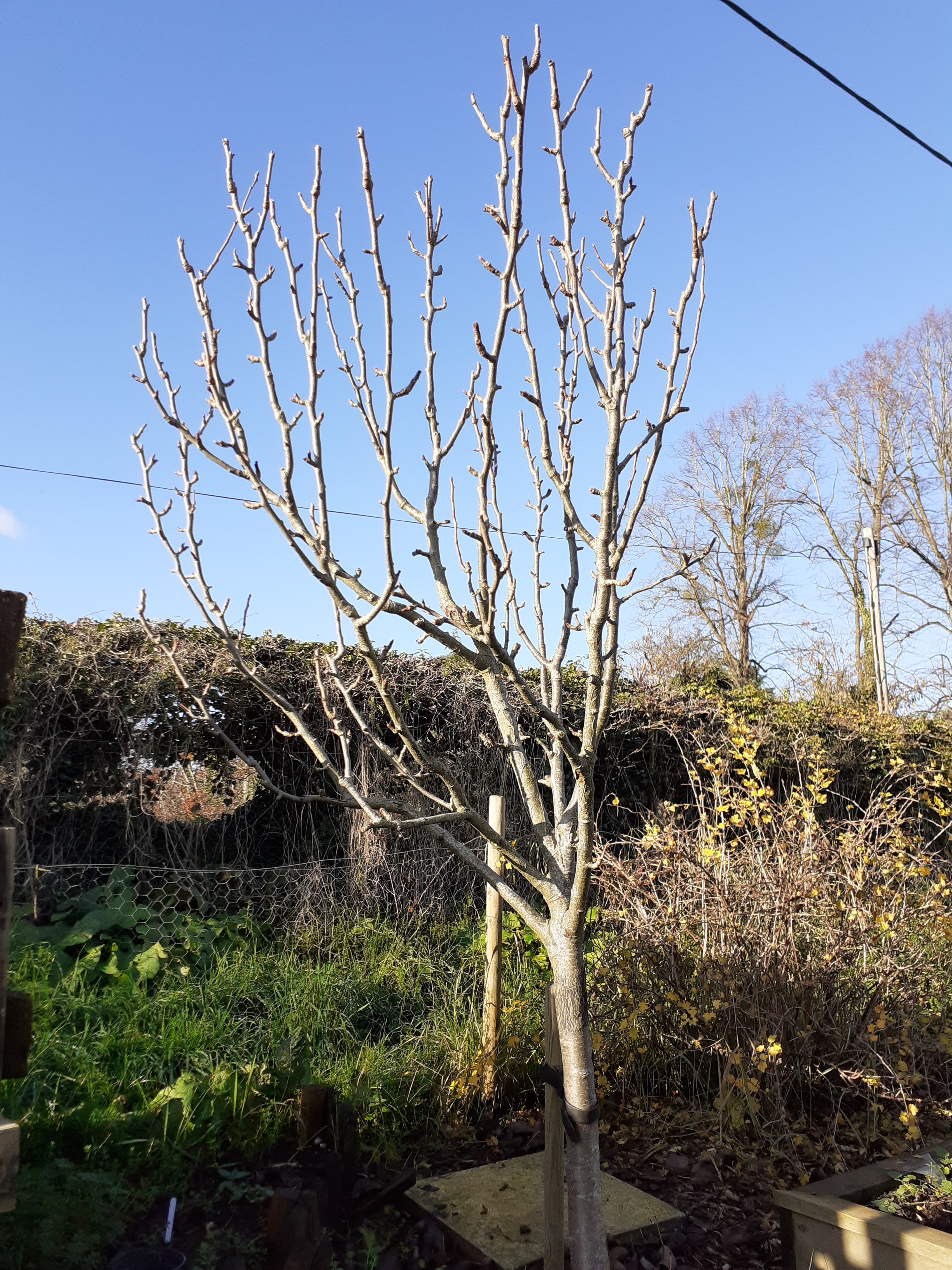
Top of the list for us is pruning fruit trees such as apples and pears and other smaller garden trees like Amelanchier. After doing this your lovely open tree looks great as a winter silhouette and will have healthier growth and better flowering and fruiting in a few months. In the picture below you can see the profusion of fat flowering buds promising a lovely display in the spring and (fingers crossed) a healthy crop to follow.

Pruned Pear and Winter Sky

Pruned Pear and Winter Sky

Take it slowly; treat it as a work of art rather than a task to done as quickly as possible. Once you’ve cleared out dead, diseased and damaged wood concentrate on what you are leaving, create the shape you want to see, stepping back frequently to assess the overall picture. A useful rule of thumb is spend as much time looking as you spend cutting.  It can be very helpful to have two people working together, one cutting and the other standing back to keep am eye on the emerging shape and to identify what should be removed (or left).  Only take a maximum of one third of the wood in one go, if more is required re-visit it next year.

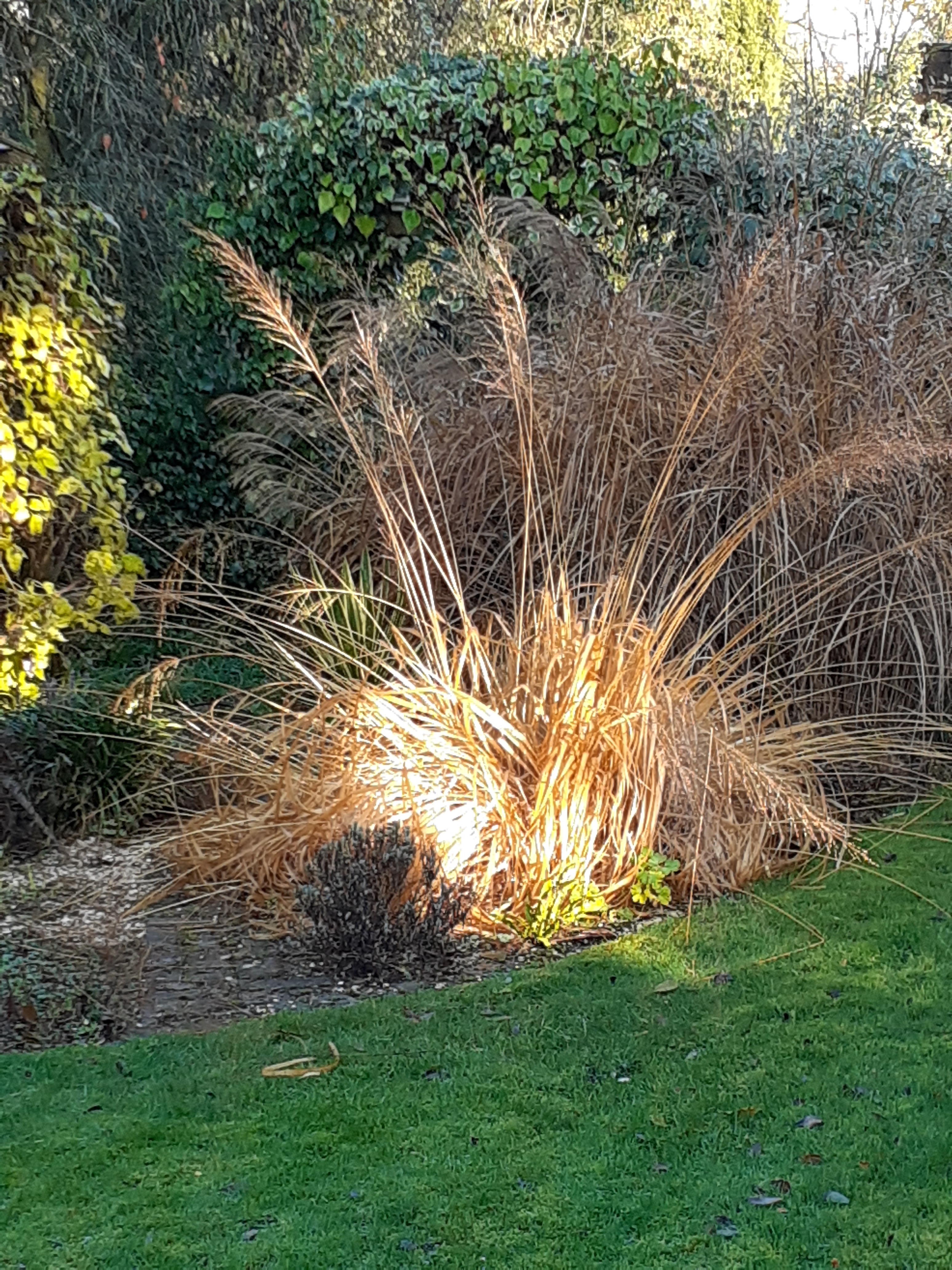
Planning and researching are good ways to get the creative juices going.  Look at your garden, are there areas that would benefit from more winter interest and colour? If so, you can use miserable days to do on-line research and take advantage of better days and winter holidays to visit gardens and look for winter planting ideas.  Don’t be intimidated by the scale of gardens that you might visit, while we don’t all have the acreage of Cliveden we do all have a patch that might benefit from a small carpet (or maybe a rug) of bluebells or some striking stems of Cornus or Salix.  Winter-scented plants such as Sarcococca and Daphne can live in relative obscurity for much of the year, but bring the whole garden to life on those glorious sunny days in winter when they fill it with perfume.  Even something as simple as a dormant grass can be spectacular in winter sunshine.

Grass on Fire

Grass on Fire

For instant creativity and colour, plant up winter containers, especially around doorways and entrances.  Remember that the plants in winter containers won’t grow that much, so you can really pack them in to make a big impact.

Garden Tips – November 2019

To follow on from last month’s suggestion on bulb planting, let’s keep the optimism and forward thinking going.  November is a great month for looking forwards. The days may be getting shorter and colder, but you can still be planting and harvesting.

November is tulip planting time. It’s important that tulip bulbs go in the ground after a cold snap as this helps to kill off tulip fire spores in the soil which could infect your new bulbs. You can also keep on planting all the other spring flowering bulbs.  The widest choice of bulbs will be available earlier in the year, but you can always pick up bargains at the end of the season, when retailers are looking to clear stock. Just make sure that the bulbs you buy are still nice and firm and all should be OK.

While thinking about planting, bare root plants, including roses become available in November and unless the soil is waterlogged or frozen getting bare root plants into the ground as soon as possible will give more time for root development and better displays next year.

Bare root roses soaking prior to planting

Bare root roses soaking prior to planting

In the kitchen garden you can plant onion sets and garlic and divide or plant rhubarb crowns

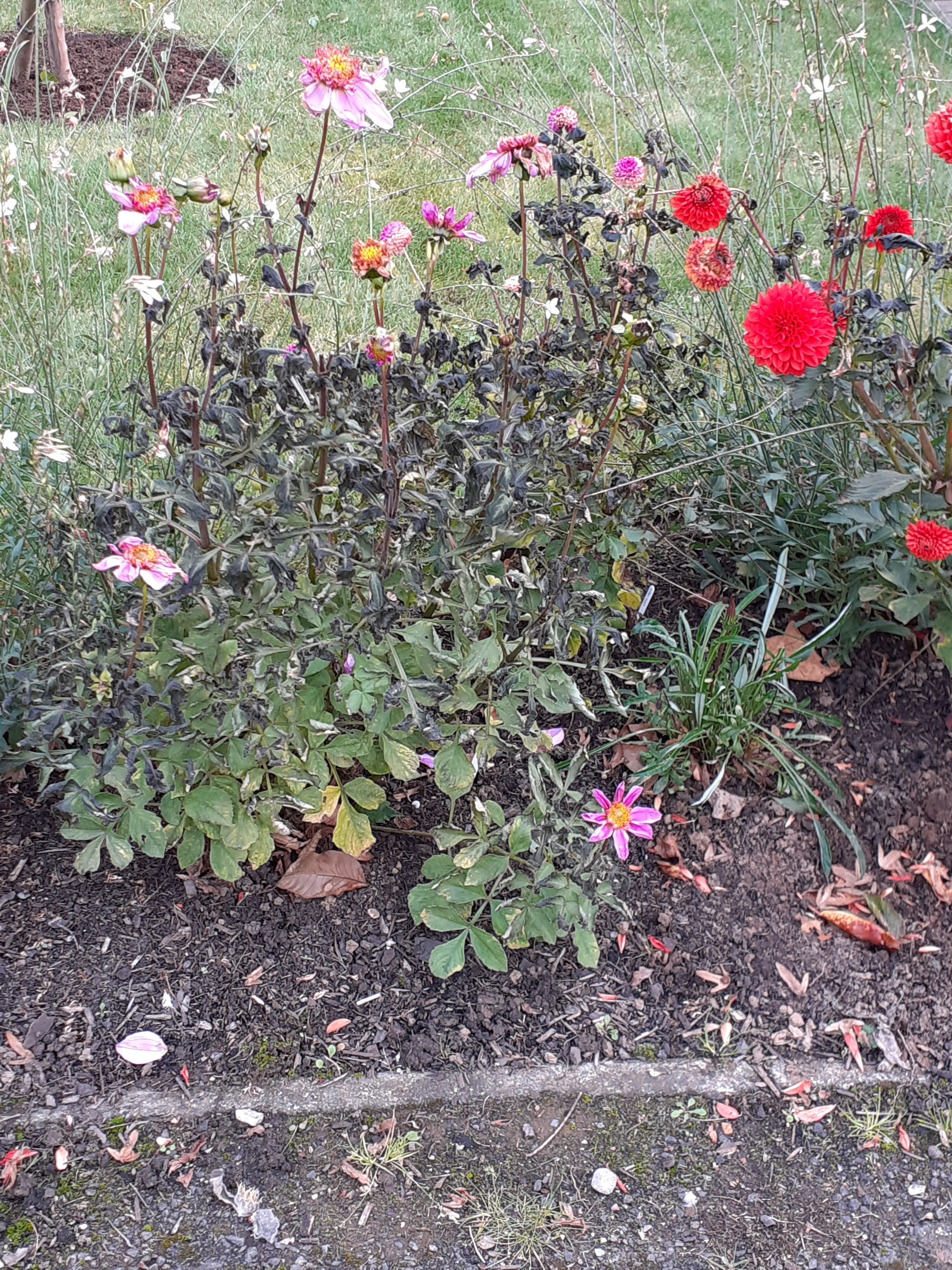
The first frost hit Cookham at the end of October and after one night the dahlias are essentially finished.  The blooms drooped and the foliage has blackened.  They can now be cut back and the tubers either dug up for storage or left in situ.

Blackened Dahlias

Blackened Dahlias

As we get more prolonged spells of colder weather as the month wears on many herbaceous perennials will start to die back and the dead foliage can be cleared.  However, there will also be plants that have spectacular seed heads that are both ornamental and provide food for wildlife.  Examples include teasels, ornamental grasses and sunflowers.

The summer showstoppers in the vegetable garden like tomatoes and beans have given up by now, but with carrots, parsnips, cabbages, cauliflowers and the first Brussels sprouts, there is still plenty of fresh produce that you can be harvesting right now.

If you’re lucky enough to have a pond, then try to clear fallen leaves from the water.